 Save
Save There's something almost meditative about arranging raw vegetables on a plate. I discovered this dish on a humid afternoon when my fridge held nothing but a pile of celery, cucumbers, and the lingering scent of rice vinegar. Instead of throwing together a sad snack, I decided to slow down—to cut with intention, to stack with purpose. The result was so quietly beautiful that I found myself just staring at it for a moment before anyone could eat it.
I made this for a small dinner when someone I cared about mentioned they'd been stressed. We didn't talk about work or problems—we just sat quietly with these cold, crunchy sticks and that tangy dipping sauce. Somehow the simplicity made space for real conversation. That's when I realized this wasn't just an appetizer; it was permission to breathe.
Ingredients
- Cucumbers (2 large): Choose firm ones that don't yield to finger pressure—they'll stay crisp longer and cut into satisfying, uniform sticks.
- Celery stalks (4 large): The outer stalks are sturdier than the pale inner ones, which makes them more forgiving to cut and arrange.
- Toasted sesame seeds (1 tablespoon): Toast them yourself if you can; the difference between stale and fresh is the difference between decoration and actual flavor.
- Soy sauce or tamari (1 tablespoon): This is your base for the dipping sauce—tamari works if you're avoiding gluten, but it tastes slightly earthier.
- Rice vinegar (1 teaspoon): A small amount cuts through the salt beautifully and adds a brightness that makes people wonder what's different.
- Fresh mint or basil leaves: These aren't just pretty—they release a smell that makes the whole platter smell alive and intentional.
Tired of Takeout? 🥡
Get 10 meals you can make faster than delivery arrives. Seriously.
One email. No spam. Unsubscribe anytime.
Instructions
- Wash everything like you mean it:
- Hold the cucumbers and celery under cold water and actually rub them clean—you're removing invisible dust and anything that's been sitting in the produce section. I listen for the sound of water running clear.
- Trim the ends with a clean cut:
- Cut about a quarter inch off both ends of each cucumber and celery stalk. Those flat, fresh cuts will keep the vegetables from looking bruised or oxidized on the serving platter.
- Cut into long sticks with a steady hand:
- Aim for sticks about 4 to 5 inches long—uniform enough to look intentional. If you're nervous, lay the cucumber on its side and cut lengthwise first to create flat surfaces, which makes the next cuts easier and safer.
- Arrange with quiet confidence:
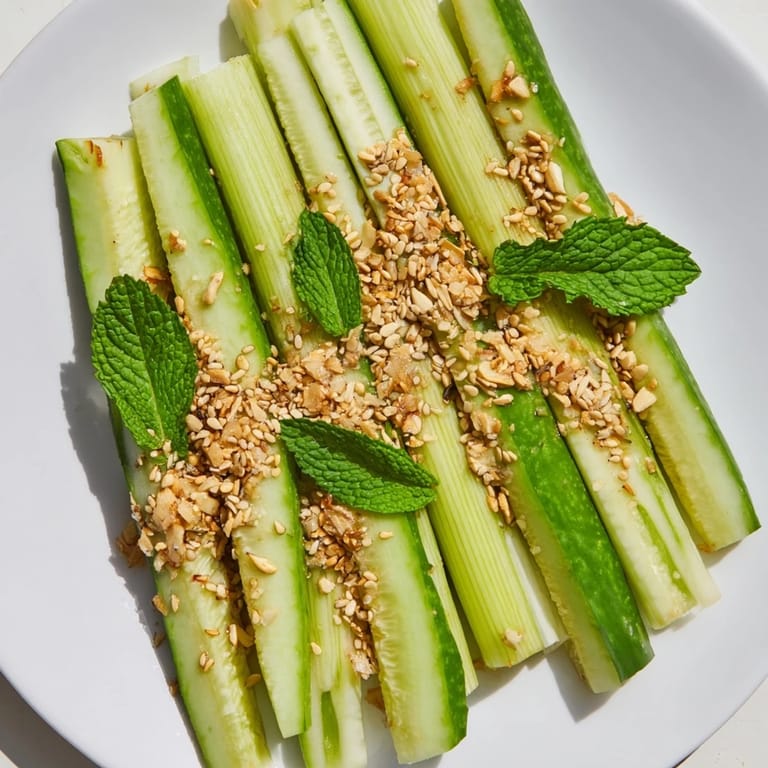
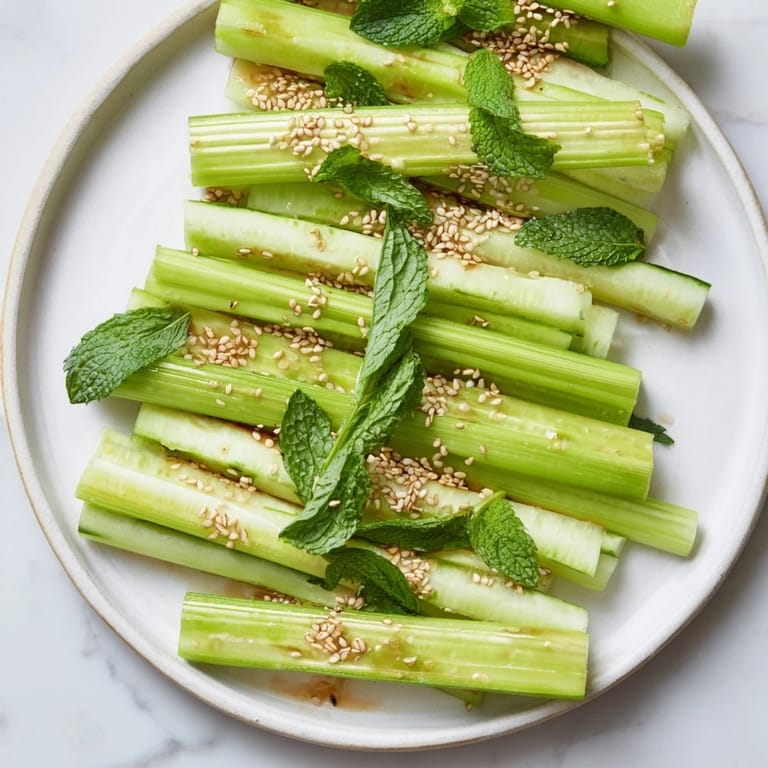
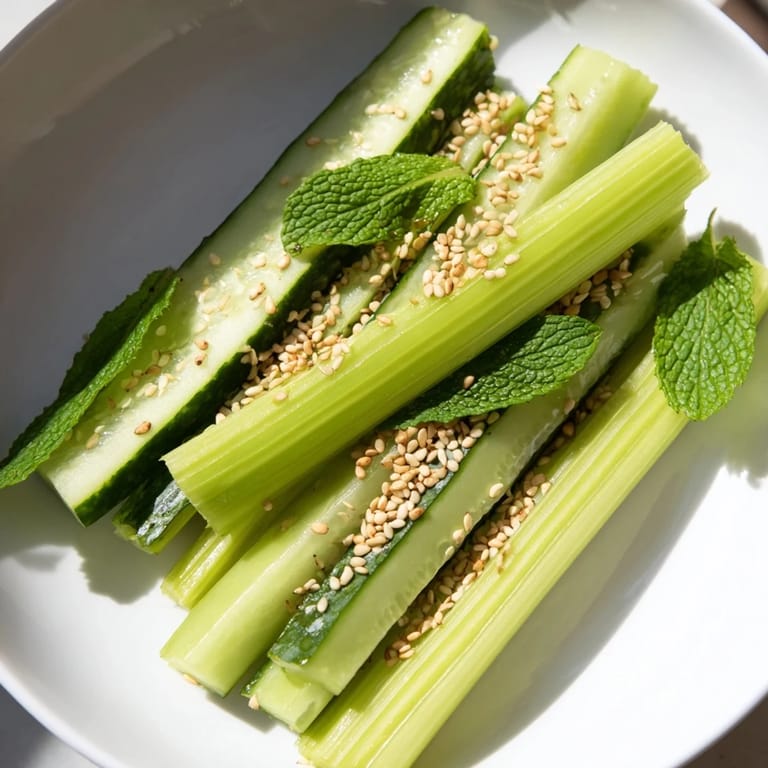
- Stand the sticks upright on your platter, layering them to suggest bamboo stalks or a forest. You don't need perfect symmetry—nature isn't perfect, and that's the whole point.
- Add the finishing touches:
- Sprinkle toasted sesame seeds across the top like you're seasoning rather than decorating. Tuck mint or basil leaves between the sticks so their green shows through.
- Make the dipping sauce and chill:
- Whisk together the soy sauce and rice vinegar in a small bowl. Place everything in the refrigerator for at least 15 minutes so the vegetables stay as cold and crisp as possible.
 Save
Save I watched someone's shoulders visibly relax when they saw this platter. They hadn't expected beauty in something so simple, so honest. That moment—seeing someone recognize that care and intention matter, even with a pile of raw vegetables—is why I keep making it.
The Power of Negative Space
There's a reason minimalist food looks so striking on a plate. The emptiness around each stick matters as much as the sticks themselves. I used to overload every inch of the platter until someone pointed out that breathing room is a flavor too. Now I actually use the white space as part of the design, and somehow that feels more generous than piling everything high.
Texture as the Main Event
Without any cooking or heavy sauces, this dish lives or dies by how crisp and snappy your vegetables are. The first time I made this, I used soft, old celery and the whole thing fell flat. Now I treat vegetable selection like it matters—because it does. A good bite should sound loud and feel fresh in your mouth, almost shocking after the first moment of dipping into that tangy sauce.
Variations That Keep It Fresh
This recipe's beauty is how easily it bends without breaking. I've added thin carrot sticks for orange, watermelon radish for pink and white stripes, and even blanched green beans when I wanted something warmer. The dipping sauce is your canvas too—try adding a tiny bit of fresh ginger or a whisper of wasabi if you want heat instead of pure brightness. Remember that less is almost always more with something this minimal.
- Daikon radishes add a peppery note that surprises people in the best way.
- A tiny drizzle of sesame oil in the dipping sauce transforms it into something almost luxurious.
- Serve with other light appetizers so this stays the quiet moment, not the main event.
 Save
Save This isn't a recipe that tries to impress through complexity or indulgence. It impresses through clarity and care. Serve it when you want to slow down the evening and remind people that sometimes the best moments are the simplest ones.
Recipe FAQs
- → What vegetables are used in Bamboo Zen?
The dish features crisp celery stalks and large cucumbers cut into long sticks for a fresh crunch.
- → How is Bamboo Zen presented?
The celery and cucumber sticks are arranged vertically and horizontally to resemble bamboo structures on a serving platter.
- → Are there any garnishes for added flavor?
Toasted sesame seeds and fresh mint or basil leaves add aroma and a subtle flavor touch.
- → What dipping sauce complements Bamboo Zen?
A light dipping sauce made of soy sauce or tamari mixed with rice vinegar is served alongside.
- → Can Bamboo Zen accommodate dietary preferences?
Yes, it's vegan, gluten-free (with tamari), and low carb, making it suitable for various diets.
- → Any tips to enhance the crunchiness?
Soaking the celery and cucumber sticks in ice water for 10 minutes before serving adds extra crispness.