 Save
Save There's something about the moment a wooden board lands on the table—the way conversations pause, eyes brighten, and people lean in without being asked. That's when I knew this platter needed a name that captured its soul: rough textures meeting refined ones, bold meats singing alongside delicate cheese ribbons. The Burlap & Lace came to me while shaving Parmigiano one autumn evening, watching how light passed through those translucent curls. It felt like translating a feeling into food.
I remember setting this out at a small dinner party on a cold November night, worried I'd somehow gotten the proportions wrong. Within minutes, people were crowding around, building their own little bites—a piece of smoked beef, a ribbon of Manchego, a cornichon, a dab of mustard. Someone said it tasted like traveling through Europe without leaving the table. That's when I realized this wasn't just a platter; it was an invitation.
Ingredients
- Smoked beef (120 g, thickly sliced or hand-torn): The foundation—look for quality, visibly marbled cuts that you'd be proud to tear apart by hand. Smoked beef brings depth and earthiness that grounds the entire platter.
- Rustic country ham (120 g, roughly chopped): This isn't deli ham; seek out a butcher-counter ham with real texture and salt complexity. Rough chopping lets people feel its rustic character, not smooth uniformity.
- Smoked sausage (120 g, thick-cut rounds or wedges): Choose a sausage with visible spice specks or herb flecks so it tells its own story. Thick cuts signal confidence and substance.
- Parmigiano Reggiano (60 g, thinly shaved): This is where a good cheese plane or vegetable peeler becomes non-negotiable—thin, translucent shards melt on the tongue, while chunks would be too heavy.
- Aged Manchego (60 g, thinly shaved): Its nutty sweetness bridges the gap between the aggressive smoke and delicate presentation. Age matters; reach for 6 months or older.
- Gruyère (60 g, thinly shaved): The subtle caramel notes round out the cheese trio, adding complexity without competing for attention.
- Cornichons (small handful): These tiny pickles are your palate resets; their sharp brine cuts through richness and signals that this is about balance, not excess.
- Red onion (1 small, thinly sliced): Raw onion brings brightness and a gentle bite that wakes up every other flavor on the board.
- Grainy mustard (2 tbsp): Use a whole-grain mustard with visible seeds—it's a condiment and a textural element simultaneously.
- Fresh thyme or rosemary sprigs (1 small bunch): These aren't decoration; brush your fingers against them while you eat. Aroma is part of the experience.
- Rustic country loaf or crusty baguette (optional, sliced): If you include bread, make it something worth eating—crusty exterior, open crumb, meant for tearing.
Tired of Takeout? 🥡
Get 10 meals you can make faster than delivery arrives. Seriously.
One email. No spam. Unsubscribe anytime.
Instructions
- Gather your players:
- Before you touch anything, lay out all your meats and cheeses on the counter so you can see what you're working with. Let them breathe at room temperature for a few minutes—flavors wake up when they're not cold.
- Build the meat foundation:
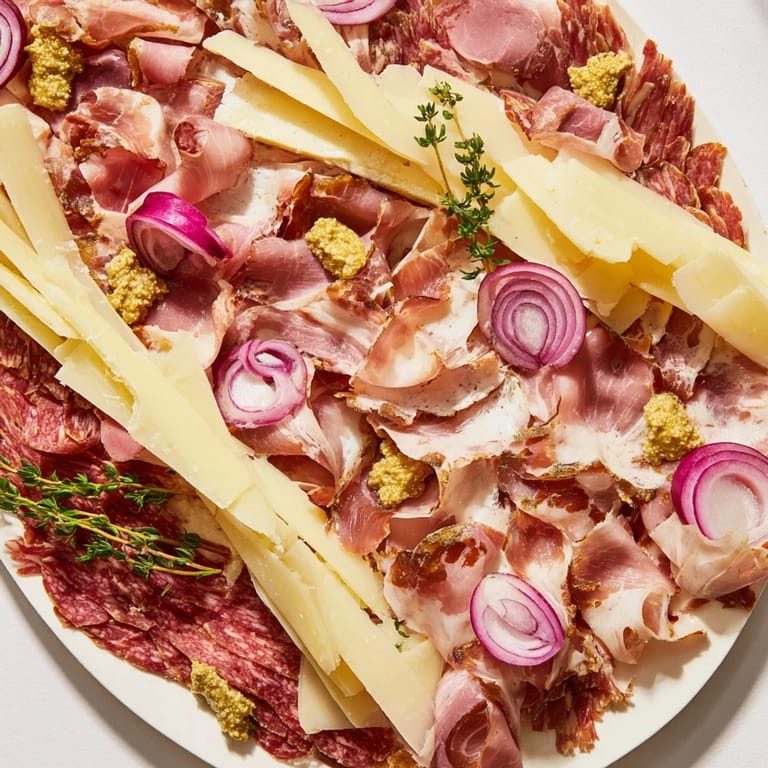
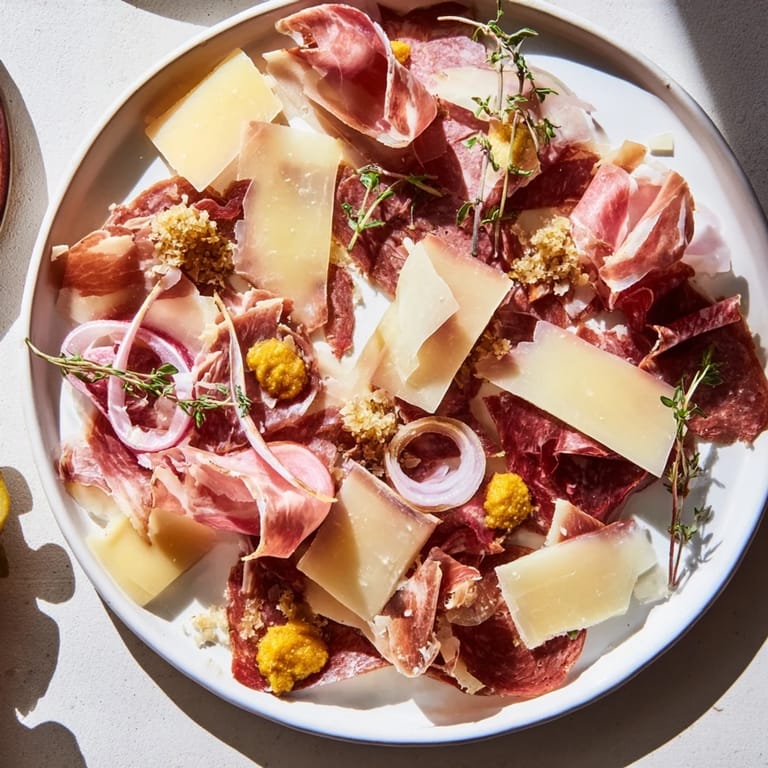
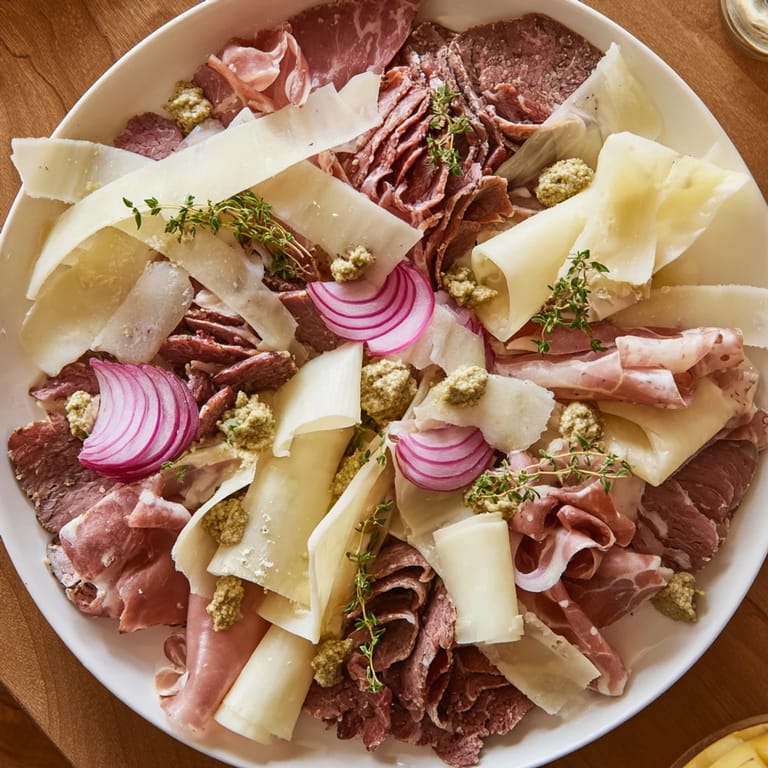
- Arrange the smoked beef, country ham, and sausage in overlapping layers or loose, slightly chaotic mounds across your board. This isn't a geometry lesson; let them tumble and angle naturally so light catches different surfaces.
- Add the delicate ribbons:
- Using a cheese plane or vegetable peeler, glide firmly across each cheese block—Parmigiano first, then Manchego, then Gruyère. Watch for those gossamer-thin curls; they're the visual and textural anchor of the whole platter. Drape them loosely over and beside the meats like silk scarves.
- Scatter your accents:
- Distribute cornichons, sliced red onion, and small dollops of mustard around the board's landscape, leaving pockets of breathing room. Think of these as punctuation marks, not wall-to-wall coverage.
- Crown with herbs:
- Tuck thyme or rosemary sprigs into gaps and across the top, letting some trail off the edge dramatically. They'll release their fragrance as people reach for cheese.
- Serve with intention:
- Bring it straight to the table while everything is at its best temperature and mood. Bread goes on the side, never competing for space.
 Save
Save I learned the real power of this platter when my grandmother tasted it—she, who grew up eating simple cured meats in a mountain village, closed her eyes and smiled. She said it reminded her that elegance isn't about fussiness; it's about honoring each ingredient enough to let it speak clearly. That moment shifted how I think about cooking.
The Art of Contrast
This platter works because every element has been chosen for a reason beyond taste. The rough, chunky meats wouldn't shine if the cheeses weren't delicate and refined. The salty smoke wouldn't sing if cornichons and mustard didn't brighten everything. The herbs wouldn't matter if there weren't aromatic negative space. Building a board is about understanding that tension creates interest, and simplicity requires intention.
Timing and Temperature
There's a narrow window where this platter is at its absolute best—not straight from the fridge, not left sitting for an hour. The cheeses are most delicate and flavorful around 60–65°F, the meats have just enough resistance, and the herb aromatics are still vibrant. I've learned to assemble everything about 15 minutes before guests arrive so it settles beautifully but hasn't oxidized or warmed too much. This isn't laziness; it's respect for what you're serving.
Variations and Improvisation
The skeleton of this platter is solid, but it loves collaboration. I've added toasted walnuts on autumn evenings, scattered dried apricots when I wanted brightness, even layered in some fresh mozzarella ribbons once when I wanted something creamier. The beauty of a platter is that it invites you to respond to what's in your kitchen and who's gathered around the table.
- Substitute any aged, firm cheese for the three listed—aged Gouda, Comté, or even a good aged white cheddar all belong here.
- If you can't find country ham, any high-quality cured ham works; just choose something with real character and body.
- Nuts (walnuts, marcona almonds) and dried fruits (figs, apricots, dates) are welcome additions that won't compete with the core flavors.
 Save
Save This is the kind of platter that teaches you what matters in cooking: restraint, quality, and the courage to let good ingredients be themselves. Serve it with confidence and watch what happens when people slow down to taste.
Recipe FAQs
- → What types of meats are best for this platter?
Smoked beef, rustic country ham, and smoked sausage provide bold, hearty flavors that balance well with the cheeses.
- → How should the cheeses be prepared?
Use a vegetable peeler or cheese plane to shave the cheeses into thin, translucent ribbons for a delicate presentation.
- → Can I add accompaniments to enhance flavor?
Yes, cornichons, thinly sliced red onions, grainy mustard, and fresh thyme or rosemary add brightness and aroma to the platter.
- → Is cooking required for this dish?
No cooking is necessary; this is a simple assembly of high-quality ingredients arranged artfully.
- → What beverages pair well with this dish?
Bold red wines or crisp, dry white wines complement the smoky meats and aged cheeses beautifully.
- → Are there suggestions for variations?
You can add toasted nuts or dried fruits, or substitute cheeses with other aged, firm varieties to customize flavors.