 Save
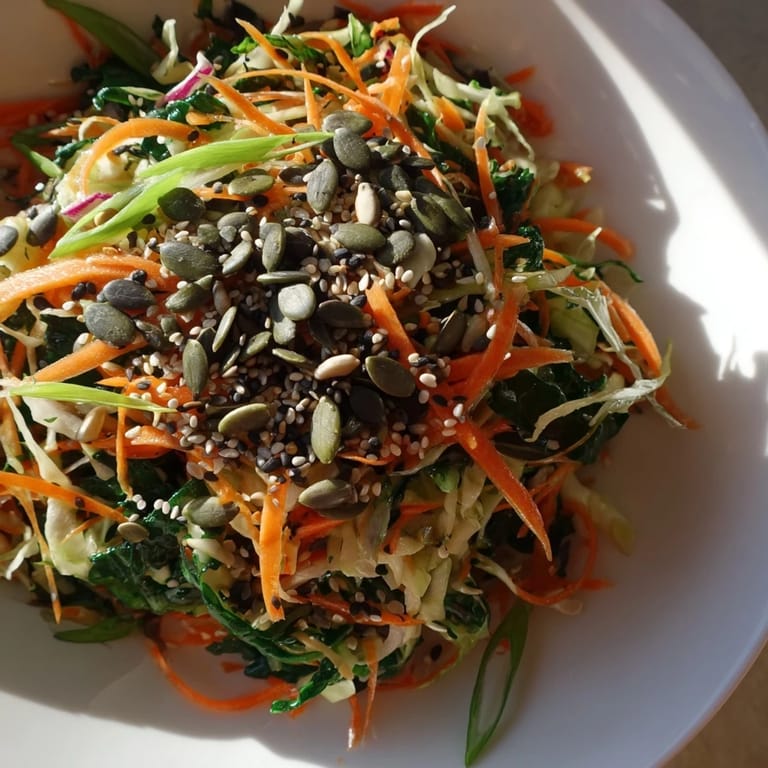
Save There's something almost defiant about using cabbage cores—the part most people toss without thinking. A friend was trimming cabbage in my kitchen one afternoon, and I watched her about to throw the core into the compost when it hit me: why waste the crunchiest, most fibrous part? That evening, I shredded it up with some leaves, added a sesame dressing that smelled like a tiny Asian market, and suddenly had this vibrant, nutty slaw that felt less like leftovers and more like discovering something everyone had been overlooking.
I made this for a potluck once where everyone brought something predictable, and this slaw somehow became the thing people kept coming back to—not because it was fancy, but because it had this honest, toasty flavor that made you feel good eating it. Someone even asked if I'd bought it from somewhere, which felt like the highest compliment a home-cooked salad could get.
Ingredients
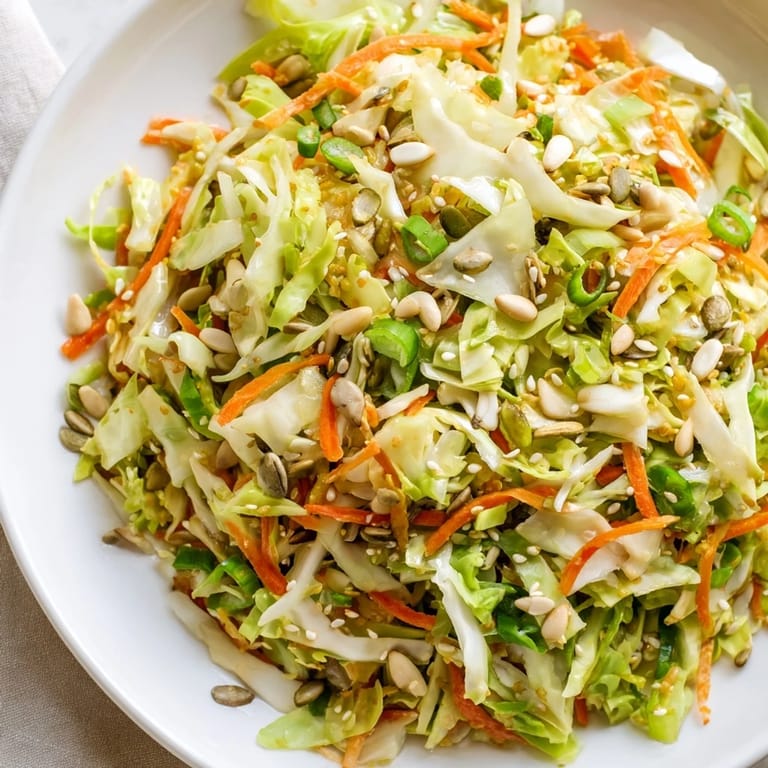
- Cabbage cores, finely shredded: This is the star—the dense, fibrous heart of the cabbage where all the crunch lives and where most nutrients hang out.
- Green cabbage leaves: These add color contrast and keep things visually interesting, plus they soften slightly to balance the core's rigidity.
- Carrot, julienned: Sweet and bright, it cuts through the earthiness and gives your knife work something satisfying to do.
- Green onions: A whisper of sharpness that wakes everything up without overpowering the subtle nuttiness.
- Toasted sesame oil: Don't skip the toasted kind—regular sesame oil is mild and forgettable, but toasted has this deep, warm flavor that makes the whole thing feel intentional.
- Rice vinegar: Gentler than white vinegar, it adds brightness without harsh acidity.
- Soy sauce or tamari: The umami anchor that ties all the flavors together.
- Maple syrup or honey: A touch of sweet that balances the sesame and vinegar, almost like a gentle hand steadying the flavors.
- Fresh ginger and garlic: These bring warmth and complexity that make the dressing taste alive rather than flat.
- Toasted sesame seeds: They add not just crunch but a subtle nuttiness that echoes the oil—buy them already toasted if you can find them.
- Pumpkin and sunflower seeds: Lightly toasted, these add variety in texture and keep the salad from tasting one-note.
Tired of Takeout? 🥡
Get 10 meals you can make faster than delivery arrives. Seriously.
One email. No spam. Unsubscribe anytime.
Instructions
- Prep your vegetables with care:
- Shred the cabbage core first—use the sharpest knife you have or a mandoline if you're feeling fancy, because uniformly shredded vegetables make the final texture sing. As you go, you'll notice the core is denser and more satisfying to work with than the leaves.
- Make the dressing by whisking:
- Combine the sesame oil, rice vinegar, soy sauce, maple syrup, ginger, and garlic in a bowl and whisk until it looks creamy and emulsified—about a minute of steady whisking. You'll smell that sesame warmth rise up, and you'll know it's right.
- Toss everything together:
- Pour the dressing over your vegetable mixture and toss thoroughly so every piece gets coated. The cabbage will start to soften ever so slightly and drink in that sesame flavor.
- Add the seeds with intention:
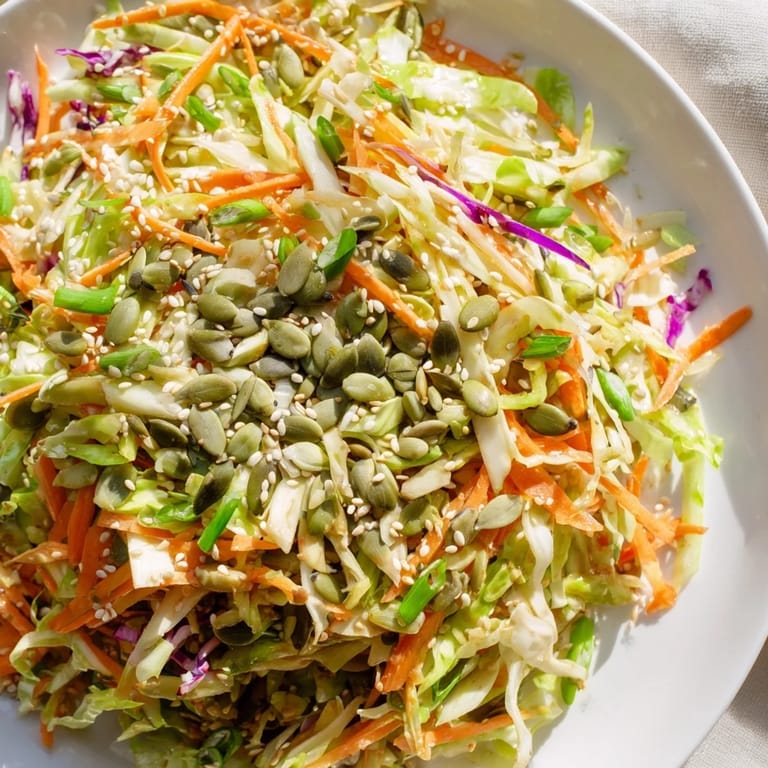
- Sprinkle the toasted seeds over top and toss gently—or reserve some to scatter over the finished salad for extra crunch and visual appeal. Either way, the seeds are your final flourish.
- Let it rest and chill:
- Give it 10 minutes to sit so the flavors meld and the vegetables just begin to soften at the edges while staying crisp. Serve chilled or at room temperature—both are equally good.
 Save
Save What surprised me most about this slaw was how it made me see cabbage differently—not as something to cook down into submission but as a vegetable worth respecting in its raw form, especially the part we usually discard. It became a reminder that sometimes the best discoveries happen when you stop assuming you know how things should be done.
Why Cabbage Cores Deserve Your Attention
Most recipes ignore the core, but that's where the cabbage stores its densest nutrition and most satisfying crunch. When you shred it finely and dress it properly, it becomes something that feels almost indulgent—a texture and flavor experience that justified vegetables don't usually deliver. The core also holds its shape longer than regular leaves, so your slaw stays fresh and snappy for days in the fridge.
The Sesame Oil Factor
Toasted sesame oil is the backbone here, so don't treat it like an afterthought. It brings a warmth and depth that regular dressings can't touch, turning what could be just another slaw into something with real personality. I learned to always smell it before using—if it smells even slightly rancid, it's past its prime and will make the whole dish taste stale.
Make It Your Own
This slaw is forgiving and flexible, so you can play around with what you add without losing the soul of it. Red chili adds heat, fresh cilantro or mint bring brightness, and even a small handful of shredded beetroot transforms it into something visually stunning while still tasting like itself.
- Add a dash of chili oil or sliced red chili if you want heat that builds slowly as you eat.
- Toss in fresh cilantro or mint right before serving to brighten the whole thing.
- If you're serving this alongside something rich, the slaw acts as a palate cleanser and digestive aid because of all that fiber.
 Save
Save This slaw has become my go-to when I want something that feels fresh and nourishing but doesn't require fussing or heat. It's proof that the best dishes often hide in plain sight, waiting for someone curious enough to stop throwing away the good parts.