 Save
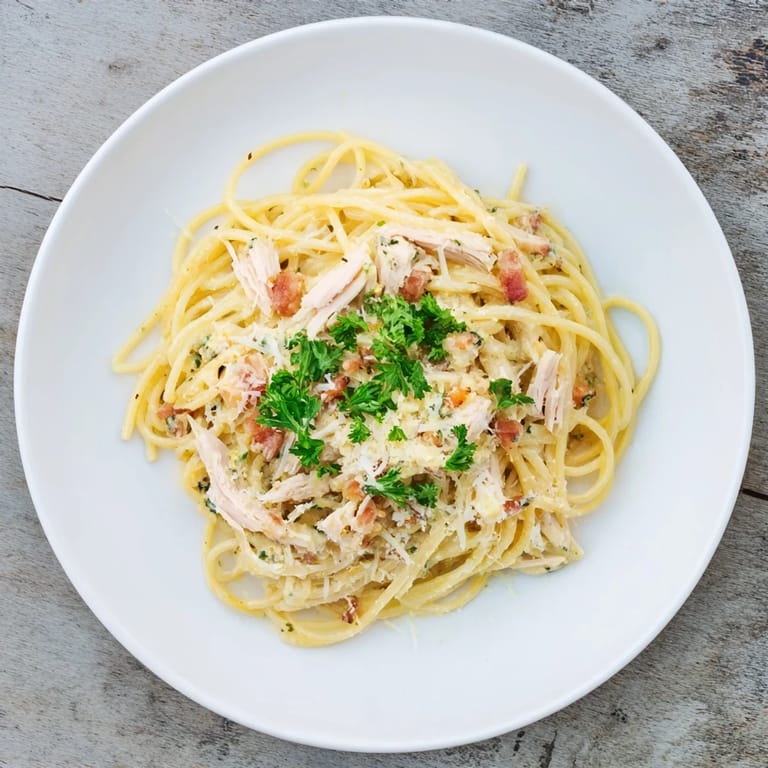
Save The first time I nailed a carbonara sauce without scrambling the eggs, I actually cheered out loud in my kitchen. I had been intimidated by the technique for months, convinced I'd end up with sweet, eggy pasta every time. But once I learned to toss everything off the heat and trust the residual warmth, it became one of those dishes I turn to when I want something indulgent but don't want to spend an hour at the stove. Adding shredded chicken was a happy accident born from leftover rotisserie, and now I can't imagine going back to the classic version.
I made this for my sister's birthday dinner last spring, and she still texts me asking for the recipe even though I've sent it twice. She said it tasted better than the carbonara she had in Rome, which I know is an exaggeration, but I'll take the compliment. There's something about the crispy bacon mixed with tender chicken that makes it heartier than the traditional version, perfect for feeding people who show up hungry and stay late talking around the table.
Ingredients
- Spaghetti or fettuccine: I prefer fettuccine because the wider noodles catch more sauce, but spaghetti is traditional and works beautifully too.
- Cooked chicken breast: Rotisserie chicken is a lifesaver here, already seasoned and juicy, just shred it with your hands or two forks.
- Bacon or pancetta: Pancetta is more authentic and less smoky, but thick-cut bacon adds a deeper flavor that I love on cozy nights.
- Eggs: Use the freshest you can find since they're the heart of the sauce, and make sure they're at room temperature so they blend smoothly.
- Parmesan cheese: Grate it yourself from a block, the pre-shredded stuff has anti-caking agents that can make the sauce gritty.
- Heavy cream: This is optional and not traditional, but a splash makes the sauce more forgiving if you're nervous about scrambling the eggs.
- Garlic: Just two cloves, finely chopped so they melt into the bacon fat and perfume everything without overpowering.
- Salt and black pepper: Carbonara needs a generous crack of pepper, it's part of the flavor profile, not just seasoning.
- Parsley: A handful of fresh parsley at the end brightens the richness and makes the plate look alive.
Tired of Takeout? 🥡
Get 10 meals you can make faster than delivery arrives. Seriously.
One email. No spam. Unsubscribe anytime.
Instructions
- Boil the pasta:
- Get your water boiling with a good handful of salt, it should taste like the sea. Cook the pasta just until al dente, then save at least half a cup of that starchy water before you drain, it's liquid gold for the sauce.
- Crisp the bacon and warm the chicken:
- In a large skillet over medium heat, let the bacon sizzle until the edges curl and brown, then toss in the garlic and let it bloom for just a minute. Stir in the shredded chicken to warm it through, then pull the skillet off the heat so it cools slightly.
- Whisk the egg mixture:
- Crack the eggs into a bowl, add the Parmesan, cream if using, and a few generous grinds of black pepper, then whisk until it's smooth and pale yellow. This is your silky sauce base, treat it gently.
- Toss the pasta with bacon and chicken:
- Add the drained pasta right into the skillet with the bacon and chicken, tossing everything together so the noodles get coated in all that flavorful fat. Make sure the pan is off the heat or just barely warm, this is crucial.
- Create the creamy sauce:
- Pour the egg mixture over the pasta and toss continuously, the residual heat will cook the eggs into a glossy, creamy coating without scrambling them. Drizzle in the reserved pasta water a little at a time until the sauce is silky and clings to the noodles.
- Serve immediately:
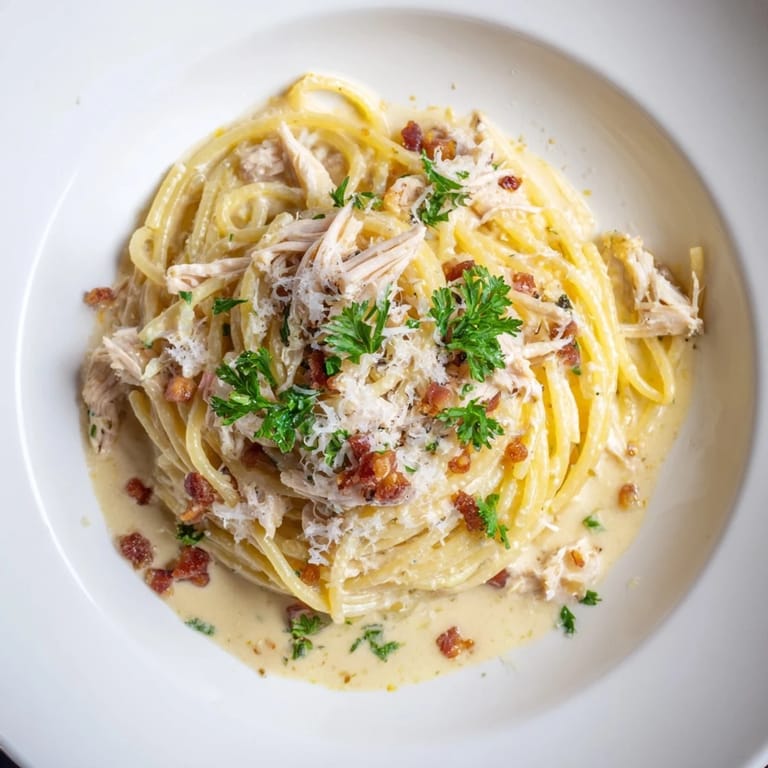
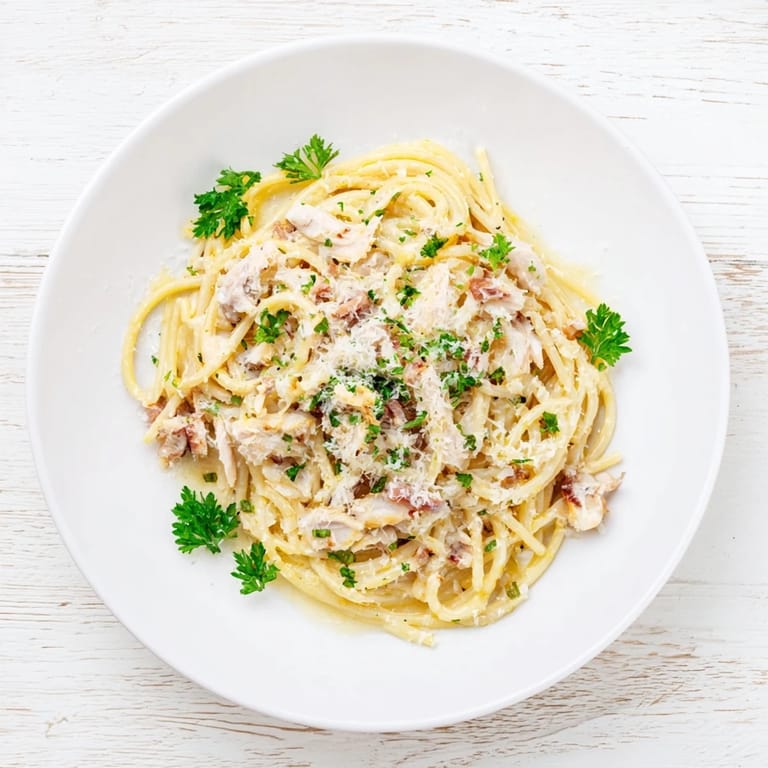
- Plate it up right away, topped with extra Parmesan and a sprinkle of parsley if you have it. Carbonara waits for no one, it's best enjoyed hot and freshly tossed.
 Save
Save One rainy Tuesday, I made this for myself after a long day and ate it straight from the skillet with a glass of cold white wine. No one was watching, no one was judging, and it was one of those quiet, perfect moments where food tastes better because you needed it. I realized then that this dish doesn't need a special occasion, it creates one just by being made.
How to Avoid Scrambled Eggs
The trick is all about temperature control and constant motion. Pull the skillet completely off the burner before you add the egg mixture, and use tongs or a pasta fork to toss continuously so the eggs coat the noodles evenly without hitting a hot spot. If you're really nervous, you can temper the eggs first by whisking in a spoonful of the hot pasta water before adding them to the pan. It takes practice, but once you get the feel for it, you'll wonder why you were ever scared.
Making It Your Own
This recipe is forgiving and loves a little improvisation. Swap the chicken for cooked shrimp, or leave out the meat entirely and add sautéed mushrooms and peas for a vegetarian twist. Try using bucatini instead of spaghetti for a fun textural change, or toss in some red pepper flakes with the garlic if you like a little heat. I've even made it with leftover turkey after Thanksgiving, and it disappeared faster than the original holiday meal.
Storage and Reheating Tips
Carbonara is best fresh, but leftovers can be saved in an airtight container in the fridge for up to two days. When you reheat, add a splash of milk, cream, or even just water to a skillet over low heat and gently warm the pasta, tossing constantly to bring the sauce back to life. The microwave works in a pinch, but use short bursts and stir in between to avoid drying it out.
- Store any extra Parmesan separately so it doesn't clump in the fridge.
- If the sauce breaks during reheating, whisk in a tiny bit of cream or pasta water to re-emulsify.
- Never freeze carbonara, the eggs and cheese don't recover well from freezing.
 Save
Save This dish has earned a permanent spot in my weeknight rotation, and I hope it does the same for you. There's a quiet magic in transforming simple ingredients into something this comforting and delicious.
Recipe FAQs
- → Can I make this without cream?
Absolutely. Traditional carbonara relies solely on eggs to create the creamy sauce. The eggs emulsify with the pasta starch and reserved pasta water to achieve a silky texture. Cream is entirely optional and used only for added richness.
- → What type of pasta works best?
Spaghetti and fettuccine are ideal choices, as their flat or round surfaces hold the sauce beautifully. Both work equally well, so choose based on your preference. Cook until al dente for the best texture.
- → How do I prevent the eggs from scrambling?
The key is tossing the hot pasta with the egg mixture off the heat. The residual heat cooks the eggs gently without scrambling them. Continuous tossing ensures even cooking and a creamy consistency. Add pasta water gradually if needed to cool the mixture slightly.
- → Can I substitute the chicken?
Yes. Ground turkey, shrimp, or additional pancetta work wonderfully. You can also make a vegetarian version using mushrooms or sun-dried tomatoes as the protein base while maintaining the classic carbonara sauce.
- → What wine pairs well with this dish?
Crisp white wines complement the creamy, savory profile beautifully. Pinot Grigio and Sauvignon Blanc are excellent choices. The acidity cuts through the richness and cleanses the palate between bites.
- → How much pasta water should I reserve?
Reserve about 120 ml (½ cup) of salted pasta water before draining. This starchy liquid is crucial for achieving the perfect sauce consistency. Add it gradually while tossing to reach your desired creaminess.