 Save
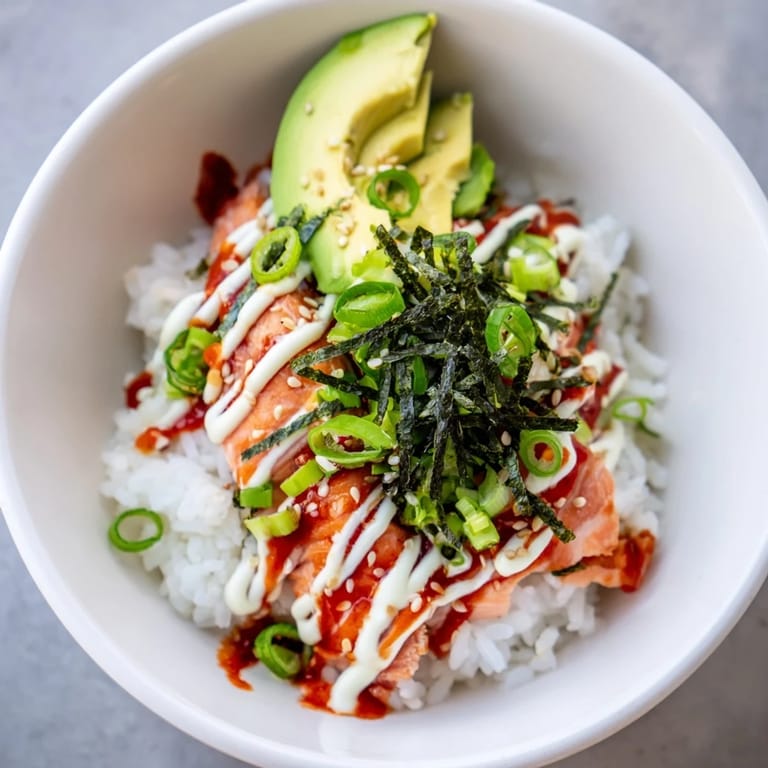
Save I discovered this bowl on my phone at midnight, scrolling mindlessly, and something about its simplicity struck me. The next day I had leftover salmon from dinner and a container of rice in the fridge, so I decided to try it. Those first few bites—the way the sesame oil hit my nose as I stirred everything together, how the warm rice softened the cool avocado—I was hooked. It felt less like cooking and more like assembling something that was always meant to taste this good.
A friend came over on a Tuesday evening, and I made this without thinking much of it. She watched me layer the rice and salmon, asked why I was adding mayonnaise to fish, and then took one bite and went quiet. That silence meant everything. Now whenever she texts asking what I'm making for dinner, she's really asking if it's this bowl.
Ingredients
- Cooked salmon fillet (about 170 g / 6 oz): Use whatever you have—fresh cooked, leftover from dinner, even canned in a pinch. The flaking is what matters, as it lets the heat and seasoning get into every piece.
- Cooked white rice, 2 cups (preferably leftover, chilled): Cold rice actually works best because it doesn't turn mushy when microwaved. If your rice is freshly made, spread it on a plate to cool first.
- Soy sauce, 1 tablespoon: This is your salt and umami base; don't skip it or use less or the bowl tastes flat.
- Sesame oil, 1 teaspoon: A little goes a long way—this is the smell that makes your kitchen feel intentional, not rushed.
- Japanese mayonnaise (Kewpie), 1 tablespoon: The egg yolks and MSG in Kewpie create richness regular mayo can't touch; it's worth buying the real stuff.
- Sriracha or chili sauce, 1 teaspoon (optional): Add this if you like heat that lingers pleasantly, not the kind that takes over the whole bowl.
- Avocado, 1 sliced: Wait to slice until just before eating so it doesn't brown, or squeeze a little lemon on the cut side.
- Roasted seaweed (nori), 1 sheet cut into squares: These become your edible spoons for scooping, and they add a briny note that brings everything into focus.
- Toasted sesame seeds, 1 teaspoon: Buy them already toasted if you can—toasting at home is easy to forget and also easy to burn.
- Spring onions, 2 thinly sliced: The sharp green bite balances the richness; don't leave these out even if you think you don't like them.
- Pickled ginger (optional): This is your palate cleanser between bites, especially welcome if you add sriracha.
- Lemon or lime wedges (optional): A squeeze at the end brightens everything, even if you don't think you need it.
Tired of Takeout? 🥡
Get 10 meals you can make faster than delivery arrives. Seriously.
One email. No spam. Unsubscribe anytime.
Instructions
- Flake your salmon:
- Place the cooked salmon in a microwave-safe bowl and use a fork to break it into bite-sized pieces. Don't make it paste—you want texture, small flakes that stay distinct.
- Layer in the rice:
- Pile the cooked rice on top of the salmon. If it's leftover rice and feels dry, sprinkle it with just a bit of water so it hydrates as it heats.
- Warm everything together:
- Cover the bowl loosely with a microwave-safe plate or plastic wrap and microwave on high for 1 to 2 minutes. You're heating through, not cooking, so watch for steam.
- Season and mix:
- Pour the soy sauce and sesame oil over everything and stir gently but thoroughly. This is when the bowl starts smelling like the real thing.
- Dress with creaminess:
- Drizzle the Japanese mayonnaise all over, then add sriracha if you're using it. Mix again so the seasonings cling to the rice and salmon.
- Build your toppings:
- Arrange the avocado slices on top, scatter the spring onions and sesame seeds, add pickled ginger if you have it. This is where the bowl becomes visually worth eating.
- Serve with intention:
- Place nori sheets and lemon wedges on the side. Use the seaweed to scoop the rice mixture for each bite, which keeps your hands clean and makes the whole thing feel intentional.
 Save
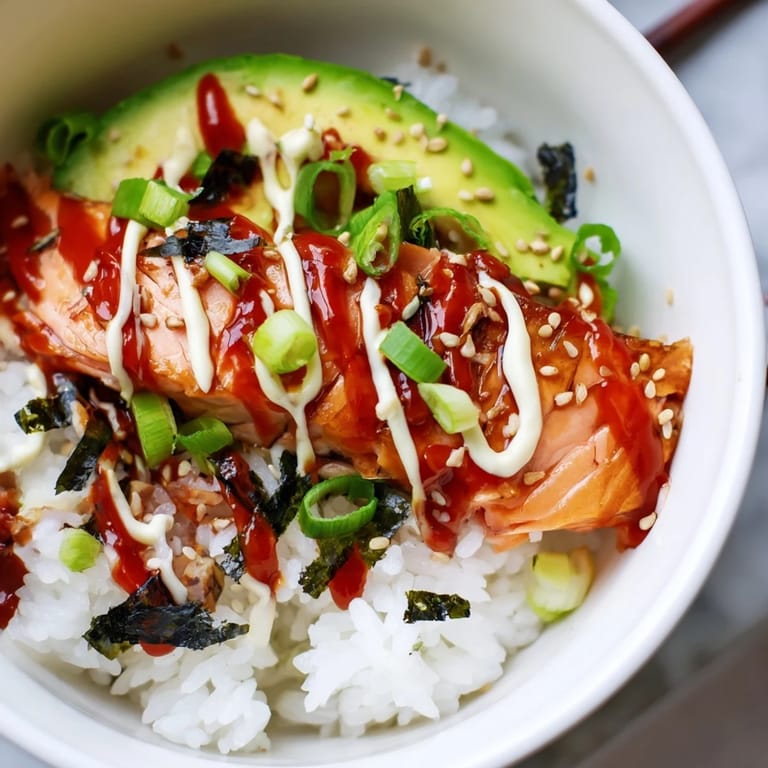
Save There's a moment right after you mix in the sesame oil when you lean over the bowl and the smell hits you, and suddenly you remember why you started cooking in the first place. It's not complicated or fancy, but it's unmistakably good, and that feeling matters as much as the taste.
Why Cold Rice is Your Secret Weapon
I learned this the hard way by using warm rice once and watching it turn into something closer to risotto. Cold rice has structure; it holds the seasoning on the outside instead of absorbing it all at once and going soft. If you're making this bowl on a whim and your rice is fresh, just spread it on a plate for five minutes while you prep everything else. That small pause makes the difference between a bowl that tastes intentional and one that tastes like you're stretching leftovers.
The Nori Scoop Technique
Using the seaweed as an edible spoon isn't just cute; it changes how you taste the bowl. Each bite has rice, salmon, and that briny seaweed hit all at once, so the flavors layer instead of sitting separately. Plus your hands stay clean, and there's something satisfying about using your food as a tool to eat more food. It sounds small, but once you try it this way, using a regular spoon feels wrong.
Making It Your Own
The beauty of this bowl is that it handles substitutions without losing its soul. Brown rice works if you want more fiber, tamari swaps in for soy sauce if you need gluten-free, and kimchi or shredded carrots add crunch and vegetables if you have them. The base—flaked salmon, warm rice, good mayonnaise, sesame oil—is what makes it work, so build around that.
- Smoked salmon or even canned salmon tastes completely different but equally delicious, so use what's in your pantry.
- Thinly sliced cucumber adds crunch without heaviness if avocado is out of season or not in your budget.
- A drizzle of extra sesame oil at the very end, after all the toppings are on, reminds you why you fell in love with this bowl in the first place.
 Save
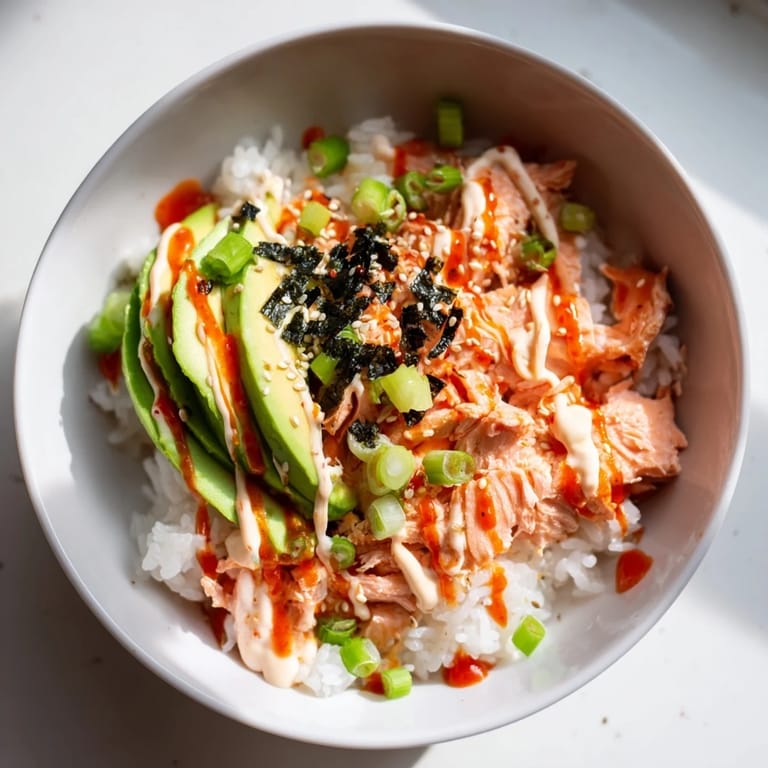
Save This bowl became my go-to when I needed something that felt like I'd made an effort but didn't actually demand much from me. That's when food gets dangerous in the best way—when it's so good and so easy you make it twice in one week.
Recipe FAQs
- → Can I use brown rice instead of white rice?
Yes, brown rice can be used as a nutritious alternative, adding fiber and a nuttier flavor.
- → Is the dish suitable for gluten-free diets?
To make it gluten-free, substitute soy sauce with tamari or another gluten-free alternative.
- → How can I add more vegetables to this bowl?
Try incorporating kimchi, shredded carrots, or cucumber slices for extra freshness and crunch.
- → Can I use smoked or canned salmon instead?
Yes, smoked or canned salmon can be convenient alternatives if fresh cooked salmon isn't available.
- → What toppings enhance the flavor and texture?
Avocado, toasted sesame seeds, spring onions, pickled ginger, and roasted seaweed sheets add creaminess, crunch, and umami.
- → How long does it take to prepare this dish?
Preparation and cooking time combined take about 25 minutes for a quick and satisfying meal.