 Save
Save There's something wonderfully surprising about cottage cheese in pasta sauce—it sounds odd until you taste it, creamy and rich without the heaviness of cream. I discovered this by accident one weeknight when I had cottage cheese taking up prime real estate in my fridge and a craving for something comforting but not indulgent. Ten minutes later, I had a sauce that tasted like I'd been simmering garlic and Parmesan for hours, except my whole dinner was ready before I finished setting the table.
I made this for my friend Sarah who was trying to eat more protein without boring herself to tears, and watching her face light up when I told her the secret ingredient was priceless. She had seconds before asking for the recipe, and now it's her go-to weeknight dinner when she's too tired to overthink cooking.
Ingredients
- Whole wheat or regular pasta (12 oz): The shape matters less than you'd think, but penne and fusilli trap the sauce beautifully in all their curves and ridges.
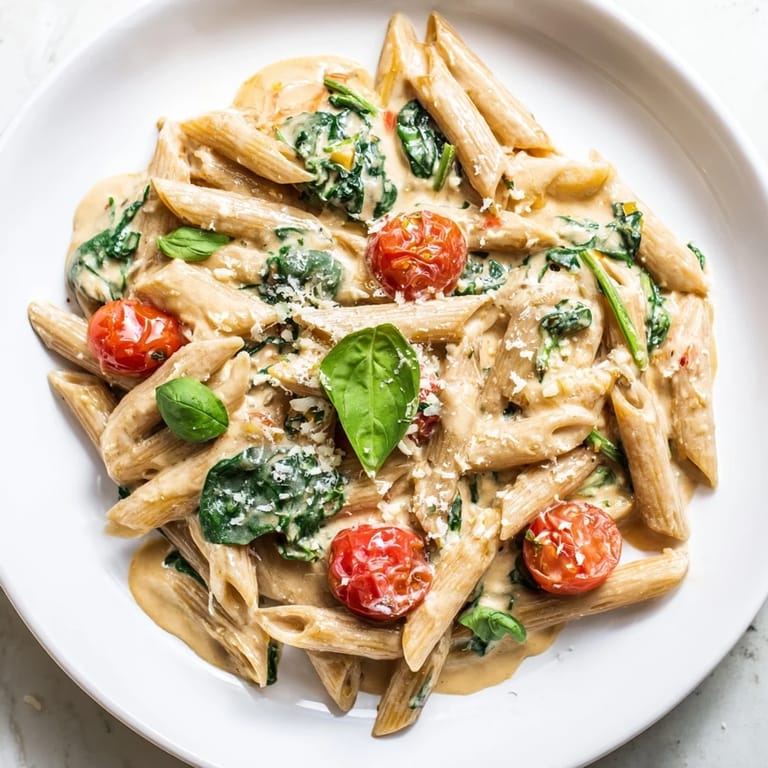
- Low-fat cottage cheese (1 1/2 cups): This is your secret weapon—it blends silky smooth and brings serious protein without any chalky texture if you blend it properly.
- Milk (1/2 cup): Dairy or plant-based both work; this loosens the cottage cheese into something pourable and sauce-like.
- Grated Parmesan cheese (1/4 cup): Fresh grated makes a real difference here, adding that nutty depth that makes people wonder what you're doing.
- Garlic (2 cloves): Raw garlic blended into the sauce becomes sweet and mellow, not harsh or overpowering.
- Extra-virgin olive oil (2 tbsp): This carries flavor and rounds out the texture, making the whole thing feel luxurious.
- Salt and black pepper: Taste as you go—you might need more than you think since blending seems to soften salt's presence.
- Red pepper flakes (optional): A whisper of heat lifts everything else and cuts through the richness in the best way.
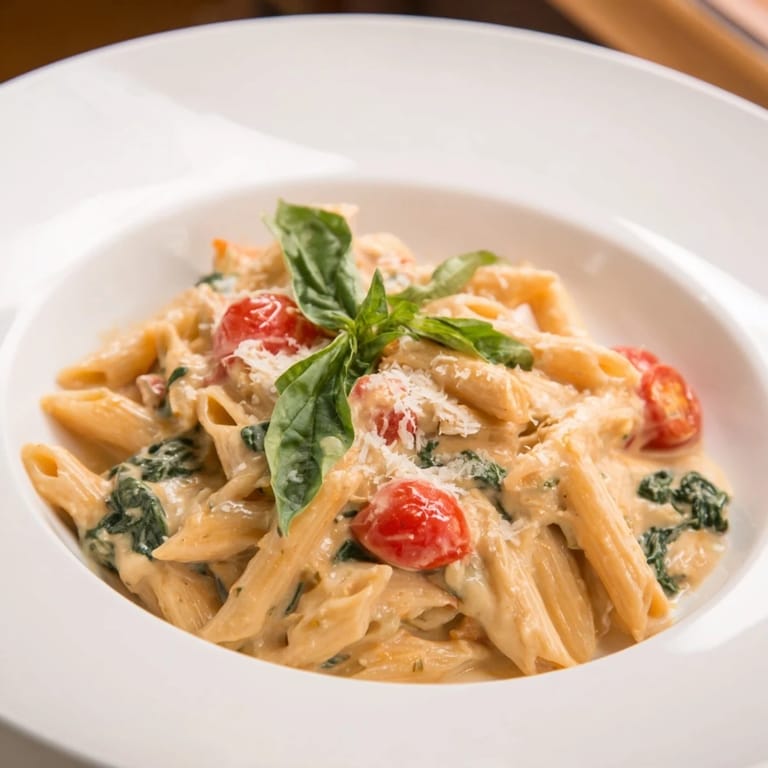
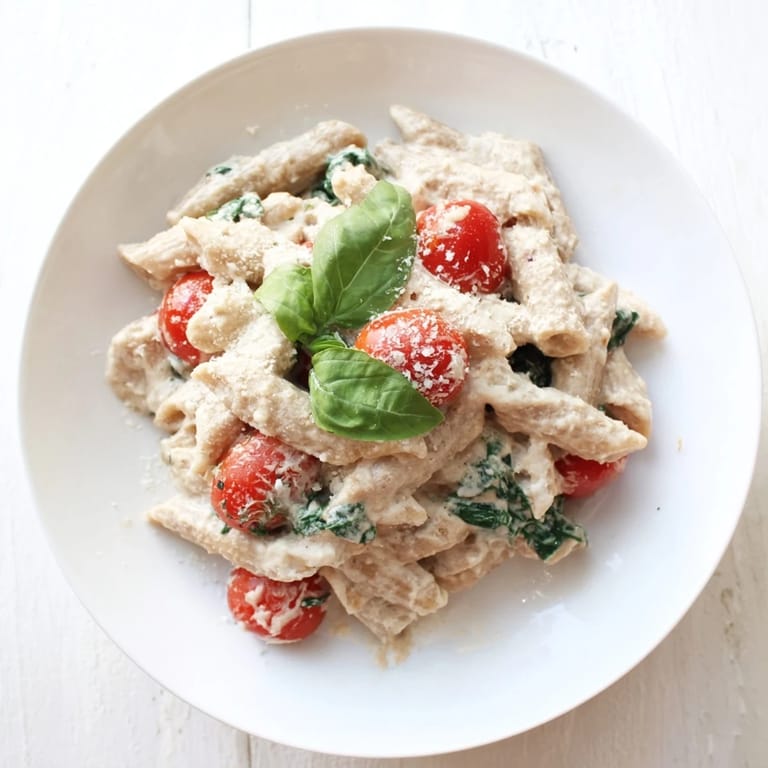
- Baby spinach (2 cups) and cherry tomatoes (1/2 cup): These add color and texture; wilted spinach becomes almost creamy, while tomatoes burst with brightness.
- Fresh basil and extra Parmesan for garnish: Don't skip this—it's the difference between good and unforgettable.
Tired of Takeout? 🥡
Get 10 meals you can make faster than delivery arrives. Seriously.
One email. No spam. Unsubscribe anytime.
Instructions
- Boil your pasta with intention:
- Salt the water generously so it tastes like the sea, and don't stray far—al dente is everything here. Before you drain, rescue that starchy water; it's liquid gold for loosening your sauce later.
- Blend until impossibly smooth:
- Cottage cheese can be grainy if you don't blend long enough, so give it a solid minute or two until the sauce looks almost glossy. Taste it raw—you want to know what you're building before heat gets involved.
- Marry pasta and sauce gently:
- Low heat is your friend; you're coating, not cooking. Add pasta water slowly, watching the sauce transform into something that clings to each piece without drowning it.
- Wilt the vegetables with care:
- A minute or two is all spinach needs; longer and it turns gray and sullen. Tomatoes should soften but still hold their shape, bursting with juice when you bite.
- Finish and serve right away:
- This sauce is best eaten immediately while it's creamy and warm, garnished generously with basil and Parmesan so every bite feels intentional.
 Save
Save The first time my mom tried this, she called me suspicious about the cottage cheese and skeptical about the whole plan. By the middle of her plate, she was quiet in that way that means something's really working, and by the end she was asking if I'd make it again before she left. It became our shorthand for a meal that looks simple but somehow feels like you're taking care of someone you love.
Why This Works as Real Food
This recipe respects what cottage cheese actually is—tangy, mild, and full of casein protein that keeps you satisfied. Blending it removes the textural baggage that makes some people hesitant, and Parmesan anchors everything in savory familiarity. You're not hiding cottage cheese or pretending it's something fancy; you're using it exactly as it wants to be used, and that honesty makes the whole dish feel grounded instead of gimmicky.
Customizing Without Losing the Plot
The beauty of this sauce is that it plays well with variations without falling apart. Arugula brings a peppery edge that makes everything taste sharper, kale adds heartiness and texture, and peas bring sweetness that balances the garlic. You can stir in white beans for more protein, toss in roasted mushrooms for umami, or add sun-dried tomatoes for concentrated brightness. The cottage cheese base is forgiving enough to support whatever vegetables you're excited about.
Small Details That Actually Matter
Reserve your pasta water before you drain—I learned this the hard way by draining first and then trying to make the sauce work, which taught me that starchy water is what transforms everything from thick to silken. Use a blender instead of a food processor if you can; it creates a smoother, silkier sauce that feels almost decadent. And never rush the blending step; thirty seconds feels like enough until you taste the difference a full minute makes.
- Grate Parmesan fresh, not from a shaker, unless you enjoy the taste of anti-caking agents.
- Serve immediately in warm bowls so the sauce stays creamy instead of separating as it cools.
- Leftover sauce thickens significantly in the fridge but loosens back up beautifully with a splash of milk and gentle reheating.
 Save
Save This pasta reminds me that sometimes the most satisfying meals come from working with what you have instead of following what you think you're supposed to make. It's quick enough for a random Tuesday and thoughtful enough to feel like you actually tried, which might be the definition of real cooking.
Recipe FAQs
- → What pasta types work best with this dish?
Whole wheat varieties like penne or fusilli hold the creamy sauce well, but regular pasta also works fine.
- → Can I substitute the cottage cheese with something else?
Ricotta or a soft cheese blend can be used, but cottage cheese provides a unique protein boost and creaminess.
- → How to adjust the sauce consistency?
Adding reserved pasta water gradually helps thin the sauce until it coats the pasta smoothly without being too thick.
- → Are there options for added vegetables?
Spinach and cherry tomatoes are recommended, but arugula, kale, or peas can be swapped in for variety.
- → How to store leftovers for best freshness?
Keep leftovers refrigerated in an airtight container and reheat gently to preserve the sauce’s texture and flavor.
- → Is this suitable for gluten-free diets?
Yes, by using gluten-free pasta, this dish can accommodate gluten-sensitive diets without sacrificing taste.