 Save
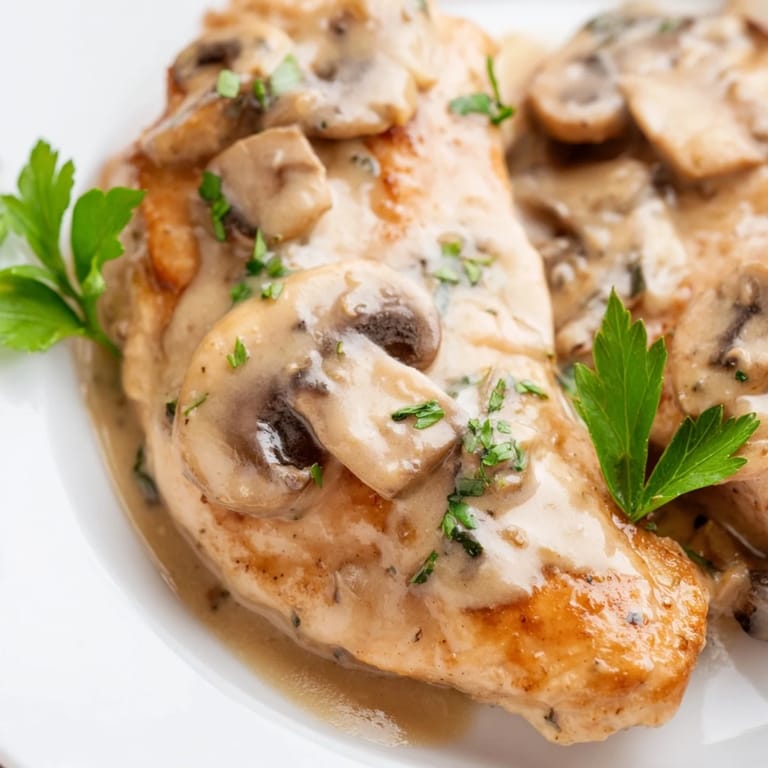
Save My neighbor used to make this every Sunday, and the smell of butter and Marsala would drift through the hallway around five o'clock. One evening she invited me in, handed me a wooden spoon, and told me to stir while she pounded the chicken. I had no idea something this elegant could come together in under an hour. The wine reduced into something dark and glossy, the mushrooms soaked up every bit of flavor, and I understood why she never ordered it at restaurants anymore.
I made this for my in-laws the first time they visited our new apartment. The kitchen was tiny, the stove uneven, and I was convinced I'd mess it up. But when I set the plates down and watched them twirl their forks into the creamy sauce, my father-in-law looked up and said it reminded him of a place in Florence. I didn't tell him I'd never been, just smiled and passed the Parmesan.
Ingredients
- Boneless, skinless chicken breasts: Pounding them to an even thickness is the secret to getting them golden without drying out, and it only takes a minute with a rolling pin.
- All-purpose flour: This creates a light crust that helps the sauce cling to the chicken and adds body to the pan drippings.
- Olive oil and unsalted butter: The combination gives you a high smoke point and rich flavor without burning, plus butter makes everything taste like it came from a bistro.
- Cremini or white mushrooms: Slice them thick so they hold their shape and develop deep caramelized edges when they hit the hot pan.
- Garlic cloves: Add them after the mushrooms so they get fragrant without turning bitter or burnt.
- Dry Marsala wine: Use the real stuff from the wine aisle, not cooking Marsala, because the flavor is sweeter and more complex.
- Low-sodium chicken broth: This keeps the sauce from getting too salty and lets you control the seasoning at the end.
- Heavy cream: It smooths out the wine and broth into something velvety that coats the back of a spoon.
- Dried thyme: A little goes a long way and brings an earthy warmth that balances the richness of the cream.
- Fettuccine or spaghetti: Cook it just shy of done because it will soak up some sauce while you plate everything.
- Fresh parsley: Chop it right before serving so it stays bright green and adds a fresh contrast to the deep flavors.
- Freshly grated Parmesan cheese: Optional, but a few shavings on top make it feel finished and add a salty bite.
Tired of Takeout? 🥡
Get 10 meals you can make faster than delivery arrives. Seriously.
One email. No spam. Unsubscribe anytime.
Instructions
- Boil the pasta:
- Bring a large pot of salted water to a rolling boil and cook your pasta until al dente, then drain and set it aside. The starchy water can be saved to loosen the sauce later if it gets too thick.
- Pound the chicken:
- Place the chicken breasts between two sheets of plastic wrap and use a meat mallet or rolling pin to gently pound them to an even half-inch thickness. This ensures they cook evenly and stay tender instead of drying out on the edges.
- Dredge in flour:
- Mix the flour, salt, and pepper in a shallow dish, then press each chicken breast into the mixture and shake off any excess. The coating should be light and even, just enough to create a golden crust.
- Sear the chicken:
- Heat the olive oil and butter in a large skillet over medium-high heat until shimmering, then add the chicken and cook for four to five minutes per side until golden brown. Transfer the chicken to a plate and cover it loosely with foil to keep it warm.
- Sauté the mushrooms:
- Add the remaining butter to the same skillet and toss in the sliced mushrooms, stirring occasionally until they release their moisture and turn a deep golden brown. Add the minced garlic and cook for thirty seconds until it smells toasty and fragrant.
- Deglaze with Marsala:
- Pour in the Marsala wine and use a wooden spoon to scrape up all the browned bits stuck to the bottom of the pan. Let it simmer for two minutes until it reduces slightly and the alcohol smell mellows out.
- Build the sauce:
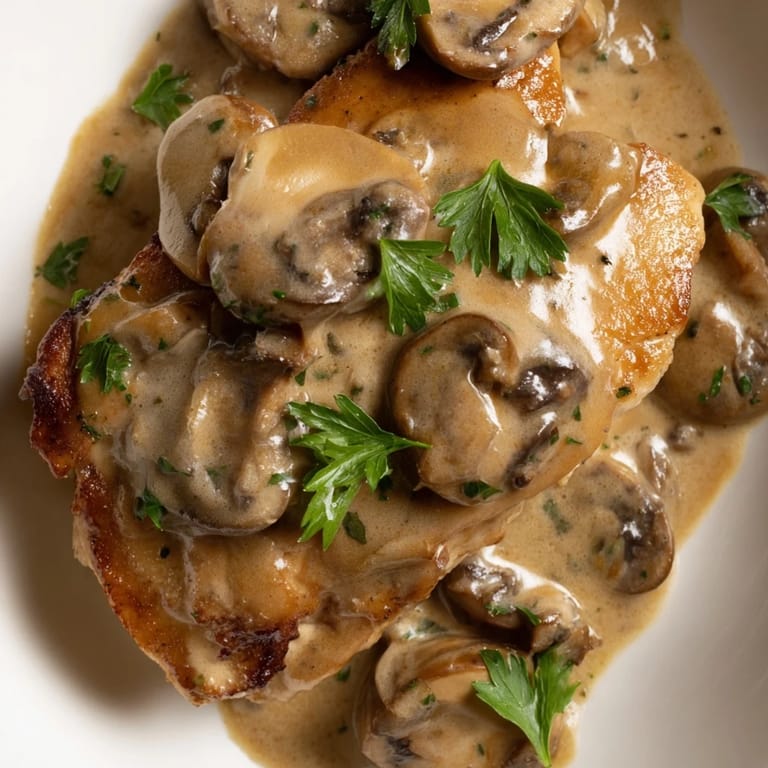
- Stir in the chicken broth, heavy cream, and thyme, then let everything simmer together for three to four minutes until the sauce thickens enough to coat the back of a spoon. Taste it and adjust the salt and pepper to your liking.
- Finish the chicken:
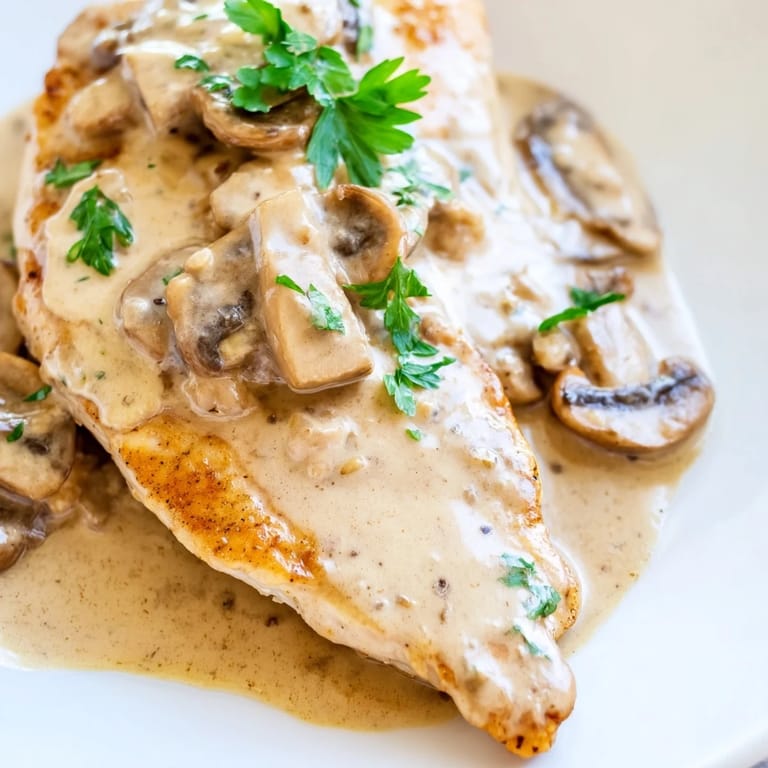
- Return the chicken and any juices from the plate back into the skillet, spooning the sauce over the top. Let it simmer gently for two to three minutes so the chicken heats through and absorbs some of that rich flavor.
- Serve:
- Place a generous tangle of pasta on each plate, top with a piece of chicken, and ladle the mushroom sauce over everything. Finish with a sprinkle of fresh parsley and a few shavings of Parmesan if you have it.
 Save
Save The first time I plated this dish, I drizzled the sauce in a careful circle and felt a little ridiculous. Then my husband walked in, took one bite, and asked if we could have it every week. It stopped being about presentation and started being about the quiet ritual of browning mushrooms and stirring cream, the kind of cooking that makes you feel capable and calm at the same time.
What to Serve Alongside
A simple arugula salad with lemon and olive oil cuts through the richness without competing for attention. Garlic bread is always a good idea if you want something to soak up the extra sauce, and roasted green beans or asparagus add a crisp, bright contrast. I've also served it with a glass of the same Marsala I cooked with, and it felt like the meal came full circle.
How to Store and Reheat
Let everything cool completely before transferring it to an airtight container, and it will keep in the fridge for up to three days. Reheat gently in a skillet over low heat with a splash of chicken broth or cream to bring the sauce back to life. The pasta may soak up some of the liquid overnight, but a little extra moisture while reheating fixes that easily.
Ways to Make It Your Own
Some people swap the chicken breasts for boneless thighs, which stay juicier and have more flavor if you're willing to add a few extra minutes to the cook time. A splash of balsamic vinegar stirred into the sauce at the end adds a subtle tang that plays really well with the sweetness of the Marsala. If you want to make it gluten-free, use a gluten-free flour blend for dredging and swap in your favorite gluten-free pasta.
- Try adding a handful of baby spinach to the sauce in the last minute for color and a little extra nutrition.
- If you love garlic, double the amount and let it cook a bit longer with the mushrooms.
- For a lighter version, replace the heavy cream with half-and-half, though the sauce will be thinner and less velvety.
 Save
Save This is the kind of recipe that makes you feel like you know what you are doing in the kitchen, even on nights when everything else feels chaotic. It is forgiving, flexible, and always turns out better than you expect.
Recipe FAQs
- → What type of chicken is best for this dish?
Boneless, skinless chicken breasts work wonderfully and cook quickly. For a richer, more flavorful option, substitute boneless chicken thighs which have more fat and stay tender throughout cooking.
- → Can I make this without Marsala wine?
Yes, you can substitute with dry sherry, dry white wine, or a combination of chicken broth with a splash of balsamic vinegar for depth. The flavor profile will differ slightly but still be delicious.
- → How do I prevent the chicken from drying out?
Pound the chicken to an even thickness for uniform cooking, avoid overcooking (4-5 minutes per side is sufficient), and ensure you don't skip the step of returning the chicken to the sauce to heat through gently.
- → Is this dish gluten-free?
The traditional version contains wheat flour and regular pasta, but you can easily make it gluten-free by using gluten-free flour for dredging and gluten-free pasta instead. Always verify all product labels for hidden allergens.
- → What pasta pairs best with this sauce?
Fettuccine or spaghetti are traditional choices that capture the creamy sauce beautifully. Pappardelle, linguine, or even egg noodles work well and offer different textures for sauce cling.
- → Can I prepare this ahead of time?
Cook the chicken and sauce separately and refrigerate for up to two days. Reheat gently on the stovetop, adding a splash of broth if needed to restore the sauce consistency. Cook pasta fresh just before serving.