 Save
Save There's something about the sound of chicken sizzling that pulls me right back to my mom's kitchen on lazy Sunday afternoons. She'd pound those breasts flat with a meat mallet, and I'd watch the transformation from thick to tender with pure fascination. Years later, I realized I could skip the stovetop mess entirely and bake them golden in the oven, keeping all that crispy, cheesy goodness without the splatter. This recipe came from one of those moments where I was tired of greasy hands and wanted something just as satisfying but easier to pull off on a weeknight.
I made this for my sister's impromptu dinner party once, and she brought a friend who claimed she didn't eat chicken cutlets. But after one bite, she asked for the recipe and the contact info of my butcher. That moment told me everything I needed to know about how forgiving and delicious this dish really is.
Ingredients
- Chicken breasts: Four boneless, skinless ones are ideal because they cook evenly when pounded thin, and you want them to stay tender through that baking time.
- All-purpose flour: This creates the first sticky layer that helps everything else cling to the chicken like it's meant to be there.
- Eggs and milk: The egg mixture is your glue; the milk keeps it from getting too thick and stiff.
- Panko breadcrumbs: Forget regular breadcrumbs if you want that shatter factor; panko's larger flakes stay crispy longer.
- Parmesan cheese: Freshly grated makes all the difference because pre-grated versions have anti-caking agents that make them less golden and crispy.
- Garlic powder, Italian herbs, salt, and pepper: These live in the breading mixture, so every bite is seasoned all the way through, not just the outside.
- Olive oil: A light spray or drizzle prevents sticking and adds the crispiness you're chasing without turning this into a fried situation.
Tired of Takeout? 🥡
Get 10 meals you can make faster than delivery arrives. Seriously.
One email. No spam. Unsubscribe anytime.
Instructions
- Set up your station:
- Preheat your oven to 425°F and line a baking sheet with parchment paper, then give it a light oil spray. Having everything ready before you touch the chicken means you won't be fumbling around with wet hands and open oven doors.
- Butterfly and pound the chicken:
- Slice each breast horizontally to create thinner cutlets, then use your meat mallet to pound them to about half an inch thick. You'll feel the resistance, then suddenly they give way to the mallet, and that's when you know they're ready.
- Pat everything dry:
- Water is the enemy of crispiness, so take a moment with paper towels to remove any moisture from the chicken surface. This small step is why your chicken will actually crunch instead of steam.
- Assemble your breading station:
- Line up three shallow bowls: flour in the first, beaten eggs mixed with milk in the second, and panko-Parmesan mixture in the third. Arrange them left to right so you move naturally through the dredging process.
- Bread each cutlet:
- Dredge the chicken in flour, shake off the excess, dip it in the egg, then press firmly into the panko-Parmesan mix, making sure both sides get completely coated. The pressing motion matters more than you'd think; it helps everything stay put through the baking.
- Oil and bake:
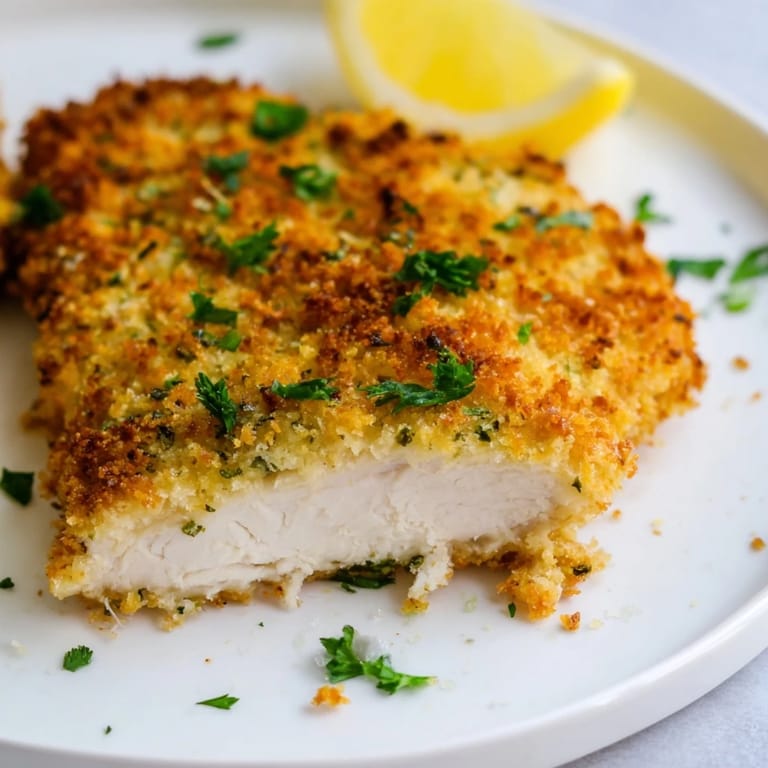
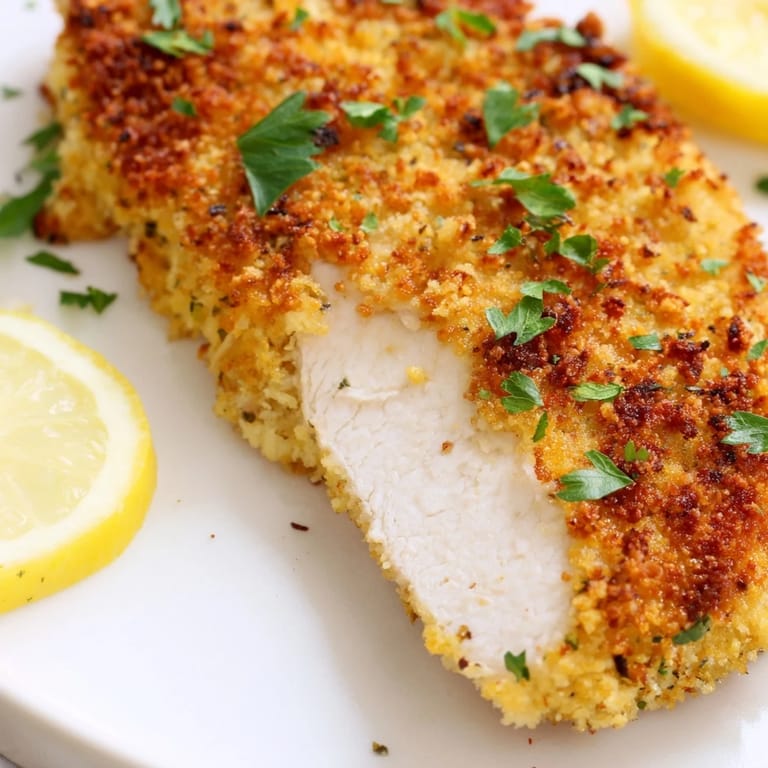
- Lay the breaded cutlets on your prepared sheet and give them a light spray or drizzle of olive oil, then slide them into the oven. Flip halfway through the 22 to 25 minute bake, and you'll see them turn from pale to golden to that shade of brown that makes your mouth water.
 Save
Save My daughter once asked why restaurant chicken tasted so good, and I realized it was because she'd only ever had overcooked, dry versions from other home cooks. The moment she bit into one of these, her whole face changed. She didn't ask questions anymore; she just asked when I was making them next.
The Breading Technique That Actually Works
The secret isn't fancy, but it's real: organization and pressure. When you move methodically through the flour, egg, and panko stations without hesitation, the coating stays put and crisps evenly. Many home cooks rush the process or don't press hard enough into the panko, and that's why their chicken turns out patchy. Take five extra seconds per cutlet to press down firmly, especially on the edges, and you'll wonder why you didn't always do it this way.
Why Baking Beats Frying
Frying chicken cutlets is faster, yes, but baking gives you something special: consistent, hands-off results without watching oil temperature or worrying about splatters. You also taste the Parmesan and herbs more clearly because they aren't competing with deep-fry oil flavor. Plus, you can actually stand near the oven without your face getting hot, which matters on a warm evening or when you're not in the mood for a sauna in your kitchen.
Serving and Storage Wisdom
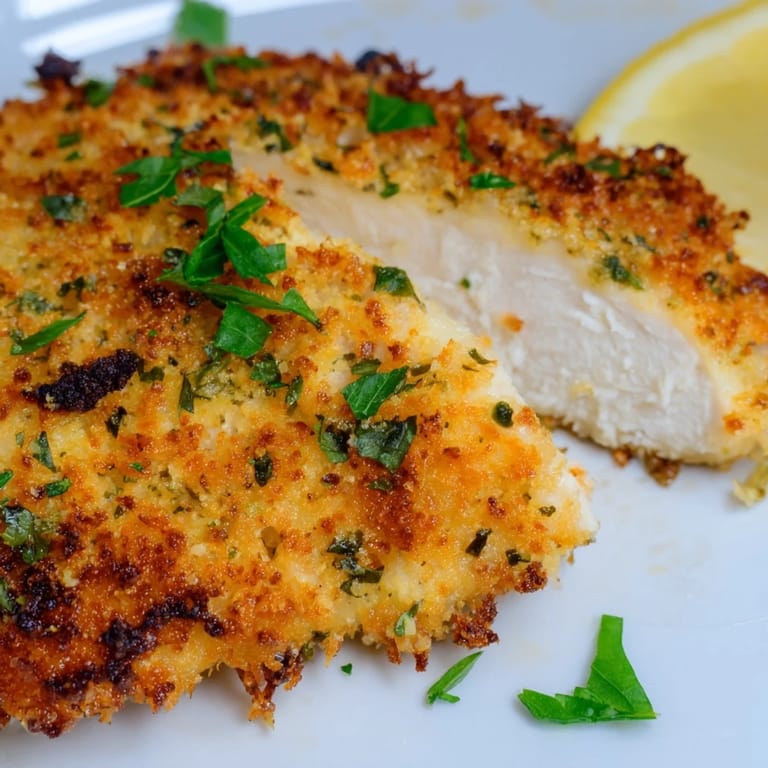
Serve these hot or at room temperature, though hot is when the crust is at its crispiest and the inside still steams slightly when you cut into it. They pair beautifully with a simple arugula salad, buttered pasta, or roasted cherry tomatoes, and lemon wedges make them sing if you're in the mood for brightness. Leftovers keep in the fridge for three days and are incredible sliced cold on a sandwich the next day, though if they survive that long, you're stronger than I am.
- Fresh parsley garnish isn't just pretty; it adds a peppery freshness that cuts through the richness of the Parmesan.
- A squeeze of lemon right before eating lifts the whole dish and makes you taste every layer of seasoning.
- If you're cooking for a crowd, you can bread everything ahead and refrigerate uncovered for a couple hours, which saves stress right before serving.
 Save
Save This dish has become my go-to when I want to impress without stress, and that's worth everything to me in the kitchen. Once you nail it once, it becomes something you make again and again, each time tasting like both comfort and confidence.
Recipe FAQs
- → How do you keep chicken cutlets crispy when baking?
Using panko breadcrumbs combined with Parmesan cheese and spraying or drizzling olive oil helps achieve a crispy crust while baking.
- → Can chicken thighs be used instead of breasts?
Yes, boneless, skinless chicken thighs work well and provide extra juiciness and flavor.
- → What herbs enhance the Parmesan coating?
Dried Italian herbs such as basil and oregano add aromatic depth to the crispy crust.
- → Is it necessary to butterfly and pound the chicken breasts?
Butterflying and pounding to even thickness ensures quick, even cooking and tender texture.
- → What is the best way to serve these chicken cutlets?
They pair nicely with lemon wedges, fresh parsley, and sides like salad, pasta, or roasted vegetables.
- → Can I prepare the breading in advance?
Yes, mix the breadcrumb and Parmesan coating ahead of time and store in an airtight container for convenience.