 Save
Save There's something almost meditative about the sizzle of falafel hitting hot oil—that moment when you know the next few minutes will deliver something genuinely delicious. I stumbled onto making falafel from scratch during a lazy Saturday afternoon when I wanted lunch but didn't want to leave the house, and what started as improvisation became a ritual I return to whenever I need something warm, satisfying, and honest.
I made these for friends who'd just moved into the neighborhood, and the second they bit into that warm pita pocket, I saw their shoulders relax—food has this quiet power to make people feel welcome, and watching them go back for seconds told me everything I needed to know about whether this recipe was worth keeping.
Ingredients
- Dried chickpeas (1 ½ cups, soaked overnight): Don't use canned here—they're too wet and will make your falafel dense instead of fluffy, and you'll notice the difference immediately.
- Fresh parsley and cilantro (½ cup each): These aren't just garnish; they're the soul of falafel, giving it that bright, earthy character that makes people ask what the secret ingredient is.
- Ground cumin and coriander (1 tsp each): Toast them lightly in a dry pan beforehand if you have time—it deepens their warmth and makes the whole dish sing differently.
- Baking powder (½ tsp): This is the trick to getting that light, almost cloud-like interior; skip it and you'll get hockey pucks.
- Tahini (½ cup): Quality matters here because it's the binding element of your sauce; cheap tahini tastes thin and bitter, while good tahini tastes nutty and rich.
- Pita bread (4 warmed): Warm them just before assembly so they're still pliable enough to hold everything without tearing.
- Fresh vegetables for assembly: Keep them crisp and cold—the temperature contrast between the warm falafel and cool lettuce is part of what makes this satisfying.
Tired of Takeout? 🥡
Get 10 meals you can make faster than delivery arrives. Seriously.
One email. No spam. Unsubscribe anytime.
Instructions
- Start with dry chickpeas:
- Drain your soaked chickpeas and pat them completely dry with a clean towel—any excess moisture will throw off your texture and make the mixture gummy instead of crumbly.
- Build your base:
- Pulse everything together in a food processor until it looks like coarse breadcrumbs that hold together when you squeeze it; this takes longer than you'd think, usually about a minute of pulsing, but it's worth it.
- Rest if you can:
- Thirty minutes in the fridge helps the mixture firm up and makes shaping easier, but honestly, if you're hungry, you can skip this step and shape with slightly damp hands instead.
- Get your oil ready:
- Heat 2 inches of vegetable oil to 350°F—you can tell it's ready when a tiny pinch of the mixture sizzles immediately; if it sinks, the oil's not hot enough yet.
- Shape and fry:
- Form walnut-sized balls with wet hands or a falafel scoop, then carefully lower them into the oil and fry for about 2 to 3 minutes per side until they're deep golden brown and sound hollow when you tap them with a spoon.
- Make your sauce:
- Whisk tahini with lemon juice, garlic, and salt, then add cold water one tablespoon at a time until it reaches the consistency of heavy cream—too thick and it won't drizzle, too thin and it won't coat.
- Assemble with intention:
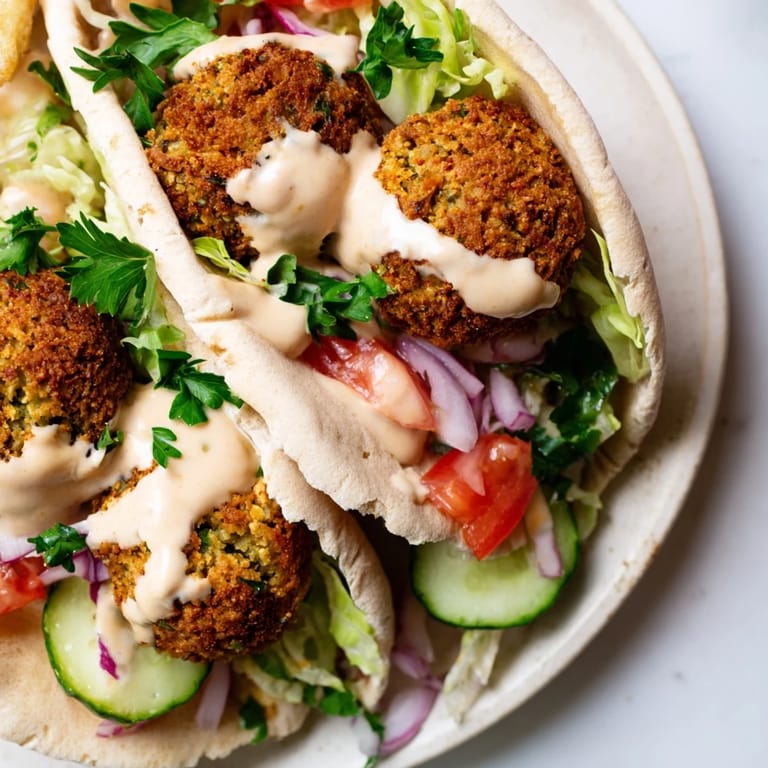
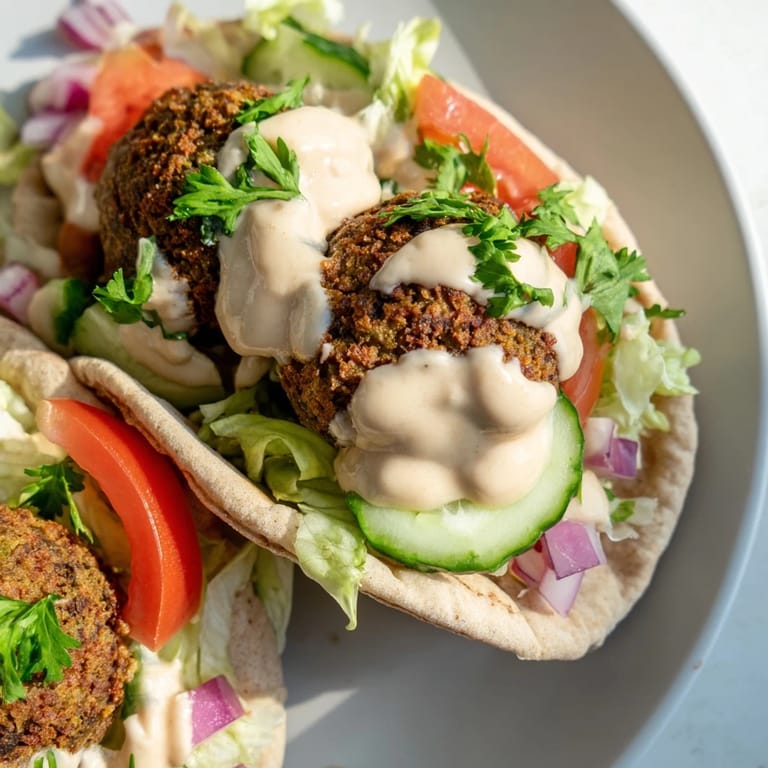
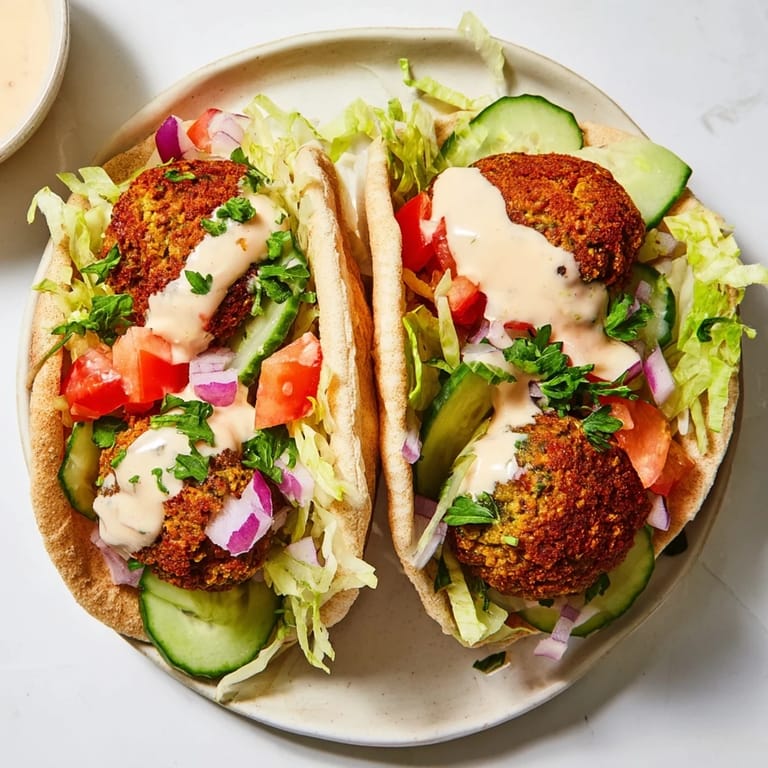
- Stuff each pita half with lettuce, tomatoes, cucumber, and red onion, nestle 3 or 4 warm falafel pieces in, then drizzle generously with tahini sauce and finish with fresh parsley.
 Save
Save There was a moment during a weeknight dinner when my eight-year-old, who usually eats three things total, took a bite and asked for another—not because I forced it, but because falafel has this way of sneaking past people's defenses with its warmth and texture and honesty. That's when I realized this recipe wasn't just lunch; it was a small act of care that happened to be delicious.
Variations That Work
The beauty of falafel is how forgiving it is if you want to make it your own. I've added minced jalapeño for heat, swapped cilantro for mint, and even pressed everything into a flat patty to bake instead of fry on nights when the kitchen felt too small for a skillet of hot oil. Each version tastes distinct but unmistakably like home.
Why This Matters
Making falafel from dried chickpeas instead of buying it pre-made changes everything—you control the texture, the seasoning, the crispness, and you end up with something that tastes almost aggressively better than the alternative. There's no store-bought version that compares to biting through that crunchy exterior into herbs and spice.
Make It Your Own
Once you've made this a few times, you'll develop instincts about what feels right—maybe you'll add pickled turnips because their sharpness brightens everything, or maybe you'll drizzle hot sauce because you like heat, or maybe you'll squeeze fresh lemon because that's how you learned it. The recipe is just a starting point.
- Add a handful of minced radishes to the mixture for peppery crunch, or layer sliced radishes into the pita for freshness.
- Make a yogurt-based sauce instead of tahini if you want something tangier, or do both and let people choose.
- Bake your falafel at 400°F for 20 to 25 minutes if frying feels like too much, turning halfway through for even browning.
 Save
Save Make this recipe once and it becomes part of your rotation—the kind of meal you come back to on ordinary Tuesdays because you know it will taste good and feel good to eat. That's the real mark of a recipe worth keeping.
Recipe FAQs
- → What ingredients are used to make falafel?
Falafel is made from soaked chickpeas combined with onion, garlic, fresh parsley, cilantro, cumin, coriander, and optional cayenne for a spicy kick.
- → How is the tahini sauce prepared?
Tahini sauce is whisked from sesame paste, lemon juice, minced garlic, salt, and cold water until smooth and creamy.
- → Can falafel be baked instead of fried?
Yes, falafel can be baked at 400°F (200°C) for 20–25 minutes, turning halfway for a lighter alternative to frying.
- → What are good additions for extra flavor?
Pickled turnips or sliced radishes add crunch and a tangy contrast to the falafel pita pocket.
- → Are there any common allergens in this dish?
This dish contains sesame from tahini and wheat from pita and flour; gluten-free alternatives can be used if necessary.