 Save
Save I discovered fattoush at a small family-run restaurant in Beirut where the owner insisted that the salad's soul lives in the contrast—crispy against tender, tangy against fresh. Years later, I realized he was right when my own kitchen filled with the scent of sumac and toasting pita, and suddenly this wasn't just a salad anymore but a small edible argument that somehow worked perfectly. The way the flavors layered made me understand why this dish has survived centuries of sharing it across tables.
I made this for a friend who'd been craving something from home, and watching her face light up when she tasted it reminded me that food is really about connection. She sat there crunching through a forkful, closing her eyes, and I knew I'd gotten it right when she asked for the recipe before even finishing her bowl.
Ingredients
- Mixed greens (4 cups): Use a blend of textures—the peppery snap of arugula, the sweetness of tender spinach, the crunch of romaine—because variety makes the salad interesting to eat.
- Cherry tomatoes (1 cup, halved): Halving them matters because it releases their juices into the dressing and makes each bite feel abundant.
- Cucumber (1, diced): English cucumbers have thin skins and fewer seeds, so you get more crunch and less watery disappointment.
- Bell pepper (1, diced): Red or yellow peppers have more natural sweetness than green ones, which balances the sumac's tartness.
- Radishes (4, thinly sliced): These give you a peppery bite and the kind of crunch that stays even after dressing touches them.
- Green onions (3, sliced): They bridge the gap between raw and cooked vegetables, adding a bright vegetal note that ties everything together.
- Fresh parsley and mint (1/4 cup each, chopped): Fresh herbs are what separate this from a regular salad—they make it taste like sunshine and earth at the same time.
- Pita bread (2): Fresh pita works best because it hasn't dried out yet and will crisp more evenly in the oven.
- Extra-virgin olive oil (1/4 cup plus 2 tbsp): The quality matters here since it's tasted directly; good oil makes the whole dressing sing.
- Fresh lemon juice (2 tbsp): Always fresh, never bottled—bottled tastes tired and metallic by comparison.
- Red wine vinegar (1 tbsp): This adds depth that plain lemon juice can't quite reach on its own.
- Ground sumac (1 tsp plus 1/2 tsp): Sumac is the secret ingredient that makes people ask what you did differently; it has a lemony tartness with no actual citric acid bite.
- Garlic (1 clove, minced): One clove is plenty—you want to taste it but not be knocked over by it.
- Sea salt and black pepper: Taste as you go because salt levels matter more in a raw salad than anywhere else.
Tired of Takeout? 🥡
Get 10 meals you can make faster than delivery arrives. Seriously.
One email. No spam. Unsubscribe anytime.
Instructions
- Toast your pita until it shatters:
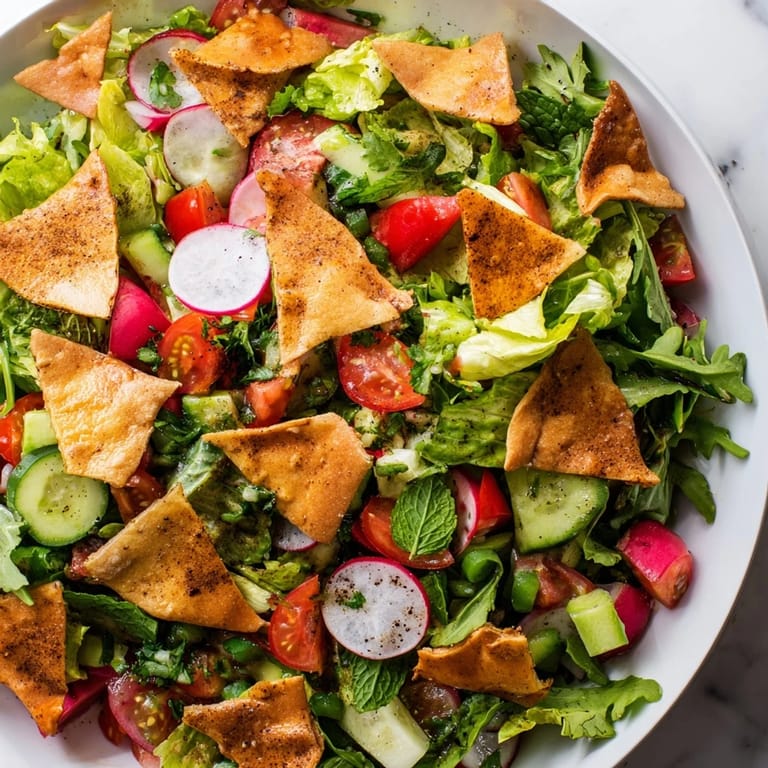
- Preheat your oven to 375°F and toss your pita pieces with olive oil, salt, and sumac, making sure each piece gets coated. Spread them in a single layer on a baking sheet and bake for eight to ten minutes, turning halfway through—you'll know they're ready when they're golden and you can break one cleanly between your fingers.
- Build the dressing with intention:
- In a small bowl, whisk together the olive oil, lemon juice, vinegar, sumac, minced garlic, salt, and pepper until it looks emulsified and tastes bright enough to make your mouth water a little. Taste it plain before you add it to the salad so you know exactly what you're bringing to the table.
- Compose your greens:
- In a large bowl, combine all your vegetables and herbs—the greens, tomatoes, cucumber, bell pepper, radishes, green onions, parsley, and mint. This is where the salad gets its personality, so don't rush it.
- Dress it gently:
- Drizzle the dressing over the salad and toss with your hands or salad servers until every leaf is touched by the dressing but nothing is bruised or broken. The idea is to coat everything without turning it into mush.
- Crown it with crunch:
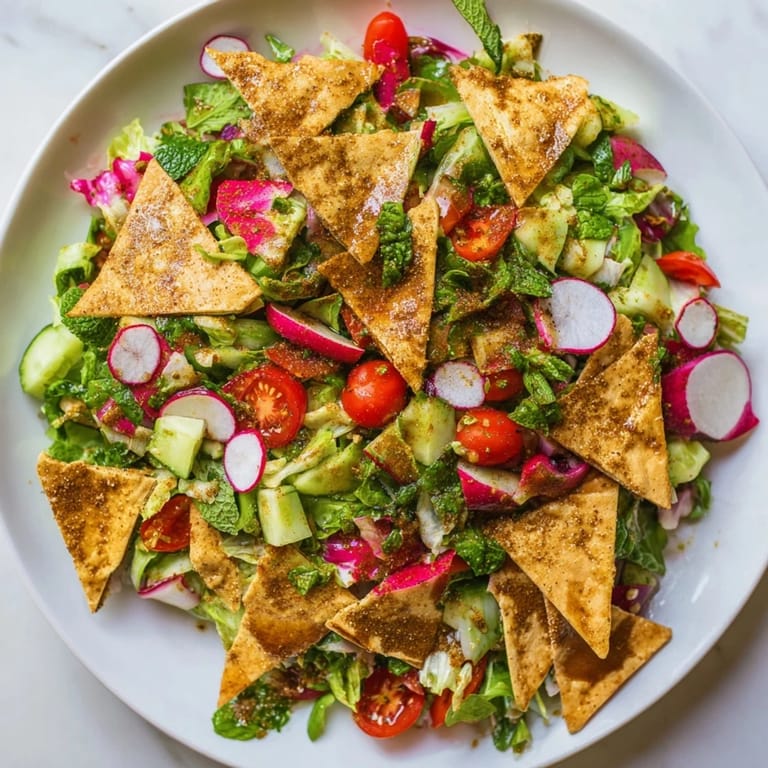
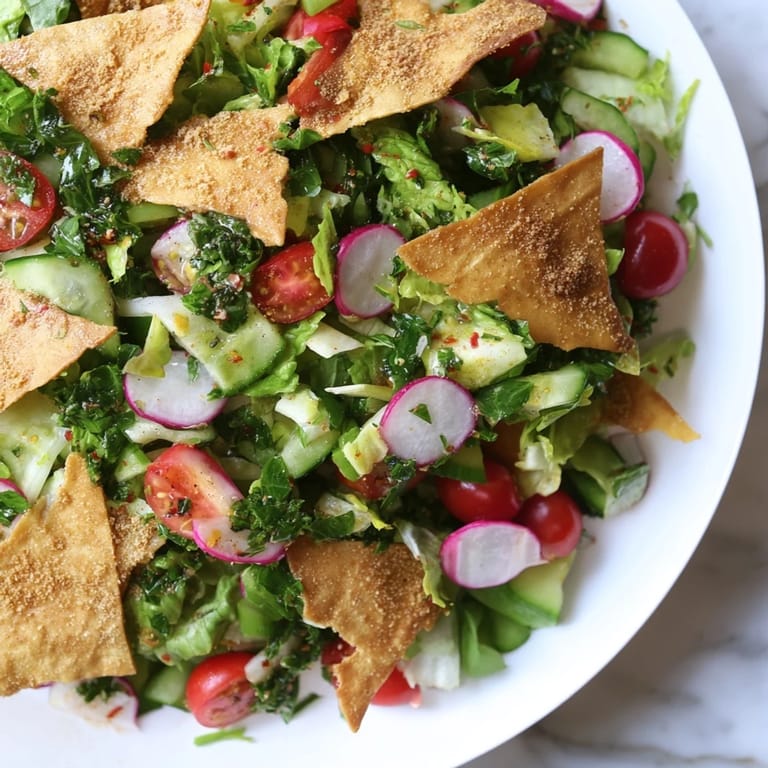
- Wait until the very last moment before serving to add the pita chips, scattering them over the top so they stay crispy against your teeth and don't turn to soggy regret.
 Save
Save I served this at a summer dinner when someone I hadn't seen in years came by unexpectedly, and we ended up eating on the back porch until dark, refilling bowls and talking about nothing important. That meal felt like a pause button on regular life, and somehow this salad was the reason—the way something so simple could be enough.
Why Sumac Changes Everything
Sumac is a ground spice made from dried berries and tastes like somebody bottled the essence of lemon without any of the liquid harshness. It's been used across the Middle East for centuries because it adds brightness without making things feel acidic or aggressive. If you've never used it before, this salad is the perfect excuse to discover why you'll start buying it in bulk.
The Art of the Perfect Pita Chip
Homemade pita chips beat store-bought every single time because you can control exactly how far you take them toward golden perfection. The moment they come out of the oven, they're still releasing steam and haven't fully hardened yet, which is exactly when they taste best—still warm, still faintly giving but already crispy. I used to make the mistake of leaving them in too long thinking they'd get crunchier, but all that does is make them hard and bitter, losing the soft pita flavor underneath.
Building Flavor in Raw Vegetables
Raw salads rely entirely on their dressing and ingredients to deliver flavor because there's no cooking time to develop it, so every element has to earn its place. The herbs here aren't decorative—they're essential flavor carriers that make the difference between something that feels fresh and something that feels alive. Torn herbs release more fragrance than chopped ones, so if you have time, rip the mint and parsley by hand instead of using a knife.
- Let your tomatoes and cucumber sit out for a few minutes before cutting them so they're not ice-cold and bitter.
- Taste the dressing separately before it hits the greens so you know exactly what flavor you're adding.
- Save any leftover dressing for the next day—it tastes even better after the flavors have settled together overnight.
 Save
Save This salad tastes best when you eat it with people you actually want to be around, in a place where you can take your time. Make it, sit down, and let the crunch and brightness do what they were always meant to do.
Recipe FAQs
- → What type of greens work best in this salad?
Mixed greens like romaine, arugula, or spinach provide a fresh and crisp base that balances well with the other ingredients.
- → How are the pita chips prepared for optimal crunch?
Pita pieces are tossed with olive oil, sea salt, and sumac, then baked at 375°F (190°C) for 8–10 minutes until golden and crispy, and cooled before topping the salad.
- → What role does sumac play in this dish?
Sumac adds a tangy, citrus-like flavor that brightens both the pita chips and the dressing, enhancing the overall freshness of the salad.
- → Can this salad be adapted for gluten-free diets?
Yes, you can substitute the pita with gluten-free alternatives or omit the chips entirely while maintaining the salad’s vibrant flavors.
- → What herbs complement the salad’s flavor profile?
Fresh parsley and mint add aromatic, herbal notes that balance the tartness of the sumac dressing and the crunch of the pita chips.
- → Is this dish suitable for vegetarians and dairy-free diets?
This salad is naturally vegetarian and dairy-free, making it suitable for various dietary preferences as prepared.