 Save
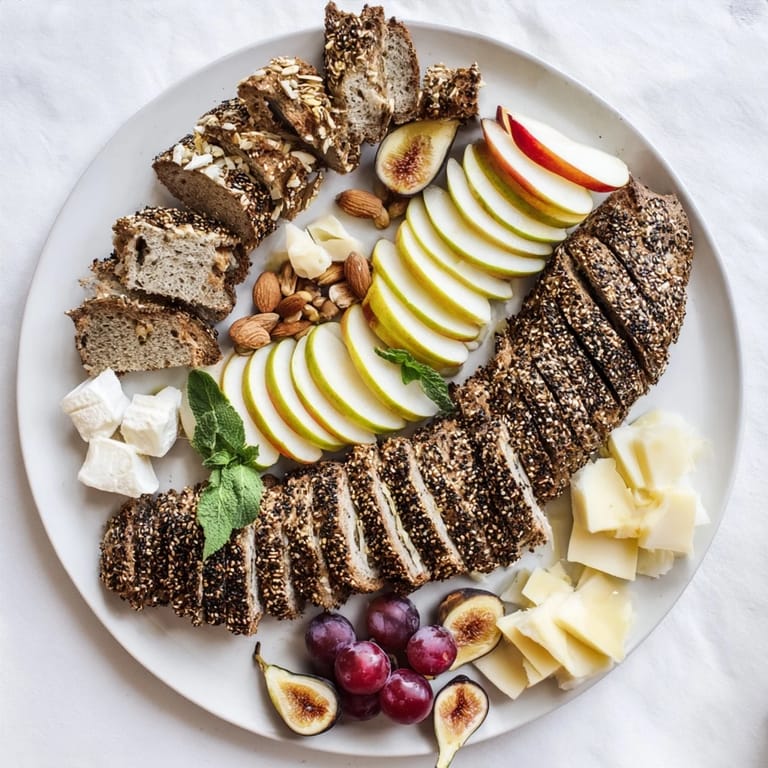
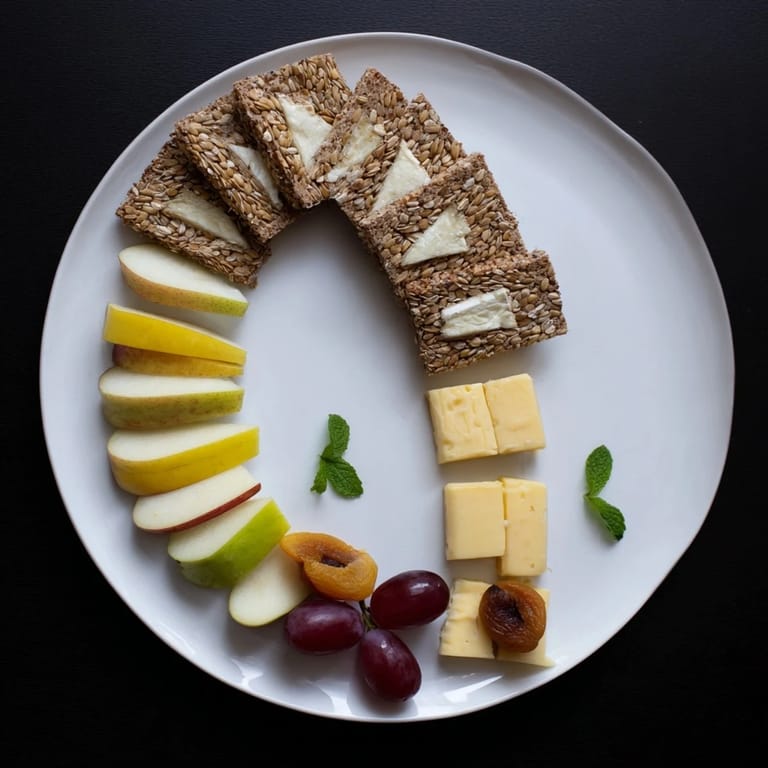
Save One autumn afternoon, I was arranging a spread for unexpected guests when I realized the bread, fruit, and grains scattered across my counter told a story all their own. Instead of wrestling with complicated plating, I simply let the ingredients guide me into a sweeping arc, and something clicked—it looked like a scythe had just swept through a harvest field. The Harvest Scythe was born not from a recipe I'd studied, but from watching my hands move with the rhythm of the season.
I still remember my neighbor watching me build this platter and asking if I'd taken a plating class. I hadn't—what made it special was simply choosing ingredients I actually loved and arranging them without overthinking. That's when I understood: the best platters aren't fancy, they're honest.
Ingredients
- Baguette, sliced: A crisp, open-crumb baguette gives you that rustic European feel and won't crumble when arranged.
- Multi-grain crackers: These add visual texture and a subtle grain flavor that echoes the theme without competing.
- Seeded rye bread, thinly sliced: Rye's earthiness anchors the spread and its darker color creates lovely contrast.
- Cooked farro or barley: Chill these completely so they stay separate and don't clump; they're the "field" in your scythe motif.
- Seedless red grapes: Fresh and juicy, they nestle into gaps and add unexpected pops of color.
- Sliced pears and apples: Slice these just before assembling or toss in a little lemon juice to prevent browning.
- Dried apricots: Their chewy sweetness bridges the gap between bread and fresh fruit perfectly.
- Fresh figs: If they're in season, halve them—the jewel-like interior is almost too beautiful to hide.
- Brie and aged cheddar (optional): Soft and hard cheeses give people something warm and savory to balance the sweetness.
- Honey or fig jam: A small bowl of this becomes an invitation to taste everything together.
- Fresh mint and roasted nuts: Mint cools the palate and nuts add a final textural surprise.
Tired of Takeout? 🥡
Get 10 meals you can make faster than delivery arrives. Seriously.
One email. No spam. Unsubscribe anytime.
Instructions
- Set your stage:
- Choose a large wooden board or platter that feels generous—this is your canvas. A worn wooden board photographs well and feels more honest than a shiny ceramic one.
- Create the sweep:
- Arrange your baguette slices and rye bread in a gentle, curved arc across the board, leaving room for what comes next. Imagine the arc of a scythe blade moving through the scene.
- Build the field:
- Scatter the cooled farro or barley along the inner curve of your bread arc, creating a thin, even layer. This is where the metaphor really comes alive.
- Dance with the fruit:
- Fan your pears, apples, and grapes around and between the breads, letting colors touch and overlap naturally. There's no "right" pattern here—let your eye guide you.
- Add cheese clusters:
- Tuck small, casual groupings of brie slices and cheddar cubes near the breads where they'll be easy to grab and pair.
- Finish with flourish:
- Place small bowls of honey or jam at the board's edge, scatter mint leaves across the arrangement, and sprinkle roasted nuts over the whole thing for aroma and crunch. Step back and smile.
- Serve and savor:
- Bring it straight to the table—the freshness of the fruit and the aroma of the bread are part of the magic, and both fade if you wait too long.
 Save
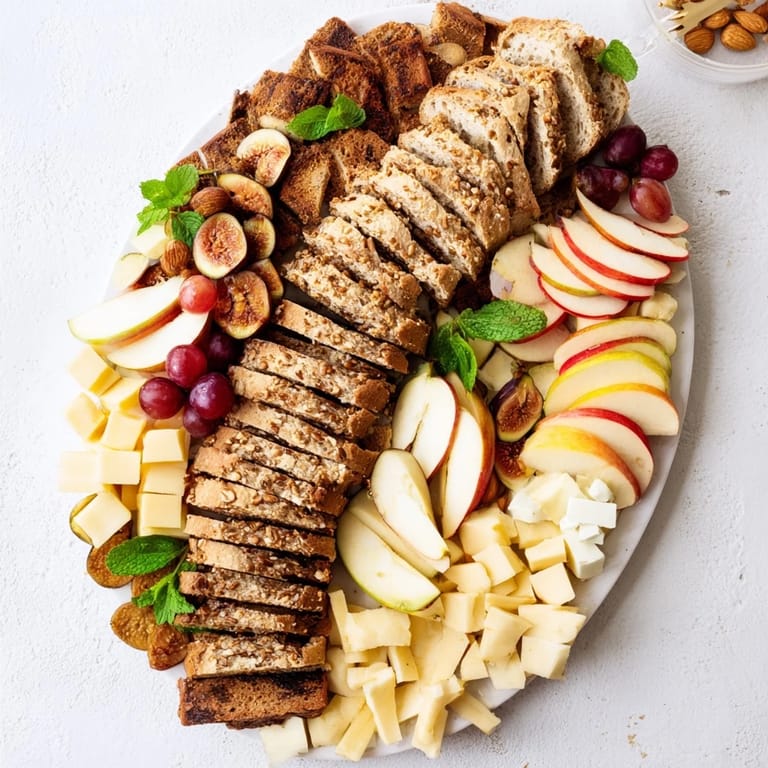
Save What surprised me most about this platter is how it sparked conversation. People didn't just eat from it—they asked about the story behind it, wondered why I'd chosen that particular arc, debated which fruit and bread combination worked best. A simple arrangement had somehow made the meal feel more intentional and alive.
Why This Works as a Centerpiece
The beauty of this platter is that it's both meal and decoration. The curved arrangement mimics nature without feeling contrived, and because everything is chosen for its visual appeal as much as its taste, the board draws people in before they even realize they're hungry. I've found that the most memorable gatherings are the ones where food feels less like a course and more like an experience.
Seasonal Swaps and Adaptations
Summer calls for berries, stone fruits, and lighter crackers. Fall is your moment for apricots, figs, and whole grains. Winter can lean into dried fruits, preserved jams, and heartier breads. The structure stays the same; you're just letting the season choose which colors and flavors take the lead.
The Art of Graceful Assembly
The scythe shape isn't sacred—it's just a starting point. What matters is moving slowly, tasting as you go, and trusting your intuition about balance and color. I've learned that the most stunning platters are the ones where you've made a few deliberate choices and then let the rest fall naturally into place.
- Work with odd numbers when you can; three pear slices look more intentional than two or four.
- Let textures and colors touch and intermingle rather than creating neat, separated sections—that's where the visual magic happens.
- Stand back every few minutes to see how the whole thing is reading from a distance, not just up close.
 Save
Save This platter reminds me that sometimes the most elegant meals are the ones that look like an afterthought. Let it be simple, let it be beautiful, and let your guests make it their own.
Recipe FAQs
- → How should the breads and grains be arranged?
Arrange sliced breads and crackers in a curved sweeping line resembling a scythe blade, then layer cooked grains evenly along the inner curve to evoke a grain field.
- → What fruits work best for this platter?
Seedless red grapes, sliced pears, apples, dried apricots, and fresh or dried figs offer a balanced mix of textures and natural sweetness.
- → Can cheese be included in the arrangement?
Yes, small clusters of sliced brie and cubed aged cheddar complement the breads and fruits, adding creamy and sharp notes.
- → Are there suggested garnishes to enhance flavor and texture?
Fresh mint leaves and roasted nuts such as almonds or walnuts add aroma, crunch, and visual appeal to the display.
- → How should the honey or fig jam be served?
Place small bowls of honey or fig jam along the platter's edge to allow dipping or drizzling onto breads and fruits.
- → Can the platter accommodate dietary restrictions?
Use gluten-free breads and crackers, or swap cheeses for vegan alternatives to suit various dietary needs.