 Save
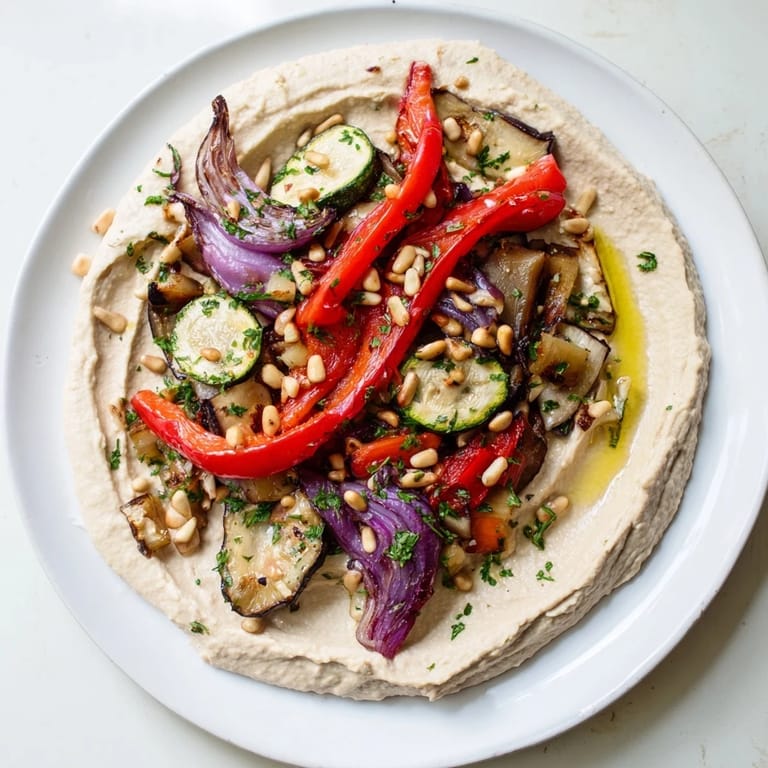
Save There's something about the smell of chickpeas blending with tahini and lemon that stops me mid-thought every time. I first made hummus by accident, actually—I'd grabbed what I thought was store-bought but opened my pantry to find only canned chickpeas and a stubborn jar of tahini someone had left behind. That afternoon taught me that the best dishes often start with improvisation. Now, when I layer roasted vegetables and toasted pine nuts over my own whipped hummus, it feels like capturing something warm and honest on a plate. This version has become my answer to almost every gathering, the one people ask me to bring back.
I remember bringing this to a potluck on a cool October evening, nervous because everyone else seemed to have store-bought dips. But within minutes, the bowl was nearly empty and someone was asking if I'd made the hummus myself. There's a quiet pride in that moment—when food you made with your hands becomes the thing people gravitate toward, not because it's fancy, but because it tastes like care.
Ingredients
- Canned chickpeas: Drain and rinse these well to remove the starchy liquid that clouds your hummus; this step is non-negotiable if you want that creamy, restaurant-quality texture.
- Tahini: This sesame paste is the soul of hummus, and it matters that it's fresh—old tahini tastes bitter and won't blend as smoothly.
- Fresh lemon juice: Bottled lemon juice will betray you here; the brightness matters, so squeeze it yourself if you can.
- Garlic: One small clove is enough; too much and your guests will taste only that, not the delicate balance you've built.
- Extra-virgin olive oil: Use the good stuff you actually care about because it's the final voice in every bite.
- Ground cumin: This warmth is what makes hummus taste like itself and not just blended beans.
- Red bell pepper: The sweetness balances the earthiness of roasted eggplant and becomes almost caramelized at high heat.
- Zucchini: Slice it thin enough to char but thick enough not to fall apart; half-moons are forgiving.
- Red onion: The char mellows its sharpness and turns it jammy, almost sweet.
- Eggplant: Cube it and watch it transform from spongy to creamy and golden, the MVP of this vegetable crown.
- Smoked paprika: This is your secret—it gives vegetables a campfire quality without any actual fire.
- Pine nuts: Toast them yourself; they're the jewelry on this plate, so make them count by bringing them to golden perfection.
- Fresh parsley: A shower of green at the end catches light and reminds you this is alive, not processed.
- Sumac or zaatar: Optional but not really; the tang of sumac or the herbaceous pop of zaatar is the final note that makes people pause and ask what that flavor is.
Tired of Takeout? 🥡
Get 10 meals you can make faster than delivery arrives. Seriously.
One email. No spam. Unsubscribe anytime.
Instructions
- Heat your oven and prep your workspace:
- Set the oven to 425°F and line a baking sheet with parchment if you want cleanup to be kind to you. Have all your ingredients visible—this is one of those recipes where seeing everything ready shifts something in how smoothly it flows.
- Tumble the vegetables in oil and spices:
- Toss your peppers, zucchini, onion, and eggplant with olive oil, smoked paprika, salt, and pepper in a bowl, making sure each piece gets a light coating. The spices should cling to the vegetables like they're meant to be together.
- Roast until they char and soften:
- Spread everything on the baking sheet in a single layer and let the oven work its magic for 22 to 25 minutes, stirring once halfway through. You want some edges dark and crispy, not everything evenly golden—that contrast is where flavor lives.
- Build your hummus while vegetables roast:
- In a food processor, combine drained chickpeas, tahini, lemon juice, minced garlic, olive oil, cumin, and salt. Blend until it starts to come together, then add cold water one tablespoon at a time, letting the machine run between additions.
- Taste and adjust until it sings:
- This is the moment where you own it—more lemon if it feels heavy, more salt if it whispers instead of speaks, another drizzle of olive oil if it's too thick. Trust your palate here.
- Toast the pine nuts while everything finishes:
- In a dry skillet over medium heat, add the pine nuts and shake the pan every 10 seconds or so; they go from pale to golden to burnt in the blink of an eye, so stay close and listen for when they smell nutty and warm.
- Arrange on a platter like you mean it:
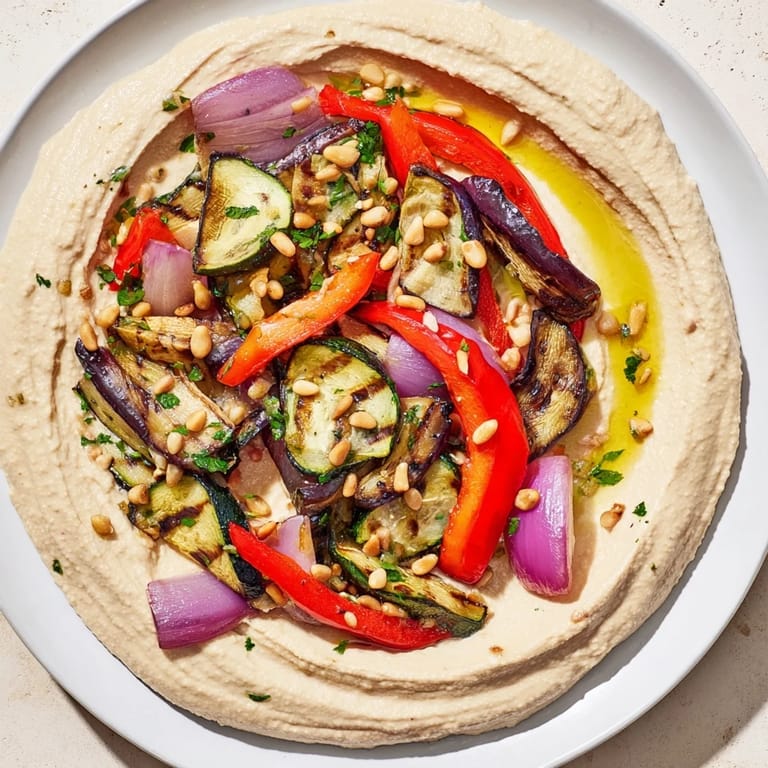
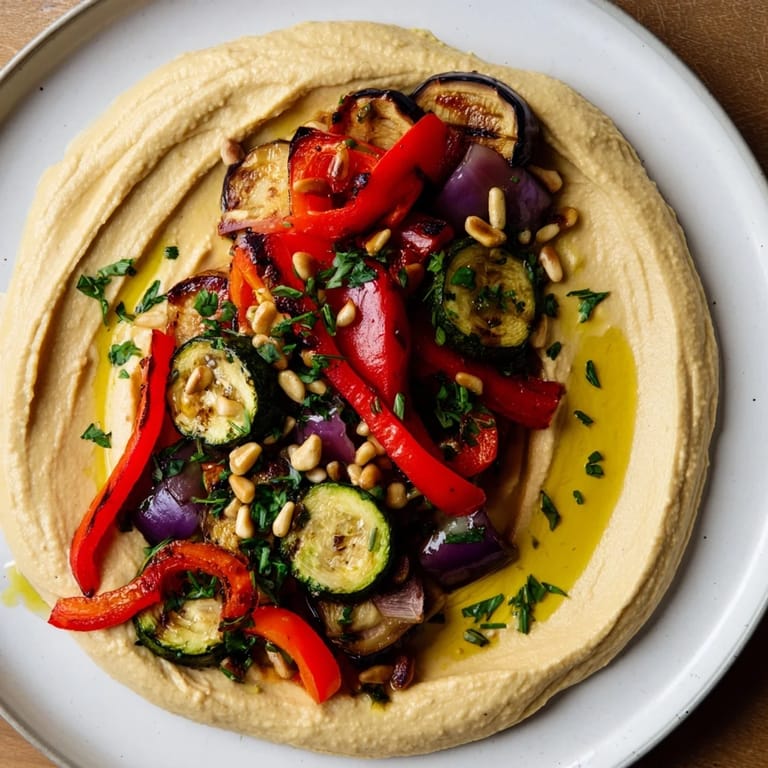
- Spread the hummus onto a serving platter in a swoosh, using the back of a spoon to create gentle waves. This isn't just plating; it's the opening gesture of hospitality.
- Crown it with vegetables, nuts, and finishing touches:
- Pile the warm roasted vegetables over the hummus, scatter toasted pine nuts across the top, sprinkle parsley and sumac or zaatar if using, then drizzle with a final thread of good olive oil. Step back and look at it—you've just made something beautiful.
 Save
Save One winter, a friend who'd been vegetarian for years and I sat at my kitchen counter eating this straight from the platter with pieces of warm pita, and she said something like, 'This tastes like you chose every vegetable on purpose.' That's when I realized hummus with roasted vegetables isn't just appetizer strategy—it's a conversation, a moment where people slow down.
Seasonal Variations and Substitutions
The beauty of this dish is that it welcomes whatever's good right now. In summer, I've used fresh tomatoes cut thick and charred at high heat, or thin asparagus spears that turn almost crispy at the edges. Fall brings roasted carrots and cauliflower florets, which develop this almost nutty sweetness. Winter calls for mushrooms—any kind, really—sliced and cooked until they release their moisture and then caramelize. Spring is when I add fresh favas if I find them, or snap peas halved lengthwise so they char on the flat side. The vegetables are the frame; the hummus is the anchor that holds everything together.
How to Serve and Make It Your Own
This works warm from the oven, at room temperature, or even cold the next day—though there's something irreplaceable about fresh-charred vegetables still warm and steaming slightly over cool hummus. I've served it as a dip with fresh pita and crudités, spooned it onto toasted bread as an open-faced toast, layered it into a grain bowl with farro or quinoa and a handful of arugula, and even tucked it into a wrap with roasted chickpeas for texture. Some nights I add a spoonful of harissa to the hummus for heat, or finish with pomegranate seeds for brightness. The dish is generous—it adapts to what you have, what you're craving, and who you're feeding.
Storage and Make-Ahead Notes
Hummus keeps in the refrigerator for up to five days, so you can make it ahead and let the flavors settle and deepen slightly. Roasted vegetables are best the same day—they soften and lose their char if stored—but you can prepare them in advance and warm them gently in a low oven just before serving. I've also made the hummus the day before and roasted vegetables the morning of, then assembled everything while guests arrived, which feels both strategic and relaxed.
- Store hummus in an airtight container and lay plastic wrap directly on the surface to prevent a crust from forming.
- If your hummus thickens in the fridge, loosen it with a splash of water and a quick blend before serving.
- Leftover roasted vegetables transform into frittata fillings, grain bowl toppings, or pasta additions the next day.
 Save
Save Make this when you want to feel like you've created something that matters, because you have. It's simple, it's elegant, and it tastes like you cared.
Recipe FAQs
- → What vegetables work best for roasting in this dish?
Bell peppers, zucchini, red onion, and eggplant roast beautifully, developing a smoky char. Seasonal alternatives like carrots or cauliflower also add great flavor.
- → How do you achieve the whipped texture for the chickpea base?
Blending chickpeas with tahini, lemon juice, garlic, olive oil, cumin, and cold water until smooth creates a creamy whipped texture.
- → What spices enhance the roasted vegetables?
Smoked paprika, salt, and freshly ground black pepper infuse the veggies with smoky, savory notes.
- → How should pine nuts be prepared for this dish?
Toast pine nuts in a dry skillet over medium heat for 2–3 minutes, stirring frequently until golden and fragrant.
- → Can this dish accommodate dietary restrictions?
Yes, it is naturally vegan and gluten-free when served with gluten-free accompaniments.
- → What serving suggestions complement this dish?
Serve with warm pita, fresh crudités, or toasted bread for added texture and flavor contrast.