 Save
Save The first time I watched tteokbokki being made at a Seoul street stall, I was mesmerized by how the vendor's wooden spoon moved through that glossy red sauce, the rice cakes tumbling like little cushions in the heat. My friend nudged me and said, "You have to try this," and one bite explained why this humble dish had lines of people waiting in the cold. Years later, I found myself standing in my own kitchen attempting to recreate that exact moment, and somehow, miraculously, I did.
I made this for my roommate on a gray Tuesday evening when she mentioned craving something spicy, and watching her eyes light up as she took that first bite reminded me why cooking for people matters. She ended up eating two bowls and asking for the recipe, which is when I realized this dish has that magical quality of tasting like home, even if you've never been to Korea.
Ingredients
- Korean rice cakes (tteok), 500 g: These cylindrical cakes are the star, and soaking them briefly keeps them from turning into mush while still maintaining that signature chewiness that makes this dish special.
- Gochujang, 3 tbsp: This fermented chili paste is non-negotiable, bringing depth and complexity that regular chili powder simply cannot match.
- Gochugaru, 1 tbsp: Korean chili flakes add brightness and a sharper kick compared to the paste, creating layers of heat rather than one flat burn.
- Soy sauce, 2 tbsp: The umami backbone that ties everything together, so use a good quality one if you can.
- Honey or corn syrup, 1 tbsp: A tiny bit of sweetness cuts the spice and mimics how street vendors make theirs taste almost addictive.
- Garlic, 2 cloves minced: Fresh garlic blooms when it hits the hot sauce, releasing an aroma that fills your whole kitchen.
- Broth (water, kelp, dried anchovies): This foundation is worth the 10 minutes it takes, transforming plain water into something with actual soul.
- Green onions and sesame seeds for garnish: These final touches aren't optional, they're the difference between good and unforgettable.
Tired of Takeout? 🥡
Get 10 meals you can make faster than delivery arrives. Seriously.
One email. No spam. Unsubscribe anytime.
Instructions
- Wake up your rice cakes:
- Submerge them in warm water for 10 minutes if they're stiff from the fridge. They'll soften enough to cook through without becoming a mushy disaster.
- Build your broth foundation:
- Simmer water with dried kelp and anchovies (if using) for 10 minutes, then remove the solids and keep the liquid. This step is where the magic happens, infusing everything with umami.
- Make the sauce:
- Stir gochujang, gochugaru, soy sauce, sugar, honey, and garlic into the broth, whisking until the paste dissolves completely so there are no lumps hiding in your finished dish.
- Bring the rice cakes in:
- Add drained rice cakes along with sliced onion and cabbage if using, then bring to a gentle boil and stir occasionally so nothing sticks to the bottom.
- Let it simmer and thicken:
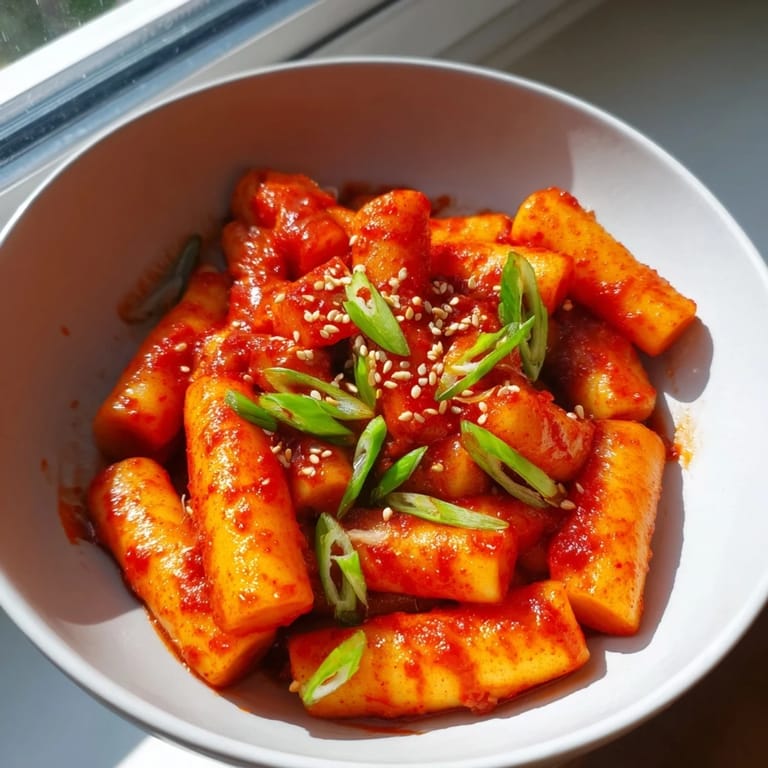
- Cook for 10-15 minutes until the sauce reduces and clings to the rice cakes like a glossy coat. You'll know it's ready when the liquid has reduced by more than half and coats the back of your spoon.
- Finish with brightness:
- Toss in sliced green onions and boiled eggs in the final 2 minutes, letting them warm through without overcooking the onions into submission.
- Serve with ceremony:
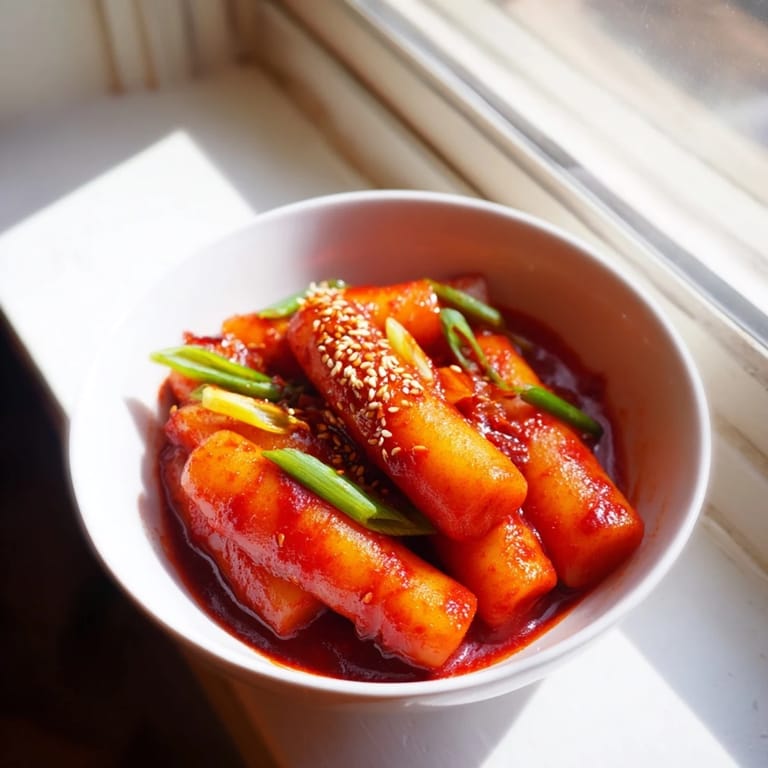
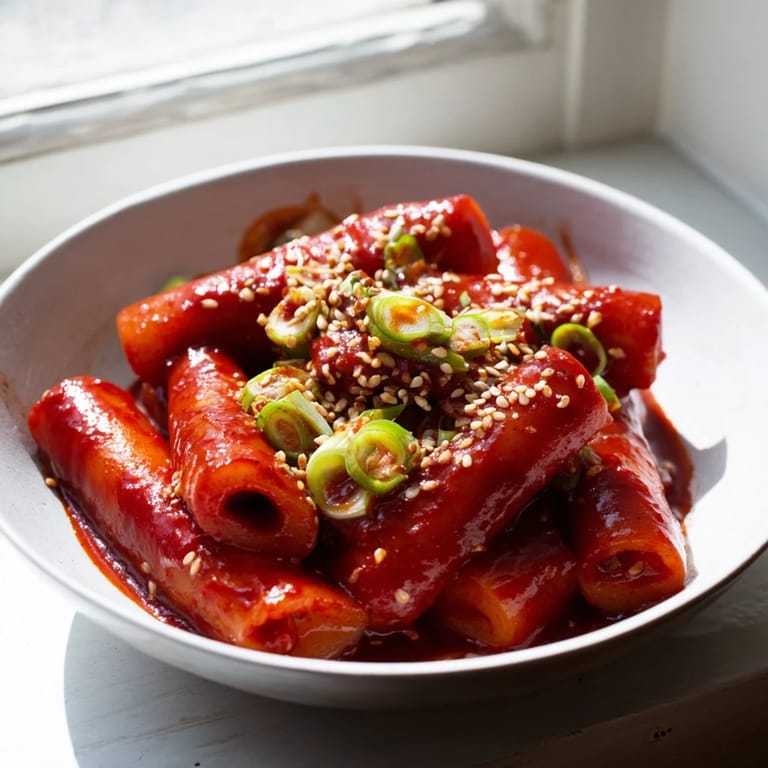
- Transfer to a platter, scatter sesame seeds across the top, and serve immediately while everything is still steaming and alive.
 Save
Save My neighbor smelled this cooking one evening and came knocking, and suddenly what was meant to be a solo dinner became an impromptu gathering in my kitchen. That's when I understood that tteokbokki isn't just food, it's an invitation to share something warm and alive with whoever happens to be nearby.
The Secret to Restaurant-Quality Results
The difference between mediocre tteokbokki and the kind that makes you close your eyes while eating comes down to patience with the broth. Don't rush the initial 10-minute simmer with kelp and anchovies; those minutes are when the magic transfers from solid to liquid. I used to skip this step and wondered why mine tasted thin and one-dimensional, then I learned to trust the process.
Customizing Your Bowl
One of the beautiful things about tteokbokki is how forgiving and flexible it is, letting you add whatever you have on hand or whatever your mood calls for. I've thrown in fish cakes when I wanted richness, fresh mushrooms for earthiness, or even a handful of spinach for color and nutrition. The core sauce is so bold that it embraces these additions rather than being overpowered by them.
Making It Your Own
The most interesting bowls I've made came from playing around with the heat level and sweetness balance, adjusting gochugaru up or honey down depending on what I was craving that day. I've also learned that adding the eggs at the very end keeps their yolks creamy and luxurious rather than cooked through and chalky. The best part about making this at home is that you're not locked into one version, you're invited to experiment.
- Keep gochujang and gochugaru stored in cool, dark places because light and heat degrade their flavors over time.
- If you want to make a big batch, this doubles beautifully and keeps for three days refrigerated, tasting even better as flavors meld.
- Serve with pickled radish or steamed dumplings on the side to balance the richness and cleanse your palate between bites.
 Save
Save This dish taught me that sometimes the most comforting meals are the simplest ones, requiring nothing more than a willingness to show up and follow through. Every time I make it, I'm transported back to that Seoul street corner, but with the added joy of knowing I've mastered something that once seemed impossible.
Recipe FAQs
- → What are rice cakes and where can I find them?
Rice cakes (tteok) are cylindrical Korean staples made from glutinous rice flour. Look for them in the frozen or refrigerated section of Asian markets, often labeled as 'Korean rice cakes' or 'tteokbokki tteok.' They come soft or hard; softer versions cook faster.
- → Can I make this dish vegetarian?
Yes! Use vegetable broth or kombu-only broth instead of anchovy broth. Skip the fish cakes garnish. The gochujang and seasonings provide plenty of depth. Ensure your gochujang is gluten-free if needed.
- → How do I adjust the spice level?
Start with less gochugaru than the recipe calls for, then add more to taste during cooking. Gochujang provides base heat while gochugaru adds intensity. Honey or additional sugar helps balance excessive heat.
- → Why do my rice cakes stick together?
Stir occasionally during cooking and ensure enough sauce to coat them. If using frozen rice cakes, soak them first. The sauce thickens naturally, so keep stirring gently to prevent clumping.
- → What can I add to make this more filling?
Fish cakes (eomuk), boiled eggs, sliced onions, and cabbage are classic additions. You can also serve alongside steamed dumplings, pickled radish, or kimchi for a complete meal experience.
- → How long does this stay fresh?
Consume immediately for best texture. Leftover tteokbokki can be refrigerated for up to 2 days, though the rice cakes may soften further. Reheat gently with added water or broth to restore sauce consistency.