 Save
Save My neighbor stopped by one afternoon with a bag of gorgeous vegetables from her garden, and I had maybe twenty minutes to pull together something that felt special. I'd learned long ago that the best entertaining doesn't require hours in the kitchen—it requires knowing how to arrange simple, quality ingredients so they become irresistible. The hummus came together in minutes, the vegetables were already perfect, and suddenly we had this stunning spread that made us both slow down and actually taste things. That's when mezze clicked for me: it's not about complexity, it's about celebration.
I made this for a small dinner party once where half the guests were vegetarian and half weren't, and I was nervous about keeping everyone happy. The mezze platter solved that instantly—people could graze at their own pace, choose what spoke to them, and somehow the sharing of it made the whole evening feel more relaxed. Someone's hand reached for the hummus at the exact same moment as someone else's, and nobody minded. That's when I realized mezze isn't just food; it's permission to gather without pretense.
Ingredients
- Cooked chickpeas: Canned work perfectly—just drain and rinse them well to avoid that tinny flavor.
- Tahini: This is the soul of the hummus; buy it from a store with good turnover so it's fresh and hasn't separated into a pool of oil.
- Fresh lemon juice: Bottled will betray you—use real lemons, and add the juice slowly so you can taste as you go.
- Extra virgin olive oil: Don't hide the good stuff here; this is where it shines.
- Garlic: One small clove is enough; garlic hummus should whisper, not shout.
- Ground cumin: Toast it in a dry pan for 30 seconds if you have time—it wakes up the flavor completely.
- Salt: Taste constantly as you blend; hummus needs more salt than you'd think.
- Cold water: Add it tablespoon by tablespoon so the hummus doesn't turn into soup by accident.
- Cherry tomatoes: Choose ones that actually taste like tomatoes; this matters more than it seems.
- Cucumber: English cucumbers have fewer seeds and stay crunchier longer on the platter.
- Red bell pepper: The sweetness plays beautifully against salty olives and tangy cheese.
- Carrot sticks: Raw carrots stay crisp for hours and their earthiness anchors everything else.
- Mixed olives: The variety of flavors—briny green ones, meaty Kalamatas—is what makes this interesting.
- Feta cheese: Use real feta if you can; the crumbly texture and salty bite are non-negotiable.
- Pita bread: Warm it gently just before serving so it's still soft but warm enough to taste special.
Tired of Takeout? 🥡
Get 10 meals you can make faster than delivery arrives. Seriously.
One email. No spam. Unsubscribe anytime.
Instructions
- Blend the hummus:
- Add chickpeas, tahini, lemon juice, oil, garlic, cumin, and salt to a food processor and blend until completely smooth and creamy. Add cold water a tablespoon at a time, tasting between additions—you want it light and spoonable, not dense or soupy.
- Compose the base:
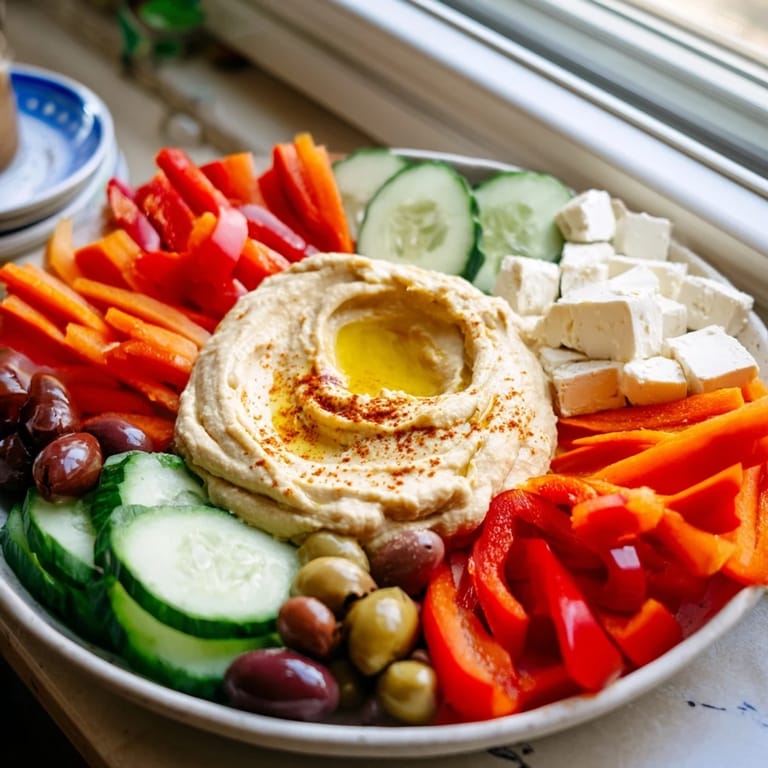
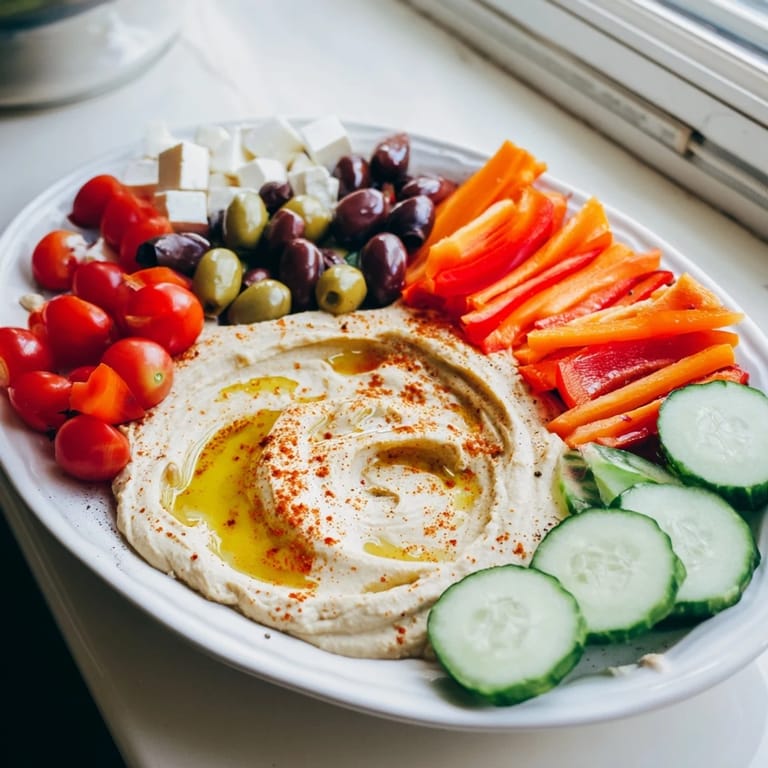
- Spread the hummus across a shallow bowl or platter, creating gentle swirls with the back of a spoon. Drizzle generously with olive oil and dust lightly with sumac or paprika so it looks inviting from the moment people see it.
- Arrange with intention:
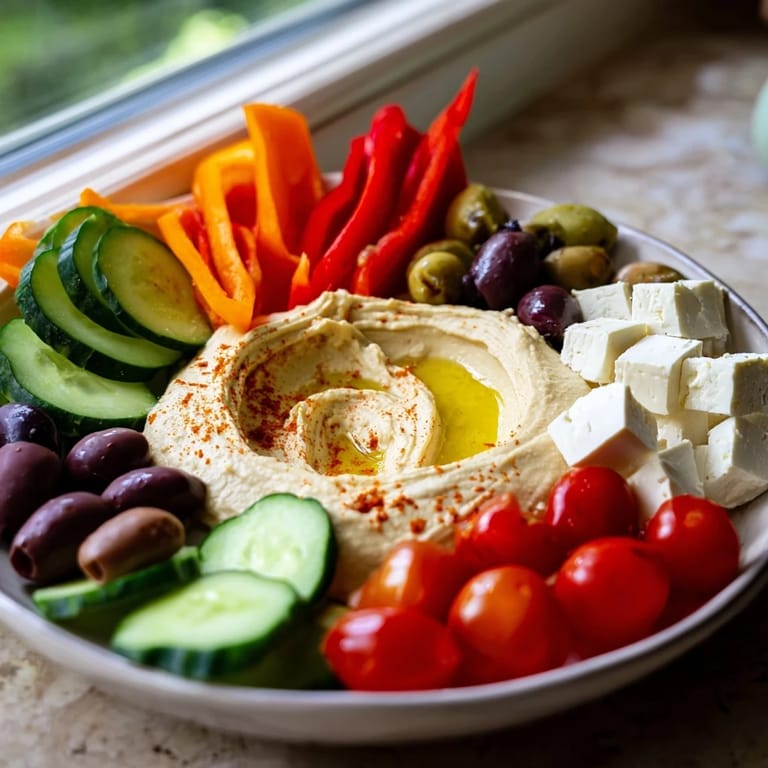
- Place vegetables, olives, and cheese around the hummus in clusters, grouping similar colors and textures together so everything looks abundant without feeling chaotic. Leave small gaps so people can see what's there.
- Finish the bread:
- If you have a moment, warm the pita in a dry pan or oven for a minute or two until it's soft and fragrant, then slice into triangles. Lean them against the platter or arrange them around the edge.
- Add the final touches:
- Scatter fresh parsley over everything, nestle lemon wedges around the platter, and step back—it should look like you spent hours when you actually spent minutes.
 Save
Save There's a quiet joy in watching people's faces around a mezze platter—someone always reaches for the hummus first, discovers it's better than anything they've had, and suddenly there's real conversation happening instead of awkward silence. That's when I understood that hospitality isn't about fancy techniques; it's about giving people permission to slow down and enjoy something real.
The Art of Building a Beautiful Platter
Arrangement matters more than people think because our eyes eat first. I used to just pile everything in the middle until a friend pointed out that grouping colors—all the reds together, all the greens—makes the platter feel intentional rather than random. Odd numbers work better than even ones, so three clusters of vegetables instead of two. Leave some negative space so it doesn't feel cramped, and always put the most photogenic ingredient—usually those deep red tomatoes—where light hits it naturally.
Making Hummus Your Secret Weapon
Once you've made hummus at home, you'll never understand why people buy it from jars again. The whole process takes five minutes, and the difference is staggering—it's lighter, more complex, and tastes like actual chickpeas instead of a vague bean situation. I started experimenting after that: roasted red pepper hummus for depth, smoked paprika for warmth, even a drizzle of pomegranate molasses for sweetness and tang. The blender becomes your best friend.
Stretching This Into a Larger Spread
If you're feeding more people or want a more substantial spread, add warm falafel, crispy pita chips, tabbouleh made with fresh herbs, or dolmas—grape leaves stuffed with rice—and suddenly this becomes a meal rather than an appetizer. I've also learned that adding a bowl of muhammara (roasted red pepper and walnut dip) next to the hummus creates visual interest and gives people choices without requiring much extra effort. A sprinkle of pomegranate seeds and toasted pine nuts adds crunch and elegance if you're feeling fancy.
- Roasted chickpeas scattered on top add crunch and look intentional.
- A small bowl of za'atar mixed with olive oil for dipping transforms plain bread.
- Fresh mint scattered over everything ties the whole platter to the flavor of actual Middle Eastern food.
 Save
Save This platter has become my answer to almost every gathering—elegant enough for company, casual enough for family, and flexible enough to work with whatever the season or pantry offers. It's food that invites people in instead of putting on a show.
Recipe FAQs
- → Can I prepare the mezze platter in advance?
Yes, you can prepare components ahead. Make hummus up to 3 days before and store in the refrigerator. Chop vegetables and store them separately in airtight containers. Assemble the platter 1-2 hours before serving to maintain freshness and prevent vegetables from wilting.
- → What can I substitute for tahini in the hummus?
If you're allergic to sesame or don't have tahini, try using Greek yogurt, almond butter, or sunflower seed butter as alternatives. These create a creamier texture while maintaining good flavor. Adjust quantities to achieve your desired consistency.
- → How do I warm the pita bread?
Wrap pita breads in foil and warm them in a 350°F (175°C) oven for 5-7 minutes, or place them directly over a gas flame for 10-15 seconds per side. You can also use a skillet on medium heat for 1-2 minutes per side until warm and slightly crispy.
- → What other appetizers can I add to expand the platter?
Consider adding dolmas (stuffed grape leaves), baba ganoush (roasted eggplant dip), tabbouleh (herb salad), falafel, or muhammara (roasted red pepper dip). These additions create a more elaborate spread while maintaining authentic Middle Eastern flavors.
- → How should I store leftovers?
Store hummus and dips in airtight containers for up to 3 days. Keep vegetables separately in sealed containers. Cheese and olives can be stored together for 2-3 days. Do not store assembled platters as bread and fresh items will deteriorate in quality.
- → Is this platter suitable for dietary restrictions?
Yes, this platter is naturally vegetarian. For vegan options, omit feta or substitute with plant-based alternatives. For gluten-free, use gluten-free pita or serve with rice crackers. Always verify ingredient labels as store-bought items may contain allergens or additives.