 Save
Save There's something almost meditative about the moment you first spread that stripe of beet purée across a bare white board, watching it bloom like a brushstroke. I discovered this dish not from a cookbook but from standing in front of a gallery installation on a rainy Tuesday, suddenly wondering what it would taste like if art could be eaten. That strange collision of thought led me to my kitchen, armed with curiosity and an offset spatula, determined to prove that dinner could be as intentional as it is beautiful.
I remember serving this to my sister after she'd had a terrible week, and watching her stop mid-complaint to just stare at the plate for a full thirty seconds. She said it felt wrong to mess it up by eating it, then she dipped a carrot stick and closed her eyes. That's when I knew this wasn't just food—it was permission to slow down.
Ingredients
- Medium beets: The earthy sweetness is your foundation; smaller beets tend to be less watery and more intensely flavored, so hunt for ones about the size of a golf ball.
- Olive oil: Good olive oil here makes a difference because you'll taste its character shining through the roasted beet's richness.
- Sea salt: Flaky salt seasons as you blend; use fine salt for the purées themselves and save the flaky stuff for the final garnish.
- Fresh lemon juice: Never bottled—fresh juice brightens the beet's earthiness and keeps the color vibrant.
- Large carrots: Sweet carrots work best; if yours taste woody or bitter, they're past their prime.
- Fresh ginger: A thin slice of ginger root grated on a microplane adds warmth without overwhelming the delicate carrot flavor.
- Unsalted butter: Use real butter for the silkiest carrot purée; it emulsifies beautifully and tastes like comfort.
- Ripe avocado: Choose one that yields gently to pressure, not rock hard or brown inside—timing is everything with avocados.
- Greek yogurt: The tang balances the avocado's richness and creates that cloud-like texture.
- Lime juice: Prevents browning and adds a subtle brightness that lemon can't quite match.
- Microgreens: These aren't just decoration; their peppery bite and delicate structure create a textural contrast that makes every bite interesting.
- Edible flowers: Nasturtiums and pansies add visual drama; peppery nasturtiums also add flavor.
- Crushed pistachios: Their pale green and slight crunch tie the whole composition together visually and texturally.
Tired of Takeout? 🥡
Get 10 meals you can make faster than delivery arrives. Seriously.
One email. No spam. Unsubscribe anytime.
Instructions
- Get your beets ready for their transformation:
- Heat your oven to 400°F and toss those diced beets with olive oil and a pinch of sea salt—you want them coated but not drowning. Spread them on a baking tray in a single layer and slide them in for 30 to 35 minutes, until a fork slides through like butter and your kitchen smells like warm earth and sweetness.
- Soften your carrots while the beets do their thing:
- Slice your carrots into rounds about the thickness of a quarter and steam or boil them until they're so tender they practically fall apart at the touch of a spoon, usually 15 to 20 minutes. Let them cool just enough to handle comfortably.
- Blend the beet purée until it's impossibly smooth:
- Add your roasted beets and fresh lemon juice to a blender, then pulse and blend until the mixture is completely silky with no graininess. If it's too thick, add just a splash of water at a time—you want it pourable but structured enough to hold a stripe.
- Create the carrot & ginger purée with warmth and spice:
- Combine your tender carrots with freshly grated ginger, unsalted butter, and a small pinch of salt in your food processor. Blend until it reaches the same smooth consistency as the beet purée, tasting as you go to make sure the ginger isn't overwhelming the natural sweetness.
- Whip up the silky avocado cream:
- Cut your perfectly ripe avocado in half, scoop the flesh into a small bowl, and mash it gently with the back of a fork until almost smooth. Fold in Greek yogurt, fresh lime juice, and a tiny pinch of salt, stirring until it's cloud-like and creamy, then transfer it into a piping bag or squeeze bottle for control.
- Compose your stripe with intention and care:
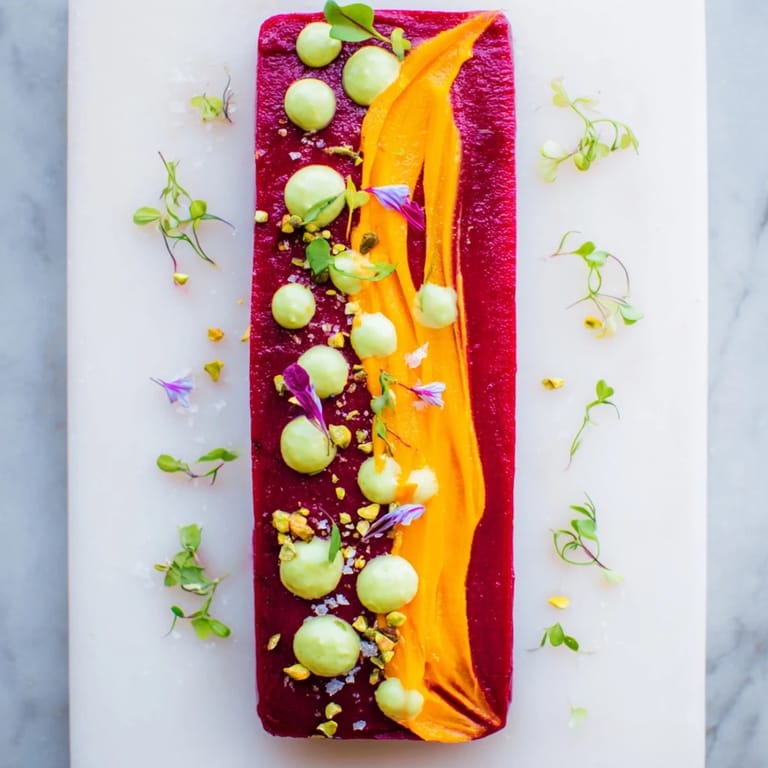
- Choose a clean white or neutral board and take a breath—this is the moment where precision meets art. Using a wide offset spatula or the back of a large spoon, spread a thick, three-inch-wide stripe of beet purée down the exact center of the board, making it as straight and confident as you can manage.
- Layer the remaining purées in artistic rhythm:
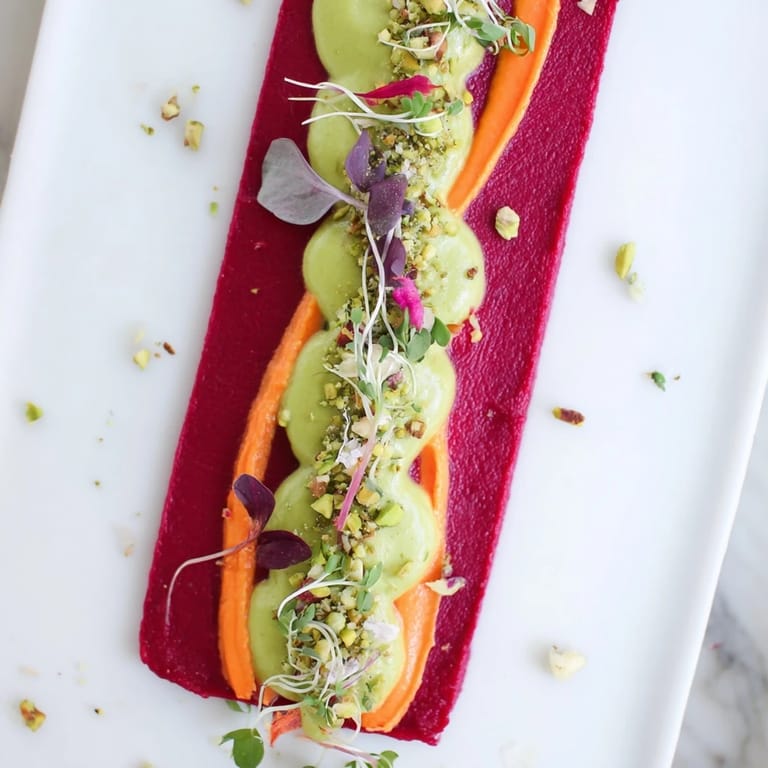
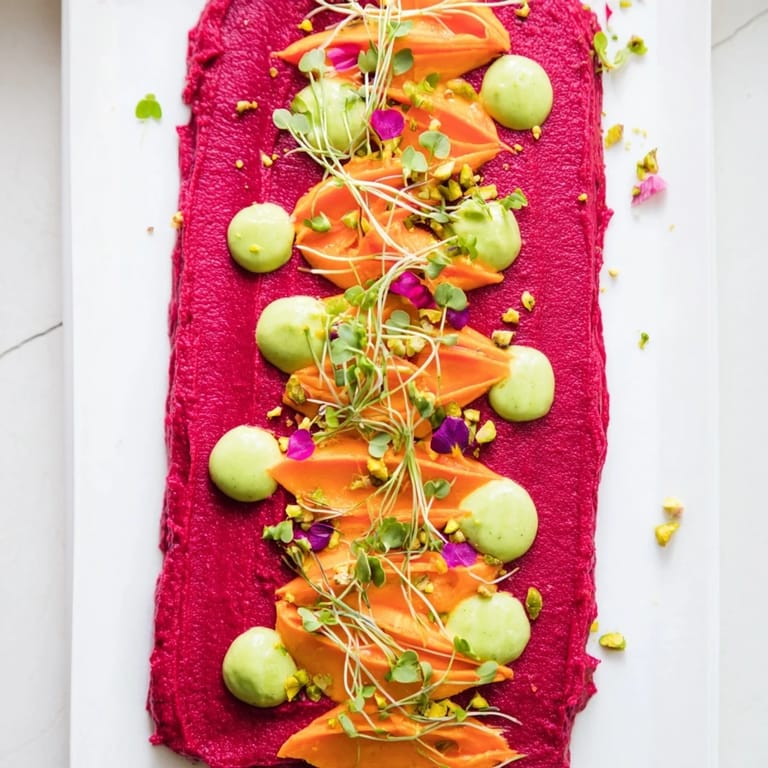
- Along the length of that beet stripe, use your offset spatula to create gestural swooshes of carrot purée, or use your squeeze bottle to pipe dots and lines of avocado cream in a pattern that feels natural to you. There's no single right way—trust your eye.
- Finish with thoughtful garnish:
- Scatter microgreens across the stripe in small clusters, place a few edible flowers at intervals, sprinkle crushed pistachios for textural pops, and finish with three or four generous pinches of flaky sea salt to catch the light.
- Invite people to eat with intention:
- Serve immediately while everything is fresh and the colors are at their brightest, and encourage your guests to scoop directly from the stripe with vegetables, bread, or chips.
 Save
Save I served this to a group of architects and designers once, and they spent more time photographing it than eating it—but then someone said it was the first time they'd thought about a plate as negative space, as intentional emptiness being part of the design. That comment shifted something in how I think about cooking.
Why the Stripe Works as a Concept
The stripe is pure intention—it says you're not trying to hide anything or layer things fussily, but rather celebrating the honest beauty of each component. When you commit to a single line running across the board, there's nowhere to hide a mistake, which means you have to slow down and really think about every movement. That constraint becomes liberating because suddenly plating feels less like decoration and more like conversation. The emptiness of the board matters as much as what's on it, turning negative space into the real star of the plate.
Playing with Color and Contrast
The genius of this dish is that the colors do half the work for you—the deep burgundy of beet, the warm golden-orange of carrot, and the pale creamy green of avocado create automatic contrast without you having to think too hard about it. But the real magic happens when you add those pistachios and microgreens, which pick up colors from each purée and tie them into a visual harmony. Your eye travels along the stripe naturally, noticing how each element makes the others look better.
Making It Your Own at the Table
This recipe is a canvas, not a cage—the moment you understand the technique, you can play endlessly. Try roasted sweet potato with coconut yogurt and charred green onions, or blanched peas with fresh mint and crispy shallots, or golden squash with brown butter and sage. The structure stays the same but the personality changes completely. Think of it as the foundation of your own edible art project, and treat every version like an experiment where you're the director.
- Leftover purées keep in the fridge for three days and make excellent dips or soup bases if you have extra.
- Toast pumpkin seeds or sunflower seeds as an alternative to pistachios for nut-free versions.
- This works beautifully as a composed cheese board element if you add some soft cheese or cured vegetables alongside.
 Save
Save At its core, this dish taught me that simplicity in the kitchen isn't about boredom—it's about respect for ingredients and the courage to let them speak for themselves. Serve it and watch how it changes the energy of a meal.
Recipe FAQs
- → What vegetables are used in the purées?
Roasted beets, carrots with fresh ginger, and ripe avocado form the base purées.
- → How is the vibrant stripe created on the board?
A wide spatula spreads a thick stripe of beet purée down the center, with layered carrot and avocado purées piped or spread on top.
- → What garnishes complement this dish?
Microgreens, edible flowers, crushed pistachios, and flaky sea salt add texture and visual contrast.
- → Can the dish accommodate dietary restrictions?
Yes, plant-based yogurt and olive oil can replace dairy for vegan options; omit pistachios to avoid nuts.
- → What cooking techniques are involved?
Roasting beets, steaming carrots, blending to smooth purées, and artistic plating create this dish’s presentation.