 Save
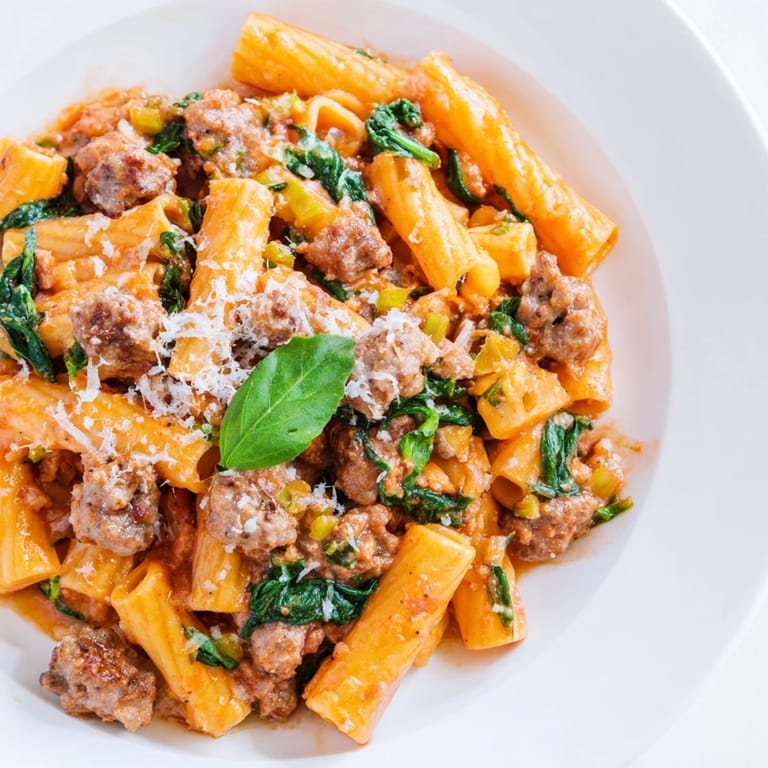
Save There's something about a weeknight when you're standing in the kitchen with maybe thirty minutes and absolutely no plan that forces you to get creative. One evening, I threw together whatever I had—spicy sausage, a can of tomatoes, pasta that needed using—and just dumped it all into one pot. The house filled with this incredible aroma of garlic and meat browning, and by the time my family gathered around the table, I realized I'd accidentally made something they'd ask for again and again.
I made this for a friend who'd just moved into her first apartment with nothing but a hot plate and serious determination. She texted me three days later saying she'd made it again because it was the only thing she knew how to cook that didn't taste like regret. That's when I knew it worked.
Ingredients
- Italian sausage (400g): Get good quality—it's the backbone of flavor here, and breaking it up as it cooks lets it brown properly and distribute throughout the dish.
- Yellow onion (1 medium): Chop it fine so it melts into the sauce rather than sitting in chunks.
- Garlic (3 cloves): Mince it small; you want it to perfume the whole pot without overpowering.
- Canned diced tomatoes (400g): Don't drain them—that juice is liquid gold for your sauce.
- Short pasta (300g): Penne, rigatoni, or fusilli all work because they trap sauce in their curves.
- Chicken broth (750ml): Low-sodium lets you control the salt level as you taste.
- Heavy cream (60ml): This is what makes it feel restaurant-quality; it rounds out the acidity from the tomatoes.
- Parmesan cheese (60g): Freshly grated if you can manage it—it melts more smoothly than pre-grated.
- Olive oil (2 tbsp): Use something you'd actually want to taste.
- Italian herbs (1 tsp): Dried works here because they bloom in the heat.
- Red pepper flakes (1/2 tsp): Optional, but the warmth rounds out the richness of the cream.
Tired of Takeout? 🥡
Get 10 meals you can make faster than delivery arrives. Seriously.
One email. No spam. Unsubscribe anytime.
Instructions
- Get Your Base Going:
- Heat olive oil in your largest skillet or Dutch oven over medium-high heat until it shimmers. You want it hot enough that the sausage hits the pan and immediately starts sizzling.
- Brown the Sausage:
- Crumble the sausage in as you add it, breaking it up with your spoon into small, bite-sized pieces. This takes about 5 minutes; you're looking for the meat to lose its pink color and develop little browned bits on the bottom of the pan.
- Build Your Aromatics:
- Add the chopped onion and let it soften for 3 to 4 minutes, stirring occasionally. Then add the garlic and cook just until you can smell it clearly—about 1 minute—before it burns.
- Add the Tomatoes and Spices:
- Pour in the canned tomatoes with all their juice, sprinkle in the Italian herbs and red pepper flakes, and stir everything together. The pan will smell incredible right now.
- Add Pasta and Broth:
- Pour in the uncooked pasta and chicken broth, stir thoroughly, and bring everything to a rolling boil. This is the moment where it looks a bit chaotic—trust it.
- Let It Cook Low and Slow:
- Turn the heat down to a simmer, cover the pan, and cook for 12 to 15 minutes, stirring every few minutes to prevent sticking. The pasta will absorb the liquid and soften as it cooks.
- Finish with Cream and Greens:
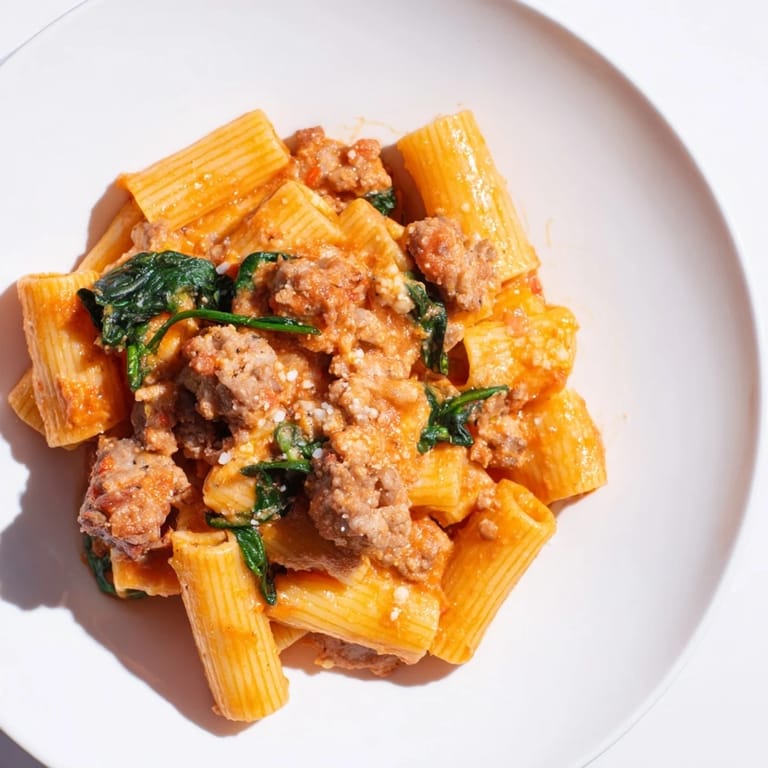
- When the pasta is just tender and most of the liquid is gone, stir in the heavy cream and Parmesan cheese. If you're using spinach, add it now and let it wilt for 2 to 3 minutes.
- Taste and Season:
- Add salt and freshly ground black pepper to your preference. Sometimes the sausage and broth bring enough salt already, so taste before you add too much.
 Save
Save My teenage nephew ate four bowls of this in silence, which for him is basically a standing ovation. Later he asked if I could teach him how to make it before he went back to college, and we spent an afternoon in the kitchen, him asking why each step mattered. It turned out to be less about the recipe and more about showing him that feeding people well doesn't require fancy skills or hours—just intention.
Why This Dish Works
One-pot meals live in that sweet spot where you get maximum flavor with minimum effort, and this one does it especially well because the pasta cooks directly in the sauce instead of separate. That means every strand soaks up the tomato, cream, and sausage all at once, and you avoid that tired, diluted pasta taste you get when you toss together separate components. The sausage does double duty too—it browns first to develop flavor, then its fat and rendered meat stay in the pot to season everything else that follows.
Variations That Actually Make Sense
This recipe is forgiving in ways that matter. You can swap the sausage for turkey if you want something lighter, though you might need to add a tiny bit more oil since turkey doesn't render as much fat. Sliced mushrooms or roasted red peppers stirred in with the onion add depth without throwing off the balance. Even the cream isn't sacred—I've made it with half-and-half or even skipped it entirely on nights when I didn't have any, and it's still worth eating.
- Use gluten-free pasta if that works for your table, and the cook time might be slightly different, so watch it.
- Fresh basil stirred in at the very end brightens everything up, though the dried herbs already in there do the job fine.
- A splash of red wine while the paste cooks adds sophistication and makes people think you actually planned the meal.
Serving and Storage
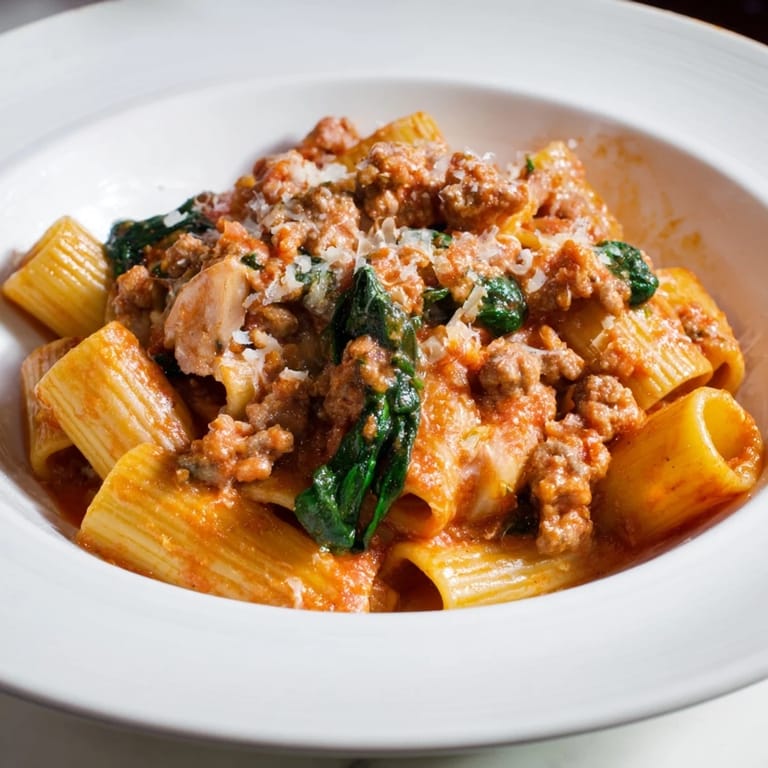
Eat this hot, straight from the pot if you're being honest about it. A shower of extra Parmesan and some fresh basil if you have it make it feel complete. It reheats beautifully the next day—just add a splash of water or broth when you warm it, since the pasta absorbs more liquid as it sits, and you want it saucy, not clumpy.
 Save
Save This dish has become my answer to a lot of kitchen dilemmas: when I'm hungry but tired, when I need to feed people with no notice, when I want something that tastes far better than the effort required. That's probably why it keeps coming back around.
Recipe FAQs
- → Can I use gluten-free pasta in this dish?
Yes, substituting gluten-free pasta works well and keeps the dish accessible to those with gluten sensitivities.
- → What type of sausage is best for this pasta?
Italian sausage, either mild or spicy, adds robust flavor. You can choose based on your heat preference.
- → Is it possible to add vegetables to this dish?
Absolutely. Sliced mushrooms or bell peppers can be sautéed with the onions to boost vegetable content and flavor.
- → How do I know when the pasta is done?
Simmer the pasta until al dente, usually 12–15 minutes, with most liquid absorbed. Stir occasionally for even cooking.
- → Can I prepare this dish ahead of time?
While best enjoyed fresh, leftovers can be refrigerated and gently reheated. Add a splash of broth or cream to restore moisture.