 Save
Save The first time I made roasted garlic soup, the house filled with a warm, sweet aroma that drew my husband from his office to the kitchen with curious eyes. I'd been fighting off a winter cold and remembered my grandmother telling me that garlic was nature's medicine. The transformation of sharp, pungent garlic cloves into buttery, caramelized morsels seemed almost magical as I squeezed them from their papery skins.
Last February during that unusual snowstorm, our power flickered for hours while this soup simmered on the gas stove. We bundled in blankets at the kitchen table, steam rising from our bowls as wind howled outside. Something about the contrast made each spoonful more meaningful, and now I associate this recipe with resilience and unexpected coziness.
Ingredients
- 3 large heads of garlic: Look for firm heads with tight cloves, as fresher garlic develops a deeper caramelized flavor when roasted.
- Yellow onion: The natural sweetness complements the roasted garlic and provides necessary depth to the base.
- Butter: Use unsalted so you can control the seasoning level, and real butter creates a silkier texture than substitutes.
- Heavy cream: Just a half cup transforms this from a basic pureed soup into something luxurious without becoming too heavy.
- Vegetable broth: I prefer homemade but a good quality store-bought works beautifully when time is short.
Tired of Takeout? 🥡
Get 10 meals you can make faster than delivery arrives. Seriously.
One email. No spam. Unsubscribe anytime.
Instructions
- Roast the garlic:
- Slice the tops off each head to expose the cloves, drizzle with olive oil, and wrap snugly in foil. You'll know they're perfectly done when your kitchen smells heavenly and the cloves feel butter-soft when pressed.
- Build the flavor base:
- As the butter melts and coats the chopped vegetables, you're creating the foundation for the entire soup. Take your time here, letting the onions turn translucent and slightly golden around the edges.
- Squeeze in liquid gold:
- Gently press each roasted garlic head from the bottom, watching as the soft cloves slide out like nature's butter. The aroma that releases at this moment is worth the entire cooking process.
- Simmer and blend:
- Allow the flavors to meld together during the simmer, stirring occasionally and breathing in the therapeutic steam. When blending, start slowly to avoid hot soup splatters.
- Finish with cream:
- Pour the cream in a slow, steady stream while stirring to create that gorgeous silky texture. Watch how the soup transforms from earthy beige to a richer, more inviting hue.
 Save
Save 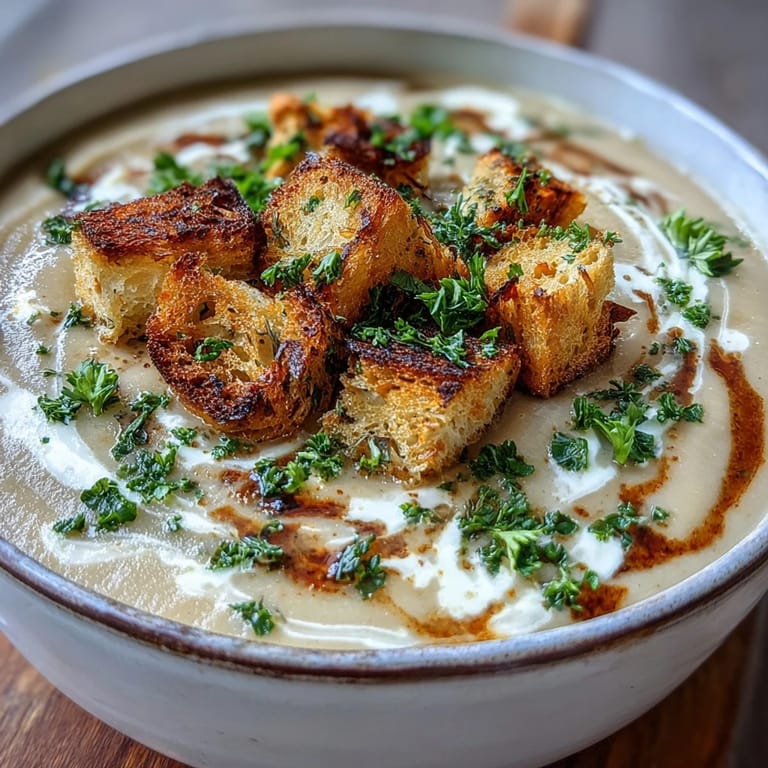 Save
Save My friend Sarah, who swears she hates garlic, came over unannounced one evening while this soup was simmering. She reluctantly accepted a small bowl and then immediately asked for seconds, completely shocked by how different roasted garlic tastes from its raw counterpart. Now she requests it specifically when she visits during the colder months.
Make It Your Own
Sometimes I add a parmesan rind during the simmering stage and remove it before blending for an extra layer of umami richness. Other variations that work beautifully include stirring in wilted spinach after blending, adding white beans for protein, or incorporating a splash of white wine before adding the broth. The soup becomes a canvas for whatever flavors you're craving that day.
Storage and Reheating
This soup actually tastes even better the next day after the flavors have had time to deepen and marry. Store it in an airtight container in the refrigerator for up to four days, reheating gently on the stovetop rather than the microwave to maintain its silky texture. Just be careful not to bring it to a boil when reheating with cream already added.
Serving Suggestions
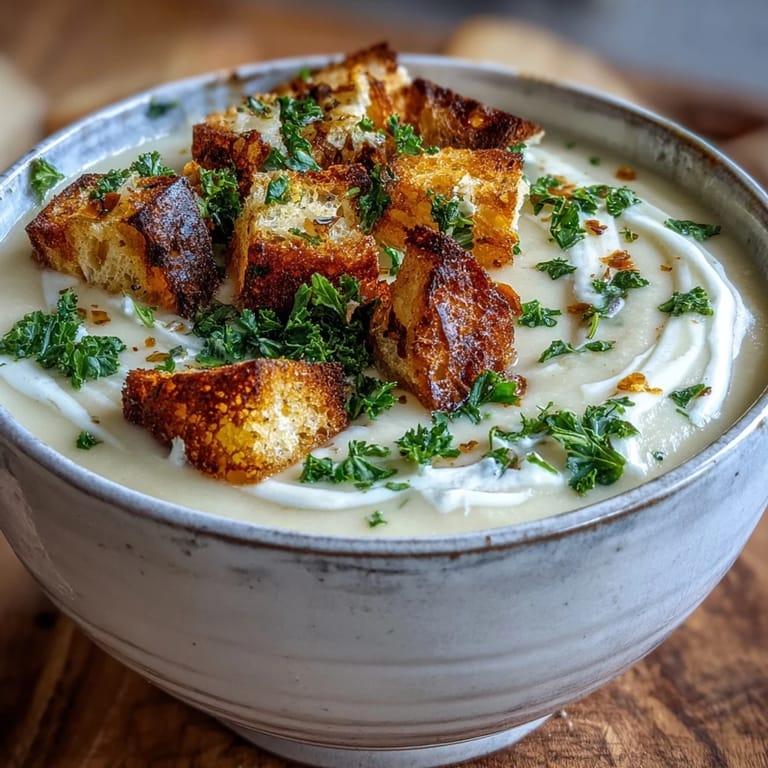
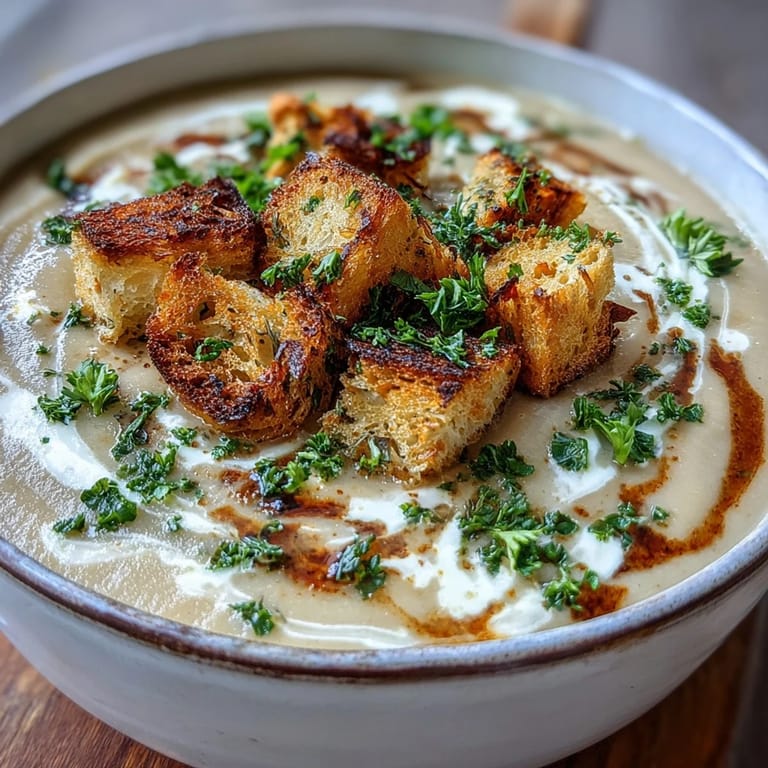
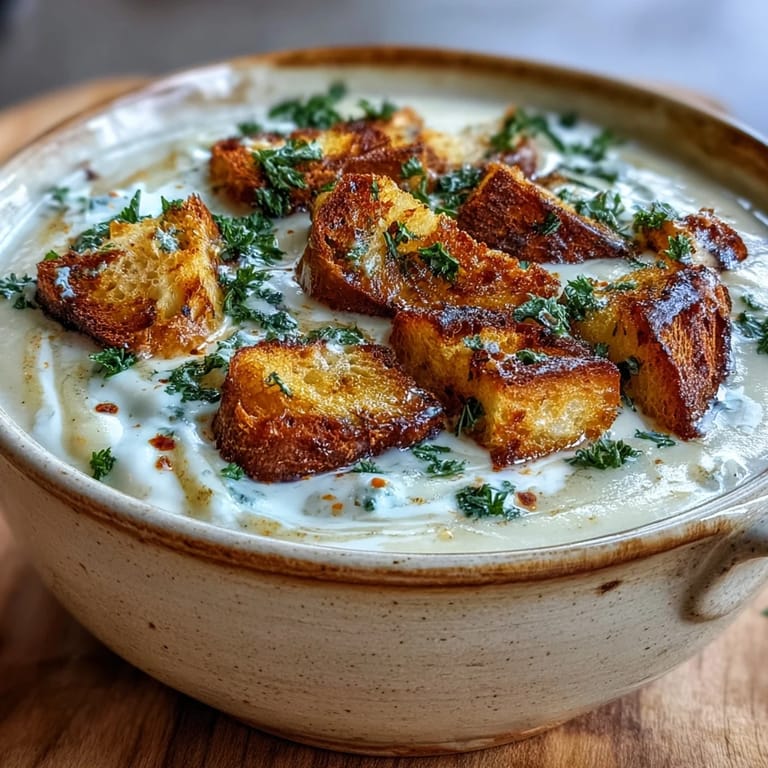
The simplicity of this soup pairs wonderfully with contrasting textures, which is why I always serve something crunchy alongside it. Homemade croutons made from day-old bread cubes tossed with olive oil, salt, and herbs then baked until golden create the perfect textural counterpoint.
- For a complete meal, serve with a peppery arugula salad dressed simply with lemon juice and olive oil.
- A glass of crisp white wine like Pinot Grigio complements the creamy richness without overwhelming the delicate garlic flavor.
- Keep garnishes light and fresh with a small drizzle of good olive oil and scattered fresh herbs to brighten each bowl.
 Save
Save 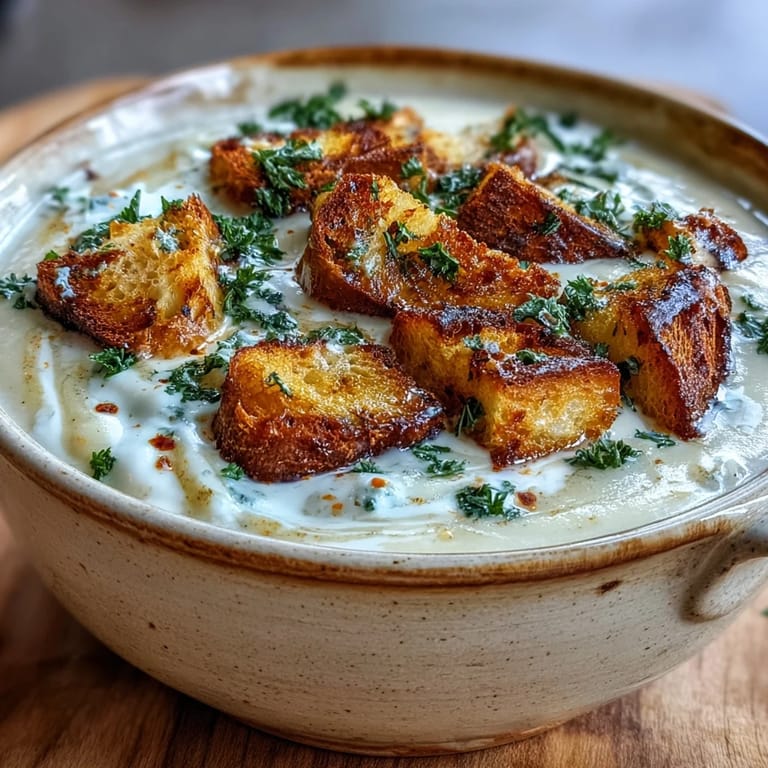 Save
Save This soup reminds me that sometimes the most humble ingredients can create the most memorable meals. Whether fighting a cold or simply needing comfort on a chilly evening, its gentle flavors never disappoint.
Recipe FAQs
- → How does roasting garlic change the flavor?
Roasting transforms garlic's sharp, pungent taste into something sweet, mellow, and deeply savory. The slow heat caramelizes the natural sugars, creating complex nutty notes that form the soul of this soup.
- → Can I make this soup ahead of time?
Absolutely. This soup actually improves after sitting in the refrigerator for a day or two, allowing flavors to meld. Store in an airtight container and reheat gently, adding a splash of broth if needed.
- → What can I use instead of heavy cream?
For a lighter version, use half-and-half or coconut cream for dairy-free options. Greek yogurt stirred in at the end adds tangy creaminess, though it shouldn't boil.
- → How do I achieve the smoothest texture?
An immersion blender works wonderfully for convenient puréeing. For ultra-smooth results, pass the blended soup through a fine-mesh sieve to remove any remaining fibrous bits.
- → What garnishes work best?
Fresh parsley adds bright color and herbal freshness. Homemade croutons, toasted baguette slices, or a swirl of olive oil create lovely texture contrasts. A sprinkle of grated Parmesan elevates the savory notes.
- → Is this suitable for freezing?
The soup base freezes beautifully for up to 3 months. Freeze before adding cream, then thaw and reheat, stirring in the cream just before serving for best texture.