 Save
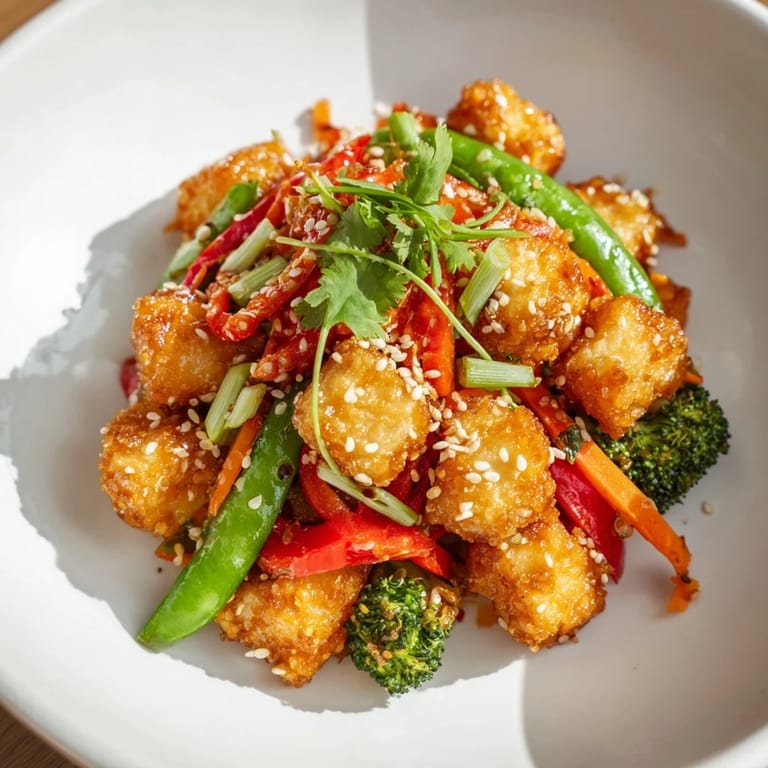
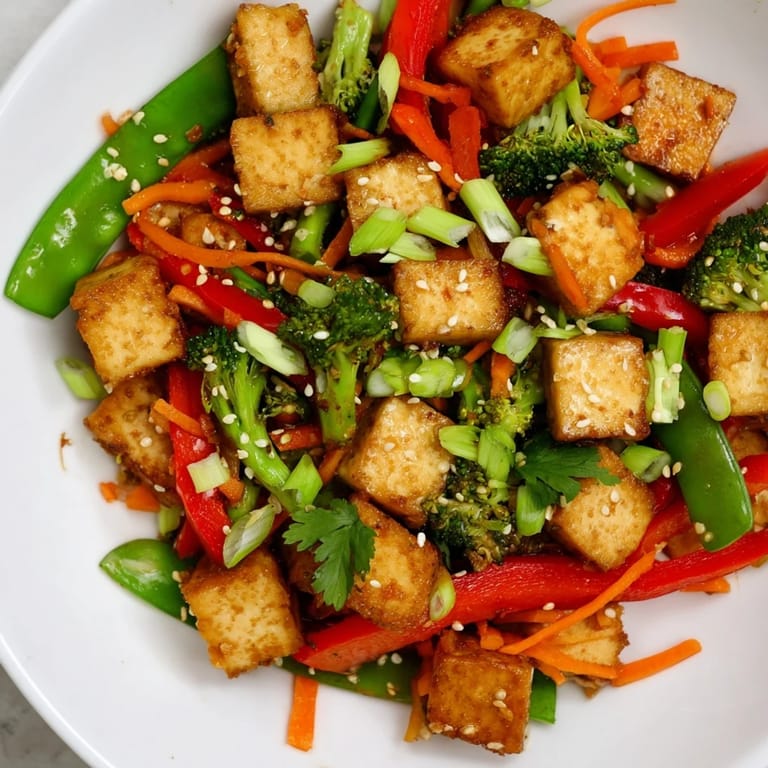
Save There's a particular Tuesday evening I'll never forget—I was standing at the stove, watching oil shimmer in my wok, when my friend Sarah wandered into the kitchen and asked what smelled so good. It was this sesame ginger tofu stir-fry, and honestly, I'd thrown it together mostly because I had noodles and tofu staring at me from the pantry. But something about that combination of crispy tofu hitting the tangy sesame-ginger sauce made her stop mid-conversation. She asked for the recipe before she'd even taken her first bite.
I made this last month for my sister's surprise lunch, and she actually paused eating to ask why the vegetables still had a little bite to them. That's when I realized the magic isn't about cooking everything until it's soft—it's about respecting the vegetables enough to know when to stop.
Ingredients
- Firm tofu (400 g, drained and pressed): Pressing removes moisture so it can crisp up properly; skip this and you'll end up with steamed tofu instead of golden cubes.
- Cornstarch (1 tbsp): This creates that addictive crispy exterior—don't use flour, it won't give you the same shatter.
- Vegetable oil (2 tbsp, plus more for the pan): High smoke point is essential; coconut oil works beautifully too.
- Red bell pepper (1, thinly sliced): Red ones are sweeter than green, which balances the ginger heat nicely.
- Carrot (1 medium, julienned): The julienne keeps them cooking at the right pace—thick slices lag behind.
- Sugar snap peas (100 g, trimmed): These stay crisp and add a fresh pop that feels almost luxurious in a weeknight meal.
- Broccoli florets (100 g): Cut them small so they're done at the same time as everything else.
- Spring onions (2, sliced): Save these for the end—they soften instantly and lose their personality if cooked too early.
- Dried wheat or rice noodles (250 g): Rice noodles are naturally gluten-free; wheat noodles have a sturdier chew.
- Soy sauce (3 tbsp): The backbone of the sauce; use full-sodium, not the low-sodium version, or you'll need more.
- Toasted sesame oil (1 tbsp): This is not a cooking oil—it's a finishing flavor bomb, so add it late.
- Rice vinegar (2 tbsp): It's milder than white vinegar and won't overshadow the ginger.
- Honey or maple syrup (1 tbsp): Both work, though maple adds an earthiness that honey doesn't.
- Fresh ginger (2 tbsp, grated): Grate it fresh; ground ginger tastes dusty by comparison.
- Garlic (2 cloves, minced): Mince it right before you use it so it doesn't oxidize and turn bitter.
- Sesame seeds (1 tbsp in sauce, 1 tbsp for garnish): Toast them yourself if you have time; they taste like they cost twice as much.
- Fresh coriander or cilantro (optional): A handful at the end brightens everything.
- Lime wedges (optional): Squeeze them over right before eating for a final brightness.
Tired of Takeout? 🥡
Get 10 meals you can make faster than delivery arrives. Seriously.
One email. No spam. Unsubscribe anytime.
Instructions
- Get the noodles ready:
- Boil water, add noodles, and follow the package timing—don't overcook them because they'll soften more when tossed with the hot sauce. Drain and rinse under cold water to stop them cooking.
- Prepare your tofu:
- Pat it dry with paper towels (this sounds silly but makes a real difference), cut into bite-sized cubes, and toss gently with cornstarch until every piece is coated. Some of the starch will dust off, and that's exactly right.
- Make the tofu golden:
- Heat oil in a wok or large skillet over medium-high heat until it shimmers. Add tofu in a single layer and resist the urge to move it around constantly—let each side sit for 2–3 minutes until it turns golden and develops a slight crust. You'll hear a quiet sizzle that feels satisfying.
- Stir-fry the vegetables:
- Once the tofu is out, add a tiny splash more oil if the pan looks dry. Add your hardest vegetables first—carrot and broccoli—then after about a minute, add the pepper and snap peas. You want them to finish together, all with a little resistance when you bite them.
- Build the sauce while things cook:
- In a small bowl, whisk soy sauce, sesame oil, rice vinegar, honey, ginger, garlic, and 1 tbsp sesame seeds. Don't taste it straight from the bowl or you'll think it's too strong—it's meant to coat noodles and tofu.
- Bring everything together:
- Return the tofu to the pan with vegetables, add your cooked noodles, and pour the sauce over everything. Toss gently for 2–3 minutes until the noodles absorb the flavors and the tofu heats through. The pan should smell incredible at this point.
- Finish and serve:
- Top with spring onions, extra sesame seeds, cilantro if you're using it, and squeeze of lime. Serve immediately so the noodles don't stick together and the vegetables stay crisp.
 Save
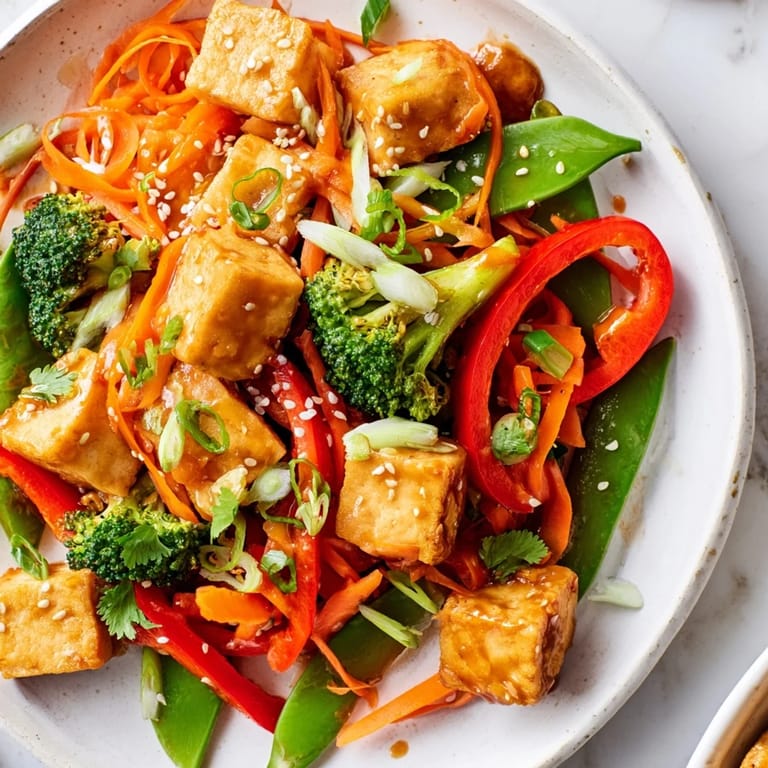
Save A few weeks back, someone at my dinner table said this tasted like a better version of what they'd ordered at a restaurant, and honestly, that moment stuck with me. It wasn't fancy or complicated—it was just the right balance of textures and flavors coming together in one pan.
The Tofu Secret
The difference between tofu that people actually want to eat and tofu that sits abandoned on a plate comes down to one thing: respecting the pressing step. When I first started cooking with tofu, I thought pressing was overthinking it. But tofu is like a sponge full of water, and that water is the enemy of crispiness. After you press it, that cornstarch coating becomes the crispy shell that makes people reach for seconds. I use a tofu press now, but honestly, wrapping it in clean kitchen towels and setting a heavy pan on top for 15 minutes works just as well.
Making It Your Own
The beauty of this dish is that it's flexible without being fussy. I've added mushrooms when I had them, thrown in bok choy because it was on sale, and once experimented with thin slices of sweet potato that somehow worked. The sauce is sturdy enough to carry almost any vegetable combination, and the noodles act like a neutral background that lets whatever you add shine through. The only rule I'd suggest keeping is the tofu and the sauce—those two things are what make it taste like intention rather than improvisation.
Timing and Heat
One evening while cooking this for friends, I got distracted and turned the heat too high, and everything started cooking unevenly—the tofu was perfect but the vegetables were barely warm. That taught me that medium-high is the sweet spot for a wok; it gives you enough heat to crisp the tofu and get a little color on the vegetables, but not so much that you're fighting to keep things from charring. If you're using a regular skillet instead of a wok, it'll take a minute longer but you'll get the same result as long as you give the pan space.
- Don't crowd the pan when you're crisping the tofu; give each cube room to breathe or they'll steam instead of fry.
- If your vegetables are releasing a lot of liquid, push them to the side and let them dry out for a minute before tossing everything together.
- The sauce should hit a hot pan so it reduces slightly and coats the noodles rather than pooling at the bottom.
 Save
Save This is the kind of meal that tastes special without asking for much in return—just a little attention to the details and a willingness to let good ingredients be themselves. It's the recipe I come back to when I want something vibrant and satisfying on a weeknight.
Recipe FAQs
- → How do I get tofu crispy in this dish?
Press the tofu well to remove moisture, toss with cornstarch, and fry in hot oil until golden and crisp on all sides for best texture.
- → Can I use gluten-free noodles?
Yes, substitute rice noodles or certified gluten-free wheat noodles to keep the dish gluten-free and delicious.
- → What vegetables work well in this stir-fry?
Red bell pepper, carrots, sugar snap peas, and broccoli provide great color, crunch, and nutrition; feel free to add mushrooms or baby corn.
- → How can I add heat to the sauce?
Include a pinch of chili flakes or a dash of sriracha to add a spicy kick without overpowering the balance.
- → What drink pairs best with this dish?
A crisp white wine or fragrant jasmine tea complements the tangy and savory flavors beautifully.