 Save
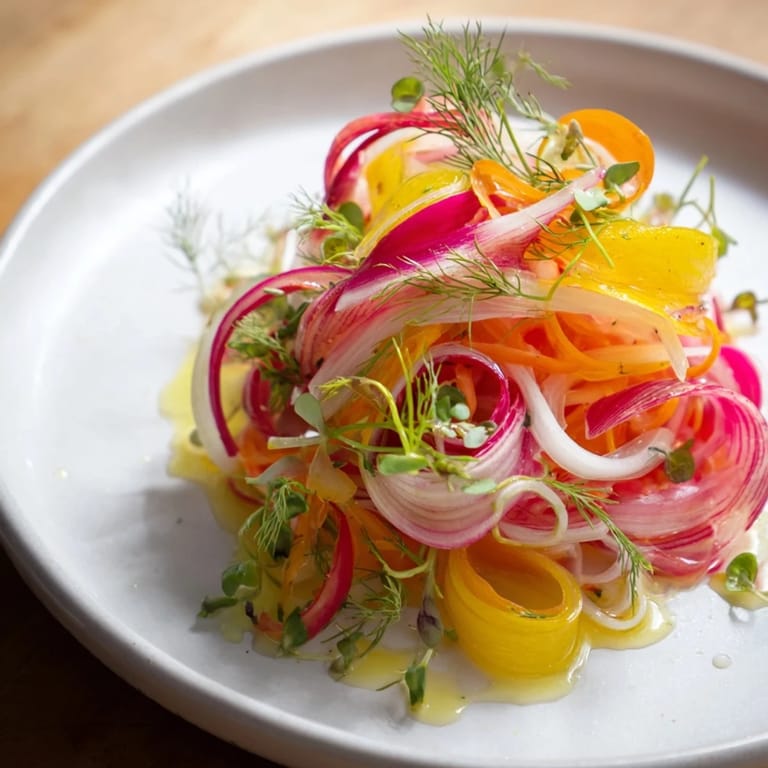
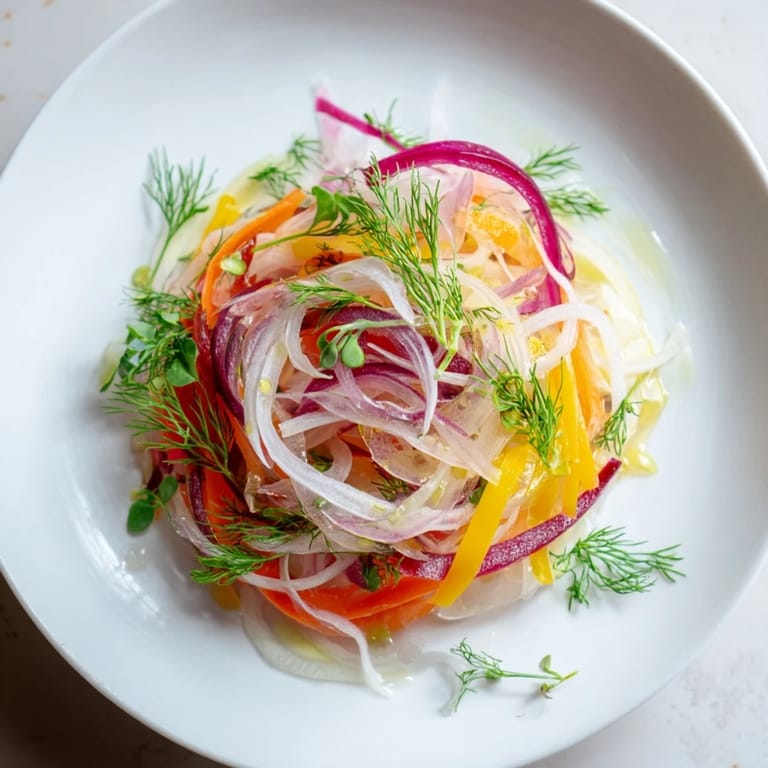
Save I discovered this salad by accident while experimenting with a mandoline one lazy afternoon, shaving vegetables thin enough to see light through them. What started as idle kitchen play—ribbons of golden beet, rainbow carrot, fennel curling under cold water—turned into something that looked almost too pretty to eat. My dinner guests that night kept circling the plate, unsure whether to dig in or take a photo first. That moment taught me that sometimes the most memorable dishes aren't the ones with the longest ingredient lists, but the ones that make people pause and really look.
I remember making this for a summer dinner party when I was too nervous to attempt anything cooked, so I leaned into what I could control: precision, freshness, and visual drama. The compliments weren't about the flavors alone—they were about how alive the plate looked, how the ribbons seemed to spin even when everything was still. That's when I realized that food can be a small act of generosity just by asking someone to really see what's in front of them.
Ingredients
- Fennel bulb: The anise-like sweetness grounds the salad and its pale, wispy ribbons are naturally elegant.
- Rainbow carrots: Different colors create visual depth, and their natural sweetness plays perfectly against the sharp lemon.
- Golden beet: Earthier and slightly less intense than red beets, it won't bleed and turn everything pink.
- Red onion: Just a whisper of bite and a pop of color; don't skip it even though it's small.
- Fresh dill and chervil: These feathery herbs are essential to the wispy, almost ethereal look—they're not just garnish, they're structure.
- Microgreens: The final flourish that catches light and adds a peppery note without heaviness.
- Extra-virgin olive oil: Quality matters here because there's nowhere to hide; I use one that tastes bright and grassy.
- Lemon juice and honey: The honey rounds out the acidity in a way that feels gentle rather than sharp.
- Dijon mustard: A small amount adds depth and helps the dressing cling to the vegetables.
Tired of Takeout? 🥡
Get 10 meals you can make faster than delivery arrives. Seriously.
One email. No spam. Unsubscribe anytime.
Instructions
- Slice everything paper-thin:
- Use a mandoline on its thinnest setting or a sharp vegetable peeler, working carefully and letting the blade do the work. The vegetables should be so thin they're translucent in places, which takes patience but creates the magic.
- Soak and crisp:
- Ice water for 5 to 10 minutes curls the edges and makes everything snap between your teeth. Pat them completely dry afterward or they'll slide around when you arrange them.
- Make the dressing:
- Whisk the oil, lemon, honey, and mustard until emulsified and glossy. Taste it—it should be bright but balanced, not aggressively sour.
- Build the spinning effect:
- Start at the center of your plate and overlap the vegetable ribbons in a loose spiral, letting them extend outward with uneven edges. Think less formal plating, more controlled chaos.
- Add the herbs:
- Scatter dill and chervil everywhere, but concentrate them toward the edges so they frame the vegetables like they're caught mid-spin.
- Dress at the last second:
- Drizzle just before serving so the vegetables stay crisp and the herbs don't wilt into sadness.
 Save
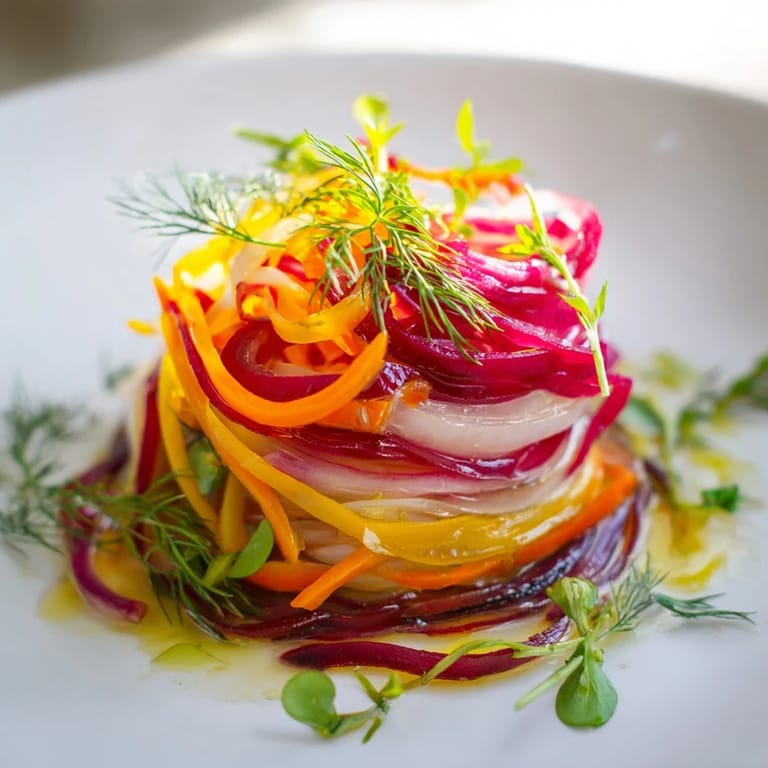
Save There's something almost meditative about arranging these ribbons, watching them catch the light differently with each turn of the plate. It reminded me that cooking doesn't always have to be about feeding people—sometimes it's about creating a small moment of beauty that says you took time and care, even when the actual preparation was simple.
The Magic of the Mandoline
I was skeptical about mandolines until I realized they're not just restaurant equipment—they're the difference between a salad that looks homemade and one that looks intentional. The slicer lets you create those gossamer ribbons that would take forever with a knife and would never be as consistent. If you don't have one, a sharp vegetable peeler works, though it takes longer and requires more arm strength than you'd think. Either way, this is the tool that transforms ordinary vegetables into something worth arranging like art.
Why Colors Matter Here
I stopped using just orange carrots after someone mentioned that the contrast is what makes people want to look closer. The golden beet adds warmth, the purple-tinted carrots add depth, and the pale fennel gives your eye a place to rest. It's not fussy—it's just knowing that when a dish is this simple, every detail is doing double duty. Choose vegetables that have clear color differences, and you'll find the whole presentation gets easier because the colors themselves create the visual interest.
Serving and Pairing
This salad showed up on my table during the warmer months when I wanted something light enough to start a meal without ruining anyone's appetite. It pairs beautifully with a crisp white wine—something with enough acidity to echo the lemon in the dressing. I've served it before grilled fish, roasted chicken, even alongside a cheeseboard. The key is that it should feel like a moment of pause before the main event, not a warm-up act.
- Serve on a large, flat plate where the spiral has room to breathe and the herbs can catch the light.
- Make this the first course and you'll set the tone for a meal that feels thoughtful and fresh.
- If you're feeding a crowd, assemble individual plates just before serving rather than one big platter, so each person gets their own perfect spinning top.
 Save
Save This salad taught me that sometimes the most impressive thing you can do in the kitchen is pay attention to simplicity and presentation. It's a quiet dish, but it speaks volumes.