 Save
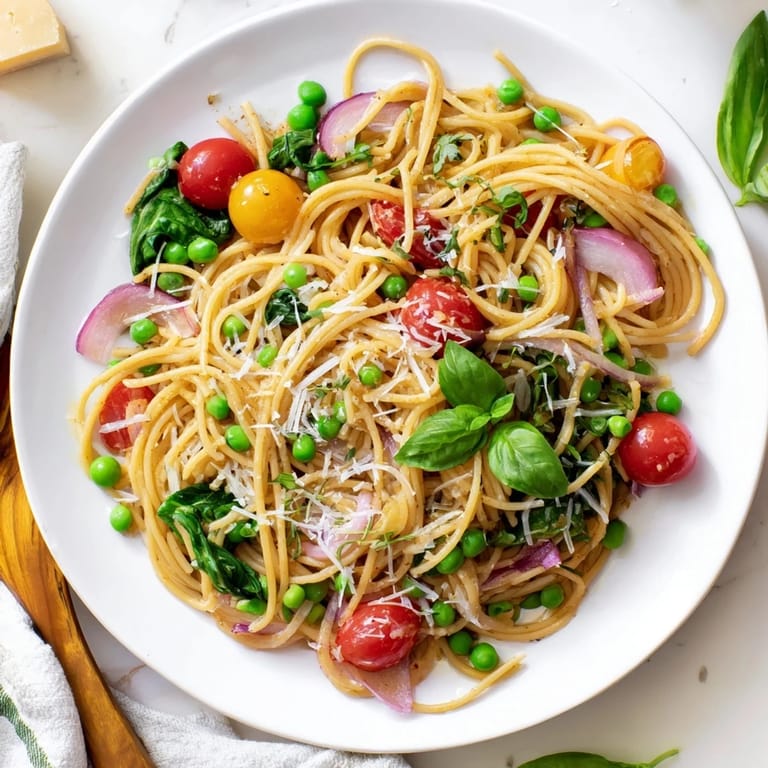
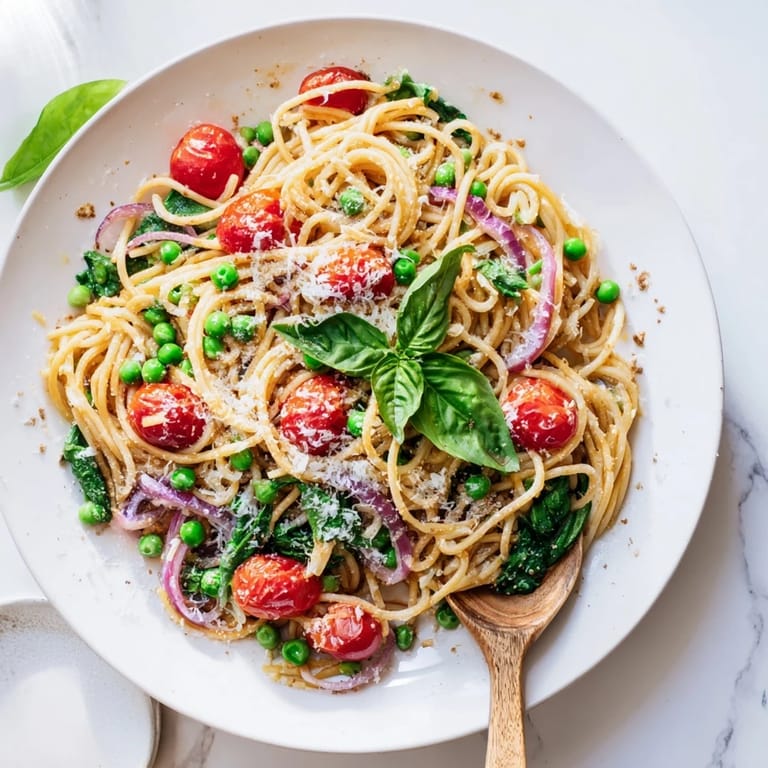
Save The first time I made this one-pot spaghetti, I was honestly skeptical about cooking pasta directly in broth. My grandmother would have shaken her head at the method, but something about throwing everything into a single pot called to me on a Tuesday evening when dishes were already piled high. When those cherry tomatoes started bursting and releasing their juices into the simmering liquid, creating the most incredible sauce without any effort, I knew I'd stumbled onto something special. Now it's become my go-to when spring produce arrives at the farmers market and I want something that tastes fresh but doesn't require hours of prep work.
Last spring, my friend Sarah came over for a last-minute dinner, and I threw this together using whatever I had in the fridge. She's not usually someone who gets excited about vegetables, but she literally scraped her plate clean and asked for the recipe before she even finished eating. There's something magical about how the peas turn bright green and tender while the spinach wilts just enough to blend into the pasta without disappearing completely. It's the kind of meal that makes you feel like you're eating something restaurant-quality while actually standing over the stove in your sweatpants.
Ingredients
- Dried spaghetti (350 g/12 oz): The strands will absorb the vegetable broth as they cook, creating a naturally creamy sauce that would take much longer to achieve with traditional methods
- Frozen or fresh peas (150 g/1 cup): They add sweetness and a pop of bright color that contrasts beautifully with the pasta
- Baby spinach (100 g/3.5 oz): Use fresh spinach here, and don't worry about the large leaves because they'll wilt down nicely into the dish
- Cherry tomatoes (200 g/7 oz), halved: Halving them helps release their juices into the cooking liquid, creating those burst pockets of flavor
- Garlic cloves (2), thinly sliced: Thin slices will mellow and sweeten as they sauté, infusing the oil before the liquid goes in
- Small red onion (1), thinly sliced: The red onion adds a mild sweetness and pretty color contrast against the green vegetables
- Vegetable broth (1 L/4 cups): This becomes both the cooking liquid and the base of your sauce, so use a good quality one you enjoy drinking on its own
- Olive oil (2 tbsp): A fruity extra virgin olive oil will add depth, though regular olive oil works perfectly fine for everyday cooking
- Salt (1/2 tsp): Start with less because the broth and Parmesan both contain salt
- Black pepper (1/4 tsp): Freshly cracked black pepper adds a warm spice that complements the sweet vegetables
- Red pepper flakes (1/4 tsp, optional): Just a tiny bit gives a subtle warmth that makes all the flavors sing without making it spicy
- Lemon zest (1 lemon): The zest, not the juice, brightens everything up and cuts through the richness of the Parmesan
- Grated Parmesan cheese (30 g/1/4 cup): Use vegetarian Parmesan if that's important to you, or nutritional yeast for a dairy-free version
- Fresh basil leaves, to serve: Tear the basil by hand instead of cutting it to avoid bruising and bitter edges
Tired of Takeout? 🥡
Get 10 meals you can make faster than delivery arrives. Seriously.
One email. No spam. Unsubscribe anytime.
Instructions
- Sauté the aromatics:
- Heat olive oil in a large pot over medium heat, then add the sliced garlic and red onion, cooking for 2-3 minutes until fragrant and softened but not browned
- Combine everything:
- Add the spaghetti, peas, spinach, and halved cherry tomatoes to the pot, then pour in the vegetable broth and bring everything to a boil
- Season the pot:
- Add salt, black pepper, and red pepper flakes, then stir occasionally to prevent the pasta from sticking to the bottom
- Simmer to perfection:
- Cook uncovered for 10-12 minutes until the pasta is al dente and most liquid has been absorbed, then stir in the lemon zest
- Finish and serve:
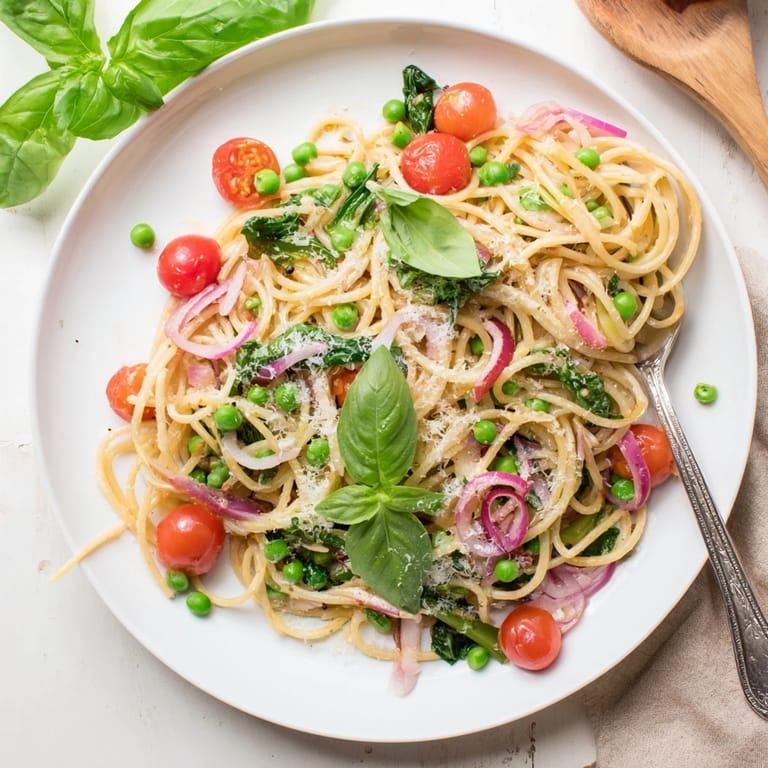
- Remove from heat and divide among plates, topping each serving with grated Parmesan and fresh basil leaves
 Save
Save This recipe transformed how I think about weeknight cooking. After my mom had surgery last spring, I brought her a batch of this pasta, and she said it was the first thing that actually tasted good during her recovery. Something about the bright vegetables and comforting pasta just hits that perfect spot between nourishing and cozy.
Making It Your Own
I've learned that this base recipe is incredibly forgiving and adaptable. Sometimes I'll add white beans or chickpeas for extra protein, and other times I'll swap in asparagus when it's in season. The method remains the same regardless of what vegetables you choose.
Timing Is Everything
The key to perfect one-pot pasta is trusting the process. In the beginning, it'll look like way too much liquid, but the pasta will absorb almost all of it while releasing starch into the broth. Resist the urge to add more liquid unless it looks completely dry.
Leftovers Love
This pasta actually tastes even better the next day as the flavors continue to meld together. Store it in the refrigerator and reheat with a splash of water or extra broth to loosen it up.
- Bring leftovers to room temperature before reheating for even warming
- Add a fresh squeeze of lemon juice to brighten day-old pasta
- Top with extra Parmesan and fresh basil to make it feel newly made
 Save
Save This recipe has saved me on countless busy weeknights when I want something homemade but don't have the energy for complicated cooking. Sometimes the simplest methods produce the most satisfying results.
Recipe FAQs
- → Can I use fresh vegetables instead of frozen peas?
Absolutely. Fresh peas work beautifully in this dish. If using larger fresh peas, you may want to add them slightly later in cooking to avoid overcooking. Fresh vegetables will enhance the spring flavor profile.
- → What vegetable broth should I use?
Any good quality vegetable broth works well. For best results, use low-sodium broth so you can control the salt level. You can also use water with a vegetable bouillon cube if preferred, though broth adds more depth.
- → How do I prevent the pasta from sticking?
Stir occasionally throughout cooking, especially in the first few minutes after adding the broth. The key is maintaining a gentle simmer and not letting the pasta sit undisturbed for long periods.
- → Can I add protein to this dish?
Yes, this dish pairs well with added protein. Consider chickpeas for a hearty vegetarian option, or white beans for creaminess. You could also add grilled chicken or shrimp for non-vegetarian variations.
- → Is this dish freezer-friendly?
This one-pot pasta is best enjoyed fresh due to the delicate vegetables and pasta texture. However, you can refrigerate leftovers for up to 3 days and reheat gently with a splash of broth or water.
- → What wine pairs best with this meal?
A crisp Sauvignon Blanc complements the fresh spring vegetables and light lemon notes beautifully. Alternatively, a light Pinot Grigio or Verdicchio would work wonderfully.