 Save
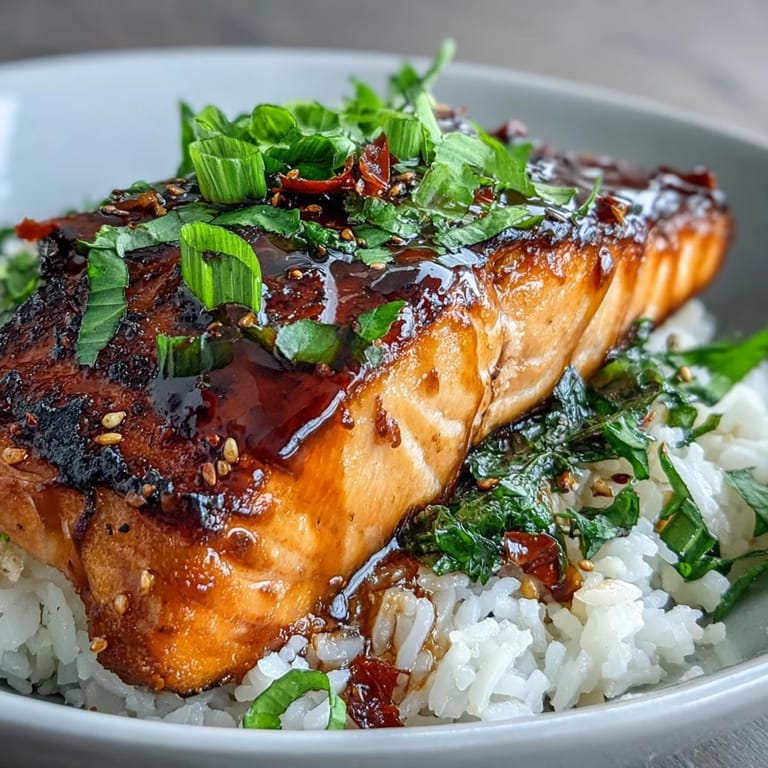
Save There's something about the sizzle of salmon hitting a hot pan that makes me pause whatever I'm doing. Years ago, I was standing in my kitchen on a Tuesday evening, completely uninspired by the contents of my fridge, when I spotted a beautiful salmon fillet and decided to raid the pantry for soy sauce and mirin. That impromptu dinner turned into something I'd make again and again, each time tweaking the glaze until it became this perfect balance of savory and sweet. Now, a teriyaki salmon bowl feels like comfort wrapped in elegance, the kind of dish that satisfies both a weeknight craving and the desire to eat something genuinely good for you.
I made this for my partner last spring when they'd been having a rough week, and watching them take that first bite and then go quiet for a moment told me everything. The kitchen smelled incredible, like garlic and ginger and something vaguely caramelized, and somehow a bowl of salmon and rice became the conversation starter we needed. Simple things done well have a way of speaking louder than elaborate efforts ever could.
Ingredients
- Salmon fillets (4, about 150 g each): Look for fillets with vibrant color and a firm texture; they should smell fresh and slightly oceanic, never fishy.
- Soy sauce (60 ml): This is the backbone of your glaze, so use something you actually like to taste on its own.
- Mirin (60 ml): This sweet rice wine gives the sauce its glossy finish and subtle complexity; don't skip it for honey.
- Brown sugar (2 tbsp): Adds depth and helps the glaze caramelize beautifully on the salmon.
- Rice vinegar (1 tbsp): Cuts through the sweetness and brightens the entire sauce with a gentle tang.
- Sesame oil (2 tsp): A little goes a long way; this creates that toasted, aromatic quality that makes people ask what your secret is.
- Garlic and ginger (2 cloves and 1 tsp): Fresh is non-negotiable here; mincing them finely ensures they distribute evenly through the sauce.
- Cornstarch slurry (1 tsp cornstarch mixed with 2 tsp water): This is what transforms your sauce from thin to silky without adding flour or cream.
- Red bell pepper, carrot, broccoli, and sugar snap peas: Mix and match based on what's at the market; the goal is color, crunch, and something green.
- Jasmine or sushi rice (300 g): Jasmine rice has a delicate fragrance that pairs beautifully with the savory sauce.
- Vegetable oil (2 tbsp for stir-frying): Use something with a high smoke point so the vegetables char slightly rather than steam.
- Sesame seeds and spring onions (optional garnishes): These finish the bowl with texture and a fresh bite that cuts through the richness.
Tired of Takeout? 🥡
Get 10 meals you can make faster than delivery arrives. Seriously.
One email. No spam. Unsubscribe anytime.
Instructions
- Prepare your rice:
- Rinse the rice under cold running water, swirling it with your fingers until the water turns from cloudy to clear; this removes excess starch and helps each grain separate. Combine the rinsed rice with water in a saucepan, bring to a boil, then cover and reduce heat to low, letting it simmer for 15 minutes before removing from heat and letting it rest covered for 5 minutes.
- Build your teriyaki sauce:
- In a small saucepan, combine soy sauce, mirin, brown sugar, rice vinegar, sesame oil, minced garlic, and grated ginger over medium heat, stirring until the sugar dissolves completely. Once it's simmering, stir in the cornstarch slurry and watch as the sauce transforms from thin to glossy within a minute or two, then set it aside.
- Sear the salmon:
- Season each salmon fillet with salt and pepper, then place them skin-side down (if skin-on) in a hot nonstick skillet with a splash of oil, listening for that satisfying sizzle. Cook for 3 to 4 minutes without moving them, then flip gently and cook another 2 to 3 minutes until the flesh is just opaque and flakes easily.
- Glaze and finish:
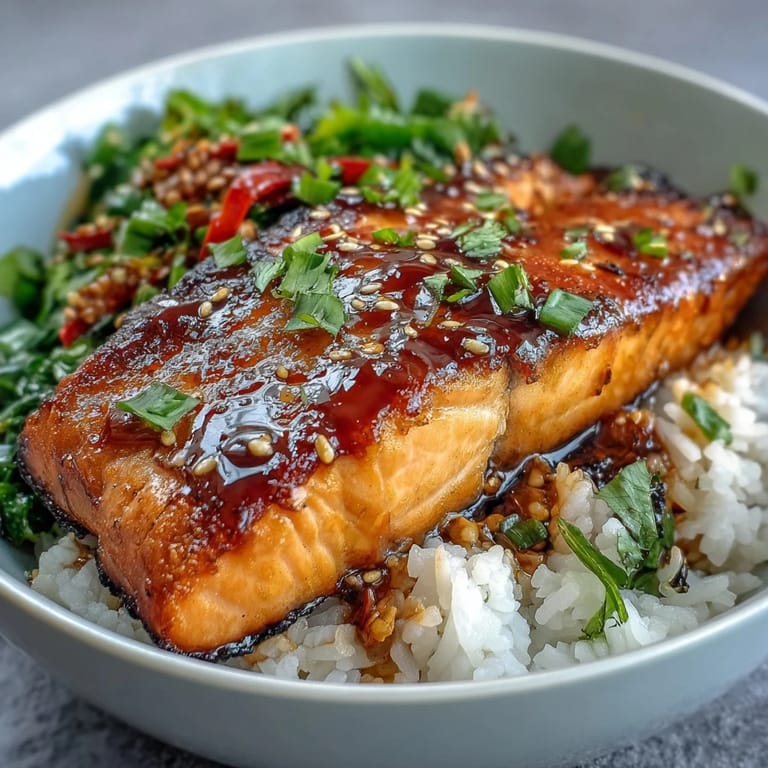
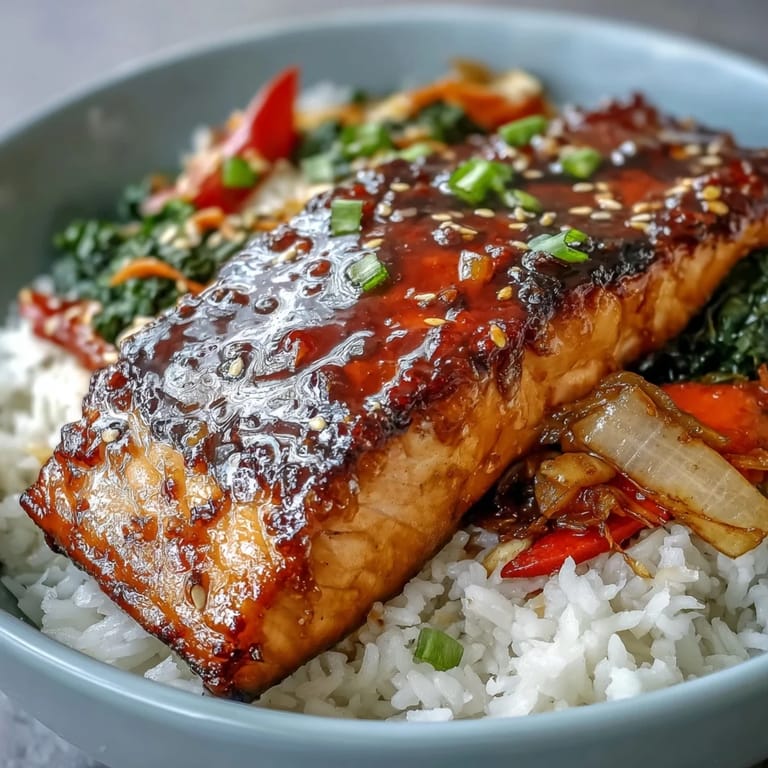
- Brush the cooked salmon generously with your teriyaki sauce, letting it coat every surface, and cook for just 1 minute more to let the glaze set. The sauce will cling to the fish and create that restaurant-quality finish.
- Stir-fry your vegetables:
- Heat vegetable oil in a wok or large skillet over high heat until it shimmers, then add your bell pepper, carrot, broccoli, and sugar snap peas in quick succession, tossing constantly. Cook for 3 to 4 minutes, aiming for vegetables that are tender but still have a slight crunch and color.
- Assemble your bowls:
- Divide the fluffy rice between four bowls, arrange the stir-fried vegetables on top, then crown each bowl with a piece of the glazed salmon. Drizzle extra sauce over everything and finish with sesame seeds and fresh spring onion slices if you have them.
 Save
Save There was an afternoon last summer when I made this for my family, and my nephew asked if it was from a restaurant we'd gone to the week before. Knowing he couldn't tell the difference filled me with an embarrassing amount of pride, and somehow that moment made me understand why people cook at all.
Why the Right Pan Matters
A nonstick skillet is almost essential here because salmon has a tendency to stick to regular stainless steel, and struggling to flip it ruins both the presentation and your mood. I learned this the hard way the first time I made this, fighting with a beautiful fillet that refused to cooperate. Now I always make sure my nonstick pan is in good condition, seasoned with a little oil before cooking, and heated until it's genuinely hot before the salmon touches it.
Timing and Temperature
Salmon cooks quickly, which is both its gift and its trap because the difference between perfectly cooked and dry is literally one minute. The flesh should be opaque but still slightly translucent in the very center when you flip it, and it will continue cooking slightly after you remove it from heat. Getting comfortable with this timing means relying on your eyes and a gentle fork test rather than a timer, and that skill transfers to every fish dish you'll ever make.
Making It Your Own
The beauty of this bowl is that it welcomes improvisation in a way that makes you feel creative rather than like you're winging it. You can swap vegetables based on what's fresh at the market or what you're craving, adjust the spice level in the sauce, or even marinate the salmon in half the teriyaki sauce for 15 minutes before cooking if you want deeper flavor. One thing I've discovered is that the sauce works brilliantly on chicken thighs or tofu if you're cooking for mixed preferences, and somehow that flexibility made this recipe one I reach for constantly.
- Try marinating the salmon for 15 minutes before cooking if you want a more intense teriyaki flavor.
- Swap seasonal vegetables like zucchini, mushrooms, or baby corn without changing a single other step.
- This glaze also works beautifully on chicken thighs or crumbled tofu if you're cooking for a mixed table.
 Save
Save This bowl has become my answer to the question of what to make when you want something that feels special but doesn't demand hours in the kitchen. It's proof that good cooking doesn't require complexity, just intention and ingredients you respect.
Recipe FAQs
- → Can I use other types of fish?
Absolutely. While salmon works beautifully with teriyaki glaze, you can substitute with other fatty fish like tuna steaks, mahi-mahi, or cod. Adjust cooking times slightly based on thickness.
- → How do I store leftovers?
Store components separately in airtight containers. Rice and vegetables keep 3-4 days refrigerated. Salmon is best enjoyed within 2 days. Reheat gently to maintain texture.
- → Can I make this gluten-free?
Yes. Use gluten-free soy sauce or tamari in place of regular soy sauce. Verify all other ingredients are certified gluten-free, particularly the cornstarch and condiments.
- → What vegetables work best?
The suggested vegetables provide great color and crunch, but feel free to use what's available. Mushrooms, zucchini, baby corn, snap peas, or bok choy all work wonderfully in this bowl.
- → Can I prep components ahead?
Certainly. Slice vegetables up to a day in advance and store refrigerated. The teriyaki sauce can be made 2-3 days ahead and kept chilled. Fresh-cooked rice and salmon yield the best results.