 Save
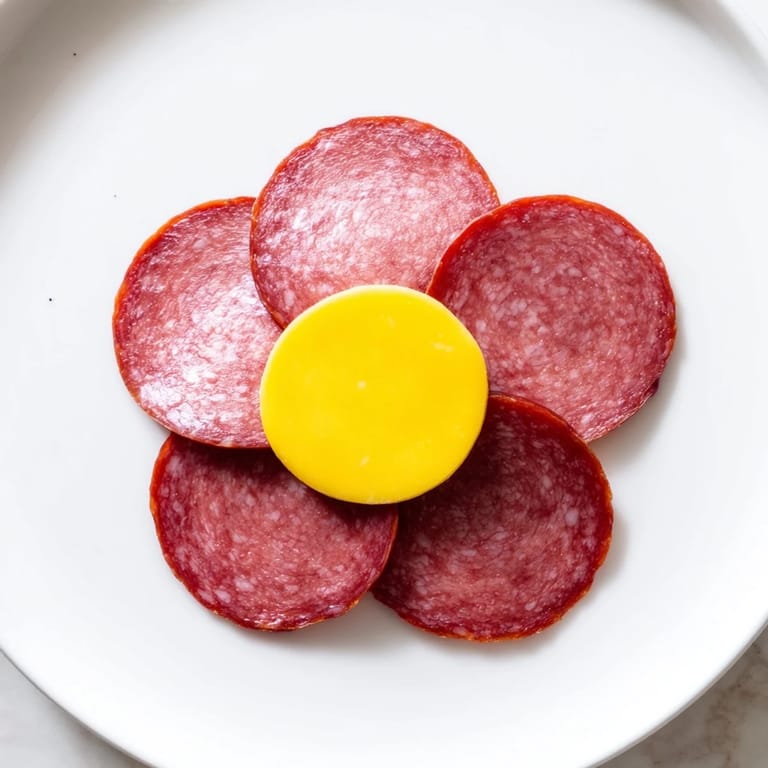
Save The first time I made a Tudor Rose, I was frantically prepping for a dinner party and realized I had salami and cheese but absolutely nothing warm to serve. My neighbor had just mentioned how beautiful arranged charcuterie could be, and something clicked—what if I made the ingredients themselves into art? Twenty minutes later, I'd arranged five perfect salami slices into a flower shape, topped it with a golden cheese button, and suddenly I had an appetizer that looked like it belonged in a gallery. My guests were genuinely surprised when they realized it was so simple.
I remember bringing a Tudor Rose to a potluck at work, and someone actually took a photo of it before eating it—which, I'll admit, felt oddly validating. The beauty of it is that people hesitate to eat something that looks this intentional, which means it stays on the platter longer and somehow tastes even better when they finally do try it. That moment taught me that food arranged with care becomes a conversation starter, not just sustenance.
Ingredients
- Salami slices (5 pieces, about 6–8 cm diameter): Look for salami that's thin enough to drape naturally but sturdy enough to hold its shape—too thick and it won't curve gracefully, too thin and it tears. I've learned that room-temperature salami arranges better than cold, so pull yours out a few minutes before assembly.
- Yellow cheese (1 small round slice, about 3–4 cm diameter, 0.5 cm thick): Gouda or aged Cheddar works beautifully because they're firm enough to stay centered without sliding around. If your cheese is too soft, briefly chill it or use a small round cutter to get a clean edge.
Tired of Takeout? 🥡
Get 10 meals you can make faster than delivery arrives. Seriously.
One email. No spam. Unsubscribe anytime.
Instructions
- Arrange your petals:
- Place your serving plate in front of you and lay down the first salami slice, then overlap the second one slightly on top, continuing around like you're drawing a flower. You'll feel when the symmetry clicks—it's oddly meditative, like arranging flower petals.
- Crown it with cheese:
- Set your cheese button dead center, letting it cover where all those salami edges meet. The cheese acts as both the visual anchor and the thing that holds everything together—press down gently so it nestles into place.
- Perfect the petals:
- Step back and look at it from above, then adjust any salami that's slipped or lost its curve. A light touch with your fingertip can nudge each petal into a more graceful shape.
- Serve it up:
- Bring it straight to the table—this isn't something that needs to sit around. The magic is in the moment when people first see it and realize they're allowed to eat it.
 Save
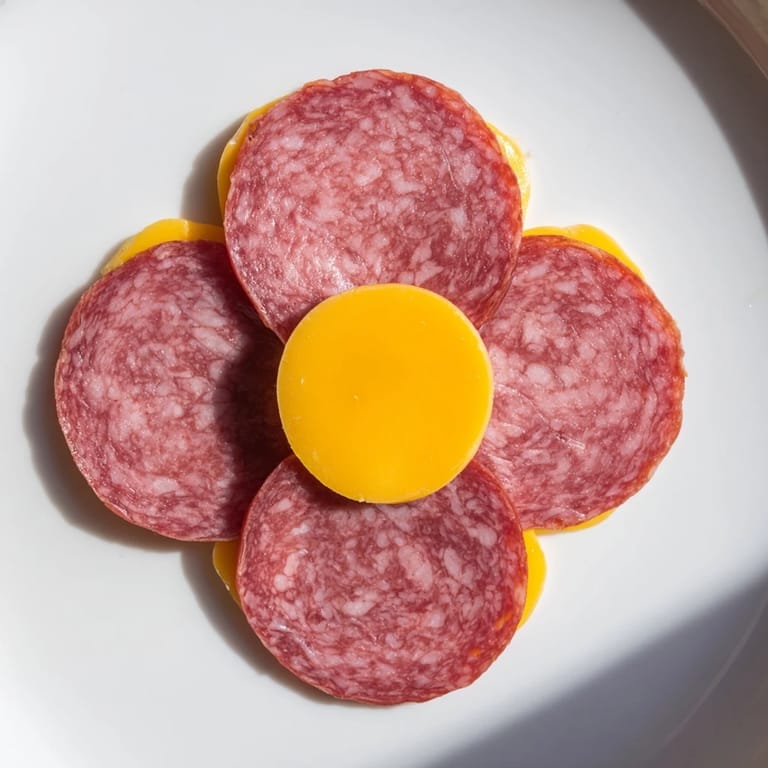
Save There's something genuinely delightful about watching someone reach for a Tudor Rose at a party—they pause, admire it, maybe take a photo, and then realize that something this beautiful is actually meant to be eaten right now. That permission slip, that moment where art becomes snack, is what makes this appetizer special.
The Elegance of Simplicity
I've noticed that some of the best entertaining tricks aren't about cooking skill at all—they're about presentation. A Tudor Rose teaches you that arranging what you already have can create more impact than hours spent over a stove. It's genuinely liberating once you realize that sophistication doesn't require complexity.
Playing With Your Ingredients
Once you understand the basic petal-and-button structure, you start seeing variations everywhere. I've made versions with prosciutto, mortadella, even smoked turkey when that's what I had on hand. The shape itself becomes the framework, and suddenly you're customizing rather than following a recipe, which is when cooking stops feeling like instruction-following and becomes actual creative play.
Making It Your Own
The Tudor Rose is really a template for a moment—your moment, your ingredients, your taste preferences. I've tucked microgreens between petals, drizzled everything with aged balsamic, even garnished with fresh basil when I was trying to impress someone specific. The genius is that you can make it exactly as fancy or casual as your occasion demands.
- If you want extra color and freshness, tuck small basil or parsley leaves between the salami petals before serving.
- A light drizzle of good olive oil or a tiny dab of whole-grain mustard in the center adds sophistication without overwhelming the delicate flavors.
- This works beautifully on a mixed charcuterie board, or stand alone as a single stunning appetizer.
 Save
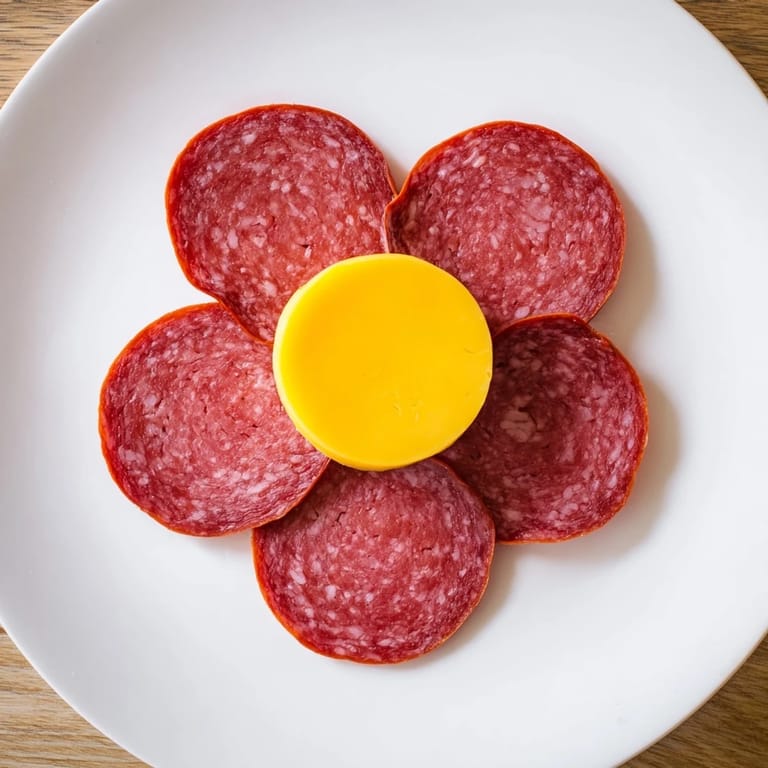
Save A Tudor Rose proves that sometimes the most elegant thing you can offer guests is permission to enjoy something beautiful without guilt or complication. It's ten minutes and two ingredients that somehow say everything about caring enough to make the ordinary feel special.
Recipe FAQs
- → What type of cheese works best for the center?
Firm yellow cheeses like Gouda or Cheddar, cut into a small round slice, hold the shape nicely and complement the salami flavors.
- → Can I use other cured meats instead of salami?
Yes, alternatives such as pepperoni or soppressata can be used to vary the flavor and texture while maintaining the floral pattern.
- → How can I keep the salami petals from sliding?
Arrange slices to slightly overlap and press gently to secure them on the serving plate. The cheese button in the center helps stabilize the shape.
- → Is this suitable for gluten-free diets?
Yes, the ingredients used—salami and cheese—are naturally gluten-free, but always verify labels for additives.
- → What garnishes pair well with this presentation?
Fresh herbs like basil or parsley tucked between the salami petals add color and a subtle fresh aroma.