 Save
Save I discovered this dish during a peculiar moment in early winter when my kitchen felt too warm and my mind too restless. Flipping through a travel photography book, I became entranced by stark images of the Arctic—those minimalist landscapes where every element seemed deliberate, spaced with intention. That evening, I found myself reaching for vegetables that matched those pale, sculptural qualities: daikon, kohlrabi, endive. What emerged was less a traditional salad and more an edible meditation, something that asked guests to slow down and truly taste the subtle interplay of crisp textures and delicate flavors.
The first time I served this to friends, I half-expected skepticism. Four pale, thinly sliced vegetables on a cold plate—it sounded austere, almost austere. But watching their faces as they took that first bite, seeing them pause and actually taste rather than just eat, made me realize I'd stumbled onto something honest. One guest asked if the stone being cold actually mattered, and when I explained it did, she nodded like I'd shared a secret she'd been waiting to hear.
Ingredients
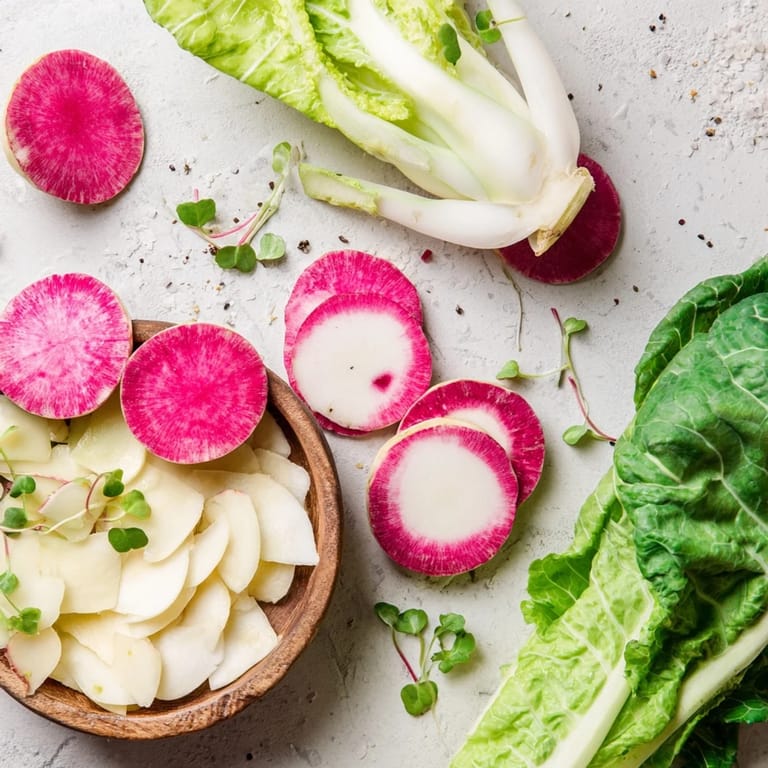
- Daikon radish: Use one that feels dense and heavy; watery ones will lose their crisp snap by the time you plate. A mandoline creates paper-thin slices that catch light beautifully.
- Kohlrabi: Often overlooked, this vegetable has a subtle sweetness and tender crunch that feels almost delicate when sliced thin. Peel away the tougher outer layer generously.
- Belgian endive: Keep the leaves whole and separate them gently; they're your plate's architecture and should look intentional, not torn.
- Cauliflower florets: Chop these finely—they should feel more like texture than substance, a whisper of earthiness rather than a statement.
- Unsweetened coconut flakes: Toast them very lightly if you have time; untoasted works fine, but the faintest warmth brings out a subtle sweetness that balances the vinegar.
- White and black sesame seeds: Toast the white seeds briefly in a dry pan, then let them cool. The black seeds add visual contrast and a slightly earthier flavor.
- Microgreens: Pea shoots offer delicate sweetness; radish sprouts bring a peppery bite. Choose based on your mood.
- Flaky sea salt: This is not a place to use fine salt—those flakes matter for texture and should be visible, like small touches of snow.
- Extra-virgin olive oil: Use one you actually enjoy tasting; it's one of only four components in the dressing.
- Fresh lemon juice: Squeeze it yourself just before making the dressing; bottled juice feels thin and tired by comparison.
- White pepper and white wine vinegar: These create a brightness that doesn't muddy the pale, clean aesthetic.
Tired of Takeout? 🥡
Get 10 meals you can make faster than delivery arrives. Seriously.
One email. No spam. Unsubscribe anytime.
Instructions
- Chill the canvas:
- Pop your stone or marble platter into the freezer for 15 minutes before you begin slicing anything. The cold is essential—it keeps vegetables crisp and transforms the eating experience from casual to intentional. If you use a ceramic plate instead, that's fine, but please chill it too.
- Create the dressing:
- In a small bowl, whisk together the olive oil, lemon juice, white wine vinegar, and white pepper until the vinegar is fully incorporated. This should take less than a minute and smell bright, almost citrusy. Taste it on a fingertip; it should make your mouth wake up.
- Slice with intention:
- Using a sharp knife or mandoline, create paper-thin slices of daikon and kohlrabi. The thinner they are, the more delicate they'll feel on the tongue. Work slowly and let the blade do the work rather than forcing it.
- Compose, don't arrange:
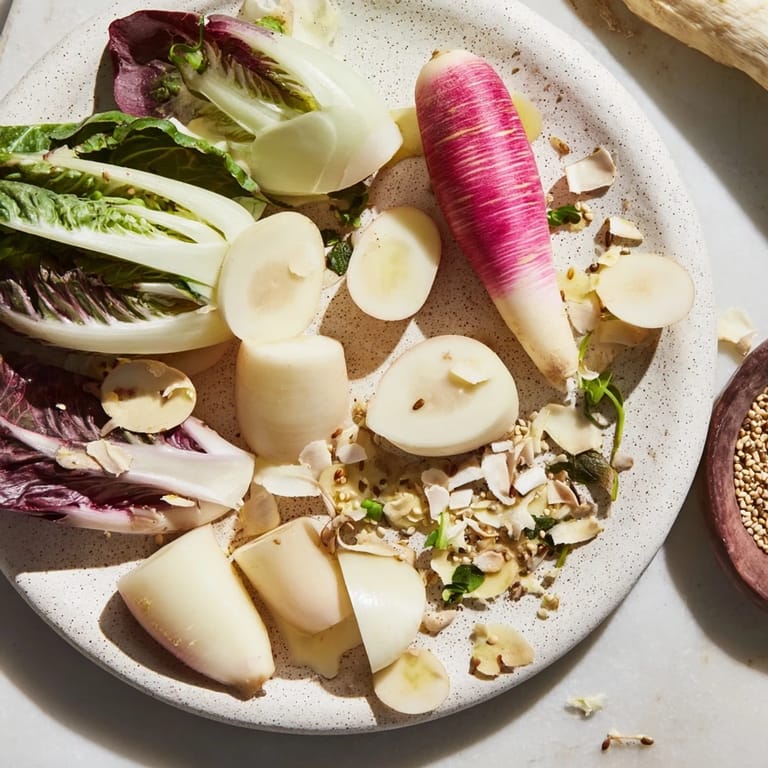
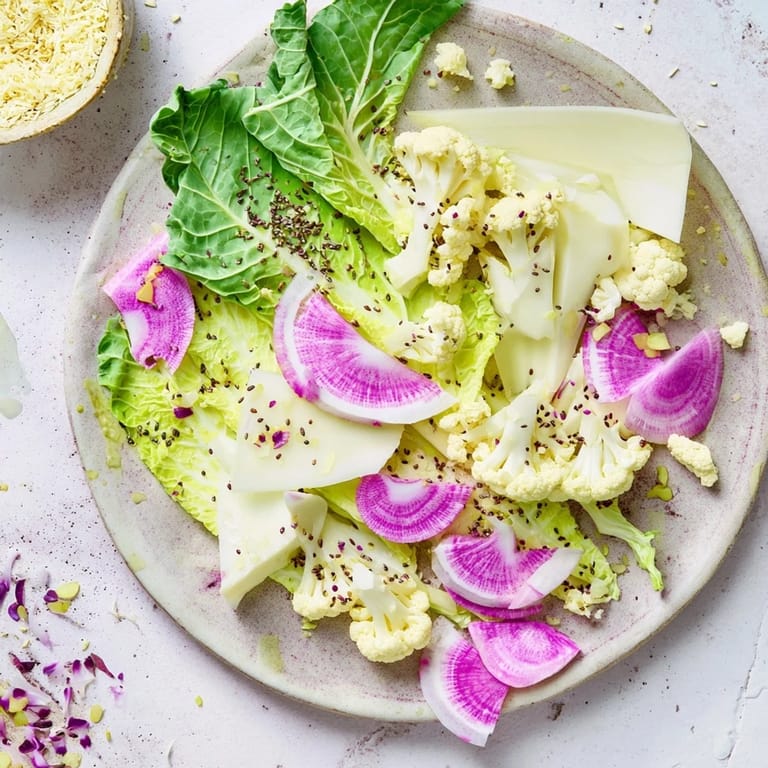
- Remove the chilled platter from the freezer and begin placing slices—daikon first, then kohlrabi, then endive leaves—across the surface with deliberate spacing. Think of a windswept landscape where nothing touches; there should be negative space between elements.
- Scatter the accents:
- Sprinkle the chopped cauliflower, coconut flakes, white sesame seeds, and black sesame seeds randomly across the plate in a way that feels natural rather than geometric. Step back occasionally and look at it from above; you're creating a visual moment, not just adding ingredients.
- Dress with restraint:
- Drizzle the dressing lightly and unevenly across the arrangement, letting some areas get slightly more than others. Less is genuinely more here—the vegetables should taste like themselves first, with the dressing as a whisper of acidity and oil.
- Final garnish and serve:
- Just before serving, scatter the microgreens across the top and add a pinch of flaky sea salt. Serve immediately while everything is still cold and crisp; this dish doesn't sit well.
 Save
Save There's a moment when someone tastes this dish and their expression shifts—a small pause, a subtle nod. That's when I know I've communicated something beyond flavors. It's an invitation to slow down, to pay attention to how cold and texture and simplicity can feel luxurious.
The Magic of Restraint
Modern cooking often celebrates abundance and boldness, so there's something quietly radical about a dish that whispers instead of shouts. This plate works precisely because it doesn't try to impress through complexity or richness. Instead, it asks you to notice the subtle sweetness of kohlrabi, the slight peppery edge of microgreens, the way cold heightens delicate flavors. When you cook this way, imprecision becomes more apparent—if your knife work is rushed, if your spacing feels random rather than intentional, guests will sense it. That's not a flaw; it's actually the point. This dish rewards care and attention.
Pairing and Serving Moments
Serve this as an opening act to a meal when people are still alert and curious, not at the end when palates are tired. It pairs beautifully with chilled aquavit—that Nordic spirit with its caraway notes echoes the earthy quality of the vegetables—or a crisp, bone-dry white wine like Muscadet or Sancerre. The dish also works wonderfully at Nordic-inspired celebrations or intimate dinners where you want the conversation to flow rather than the food to dominate. I've served it in summer when the garden is overwhelming with choices, and in winter when these pale vegetables feel like a small rebellion against the season.
Variations and Protein Additions
While the vegetarian version is genuinely complete, adding smoked whitefish flakes or tiny shrimp transforms this from appetizer into something closer to a composed first course. For a different acidity profile, try yuzu juice instead of lemon—it brings a floral, slightly bitter edge that's quite beautiful. You could also experiment with rice vinegar for something softer, or even a small amount of champagne vinegar for elegance. The core philosophy remains: each element should have space to breathe.
- Toast coconut flakes lightly in a dry pan to deepen their sweetness, but watch them carefully as they brown quickly.
- If using a wooden board instead of stone, chill it thoroughly and understand that it won't stay cold as long as ceramic or marble.
- Prep your vegetables just before serving; they'll lose their crisp snap if sliced too far in advance.
 Save
Save This dish taught me that sometimes the most memorable meals aren't the ones with the longest ingredient lists or the most complicated techniques. Sometimes it's just the clarity of good ingredients, treated with respect, and presented with intention.
Recipe FAQs
- → What makes The Tundra Trek unique?
Its artistic plating on a chilled stone and combination of pale, crisp vegetables offers a distinct, minimalist sensory experience.
- → Can the dish be prepared ahead of time?
While vegetables can be prepped in advance, assemble just before serving to preserve texture and freshness.
- → What alternatives can be used for the citrus dressing?
Yuzu juice or rice vinegar can replace lemon juice and white wine vinegar for a different bright acidity.
- → Are there suggested accompaniments for this dish?
Serving chilled aquavit or dry white wine complements the cold, refreshing nature of the dish.
- → How can protein be incorporated without altering the main characteristics?
Add delicate flakes of smoked whitefish or chilled poached shrimp just before serving, noting these alter vegetarian status.