 Save
Save The first time I made zaatar olive focaccia, I wasn't trying to blend two cuisines—I just had a container of zaatar sitting in my pantry alongside a jar of Kalamata olives, and something about them felt like they belonged together. That afternoon, while the dough rose on my kitchen counter, the smell of yeast mingling with the anticipation of what was to come made me realize how simple ingredients could tell a story of two kitchens, two traditions, coming together on one golden sheet. It's become the bread I reach for when I want something that feels both grounded and a little bit special.
I made this for a small dinner party on a November evening, when my friends were tired of the usual bread basket routine. When I pulled the focaccia from the oven, the kitchen filled with this warm, salty-herbal aroma that made everyone lean in before I'd even set it down. Someone asked if I'd learned to bake in the Middle East—no, just trial and error in my own small kitchen, with the internet and a lot of tasting along the way.
Ingredients
- Bread flour (500 g): The protein content here matters—it gives the focaccia its signature tender chew without the heaviness of all-purpose flour.
- Active dry yeast (7 g): Fresh or instant yeast works too, but I've found that dissolving it separately lets you see it come alive, which is oddly reassuring.
- Fine sea salt (1½ tsp for dough): Don't skip the fineness—coarse salt won't distribute evenly and can create surprises as you bite into it.
- Warm water (325 ml): Warm, not hot—if your finger can't sit in it comfortably for a few seconds, it'll kill the yeast faster than you can say focaccia.
- Extra virgin olive oil (60 ml plus 2 tbsp): This is where flavor lives, so don't reach for the generic bottle; your bread deserves the good stuff.
- Zaatar spice blend (2 tbsp): The heart of this recipe—that tangy, herbaceous, almost lemony quality comes from sumac mixed with thyme and sesame seeds.
- Kalamata olives (100 g, halved): Their brininess cuts through the richness of the oil and keeps every bite interesting.
- Flaky sea salt (1 tsp): This sits on top, so use the fancy stuff—Maldon or something similarly crystalline that adds texture and brightness.
Tired of Takeout? 🥡
Get 10 meals you can make faster than delivery arrives. Seriously.
One email. No spam. Unsubscribe anytime.
Instructions
- Mix your dry foundation:
- In a large bowl, combine your bread flour and fine sea salt, whisking them together so the salt doesn't settle in one spot. In a separate small bowl, sprinkle yeast over warm water and let it sit for five minutes—you'll see it get foamy and bubbly, which means it's ready to work.
- Bring it together:
- Pour the yeast mixture and olive oil into your flour, and mix with your hands or a wooden spoon until you have a shaggy, rough dough. Don't worry about it looking messy; that's exactly right.
- Knead until silky:
- On a lightly floured surface or using a stand mixer with the dough hook, knead for eight to ten minutes until the dough feels smooth, elastic, and slightly tacky. You should be able to stretch a small piece without it tearing immediately.
- First rise:
- Transfer the dough to a lightly oiled bowl, cover it with a damp kitchen towel or plastic wrap, and let it rest in a warm spot—a turned-off oven with the light on works beautifully—until it doubles in size, about an hour.
- Shape and second rise:
- Oil a large baking sheet or nine-by-thirteen pan generously. Punch down the dough with your fist (it's satisfying, I promise), then press it into the pan so it fills every corner, stretching gently as needed. Cover again and let it rise for thirty minutes—this time it won't quite double, but it'll puff up and become pillowy.
- Dimple and dress:
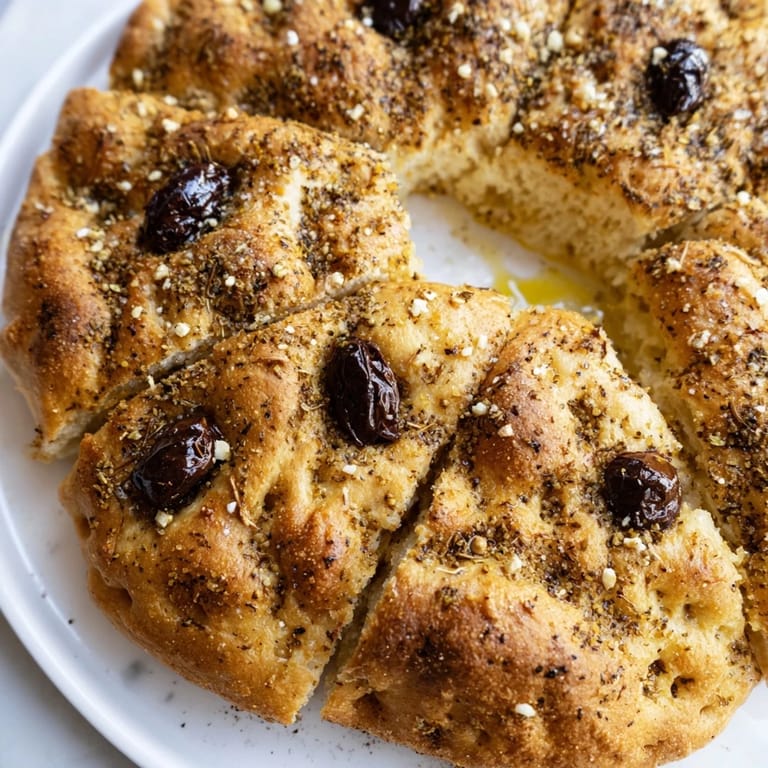
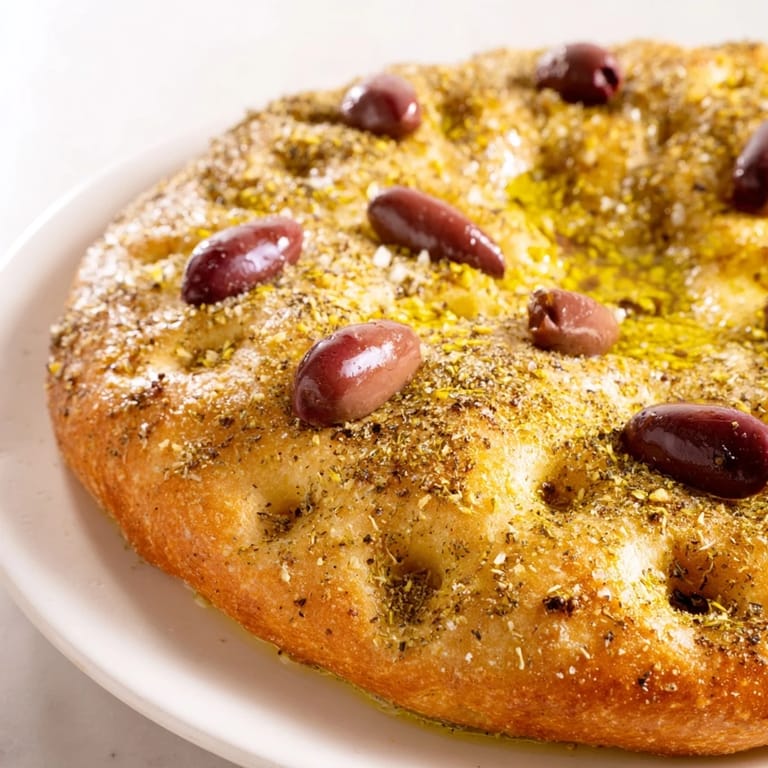
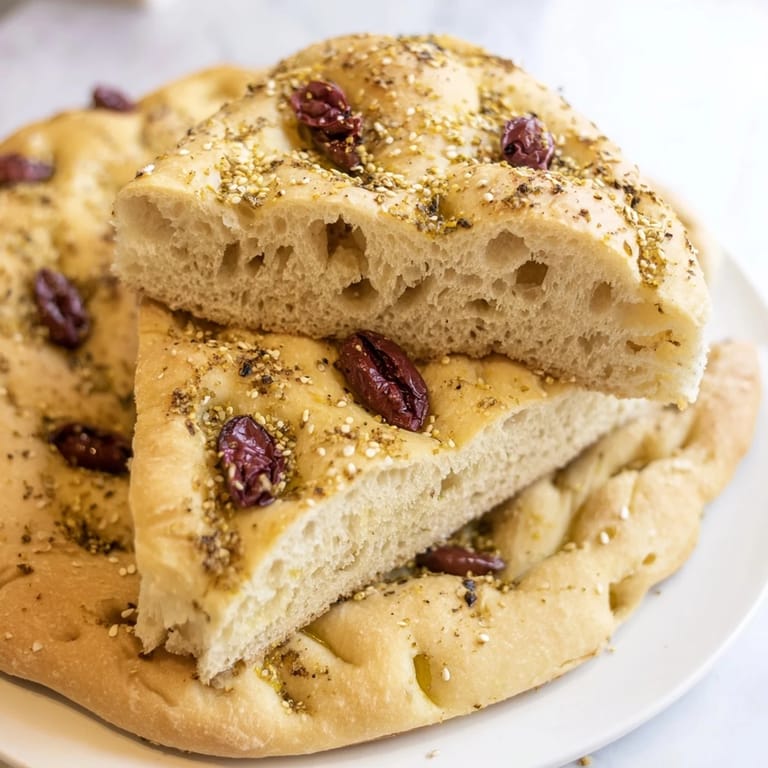
- Preheat your oven to 220°C (425°F). Using your fingertips, press deep dimples all over the surface of the dough—this is where the magic happens, as the oil and zaatar settle into these little pockets. Drizzle with two tablespoons of olive oil, then scatter the zaatar blend evenly across the whole surface, finish with the halved olives, and sprinkle flaky sea salt over everything.
- Bake until golden:
- Slide into the oven and bake for twenty to twenty-five minutes, until the top is deep golden brown and the edges are crisp and slightly darker. Your kitchen should smell incredible right now.
- Cool and serve:
- Let the focaccia cool for just five to ten minutes on the pan—enough to set slightly but still warm enough to tear into. Slice and serve warm or at room temperature.
 Save
Save There's a moment when focaccia comes out of the oven where it stops being just bread and becomes something you want to share immediately, not because you're trying to impress, but because good food is meant to be tasted together. That's when this recipe feels most alive to me.
The Zaatar Secret
Zaatar isn't just one thing—it's a blend, and understanding that changed how I approached this focaccia. The sumac brings tartness, the thyme contributes earthiness, and the sesame adds nuttiness and texture. If you've never worked with zaatar before, start by tasting a small pinch on its own so you know what you're aiming for. It should taste herbaceous and a little bit lemony, never dusty or stale.
Why This Works as Mediterranean Fusion
Focaccia comes from Italy, zaatar comes from the Levant, and olives belong to the whole Mediterranean world, so putting them together isn't really fusion—it's more like introducing friends who should have met long ago. The fluffy, oil-rich crumb of focaccia is the perfect canvas for the bright, briny, herbal toppings, and nothing gets lost or overwhelmed. It's one of those happy accidents that feels inevitable once you've made it.
Storage, Serving, and Simple Variations
Fresh focaccia is best eaten the same day, but it keeps beautifully for two days wrapped in paper or cloth—avoid plastic, which traps steam and makes it soggy. To serve, tear it into pieces or slice it into neat rectangles, and offer it alongside hummus, labneh, or just a small bowl of good olive oil for dipping. If you want to play around, sun-dried tomatoes work wonderfully mixed into the dough, or try roasted garlic cloves scattered on top instead of some of the olives.
- Green olives make this milder and slightly less briny if that's more your speed.
- A gentle reheat in a 180°C oven for five to seven minutes brings back the warmth and restores some crispness to the crust.
- Leftover focaccia makes an exceptional base for open-faced sandwiches or a hearty salad topping the next day.
 Save
Save This focaccia has become one of those recipes I return to again and again, not because it's complicated, but because it's dependable and makes everyone happy. Every time I make it, I'm grateful for the accident that led me to combine these two traditions into something that tastes like home, even if home is somewhere between Italy and the Levant.
Recipe FAQs
- → What is zaatar and how does it affect the flavor?
Zaatar is a Middle Eastern spice blend featuring thyme, sesame seeds, and sumac, adding a fragrant, earthy, and slightly tangy flavor to focaccia.
- → Can I use other olives besides Kalamata?
Yes, green olives or other varieties can be used for a milder, less briny taste while still maintaining the savory profile.
- → How does the double rise influence the bread texture?
Allowing the dough to rise twice creates a light, airy crumb by developing gluten structure and fermentation, resulting in a fluffy texture.
- → What are good accompaniments for this focaccia?
This focaccia pairs well with dips like hummus or labneh and can also complement salads or soups as a side.
- → Can the bread be stored or reheated?
It is best consumed the day it’s made but can be gently reheated in a warm oven to regain crispiness and warmth.