 Save
Save The first time I tasted dukkah-spiced eggs was at a tiny café in Cairo, where an elderly woman served them on a chipped white plate with warm pita and the most insistent hospitality. I've been chasing that moment ever since—that perfect collision of creamy yolk, toasted spice, and something that felt both simple and deeply nourishing. Now, when I make these at home on a lazy Sunday morning, my kitchen fills with that same warm, nutty aroma, and suddenly breakfast feels like an occasion worth dressing up for.
I made these for my sister once when she was going through a rough patch, and I watched her expression shift from tired to actually present as she tasted them. She reached for a second egg half before saying anything, which somehow meant more than words. That's when I realized this dish has a quiet magic—it's humble enough to feel like an act of care, but special enough to feel like a celebration.
Ingredients
- Eggs (8 large): The foundation—get the freshest ones you can find, because they'll peel more cleanly and taste noticeably brighter.
- Dukkah spice mix (3 tbsp): This Egyptian blend of toasted nuts, seeds, and spices is non-negotiable; it's the whole point.
- Fresh parsley, cilantro, and mint (2 tbsp each): Don't skip these—they add a living brightness that makes each bite sing.
- Extra virgin olive oil (2 tbsp): Use something you actually like tasting, because it's the only fat here.
- Sea salt and black pepper: Taste as you go; these eggs need seasoning more than you'd expect.
Tired of Takeout? 🥡
Get 10 meals you can make faster than delivery arrives. Seriously.
One email. No spam. Unsubscribe anytime.
Instructions
- Boil the eggs gently:
- Bring water to a gentle boil, then carefully lower in your eggs. Simmer for 7 minutes if you want jammy, sunset-colored yolks, or 9 minutes for firmer ones—I prefer the 7-minute window because that yolk is where the magic lives.
- Shock them in ice water:
- Scoop them out with a slotted spoon and plunge them immediately into ice water; this stops the cooking and makes peeling surprisingly easy.
- Peel with patience:
- Once cool, gently roll each egg and peel under cool running water—the shell comes away like it was waiting for permission.
- Arrange and dress:
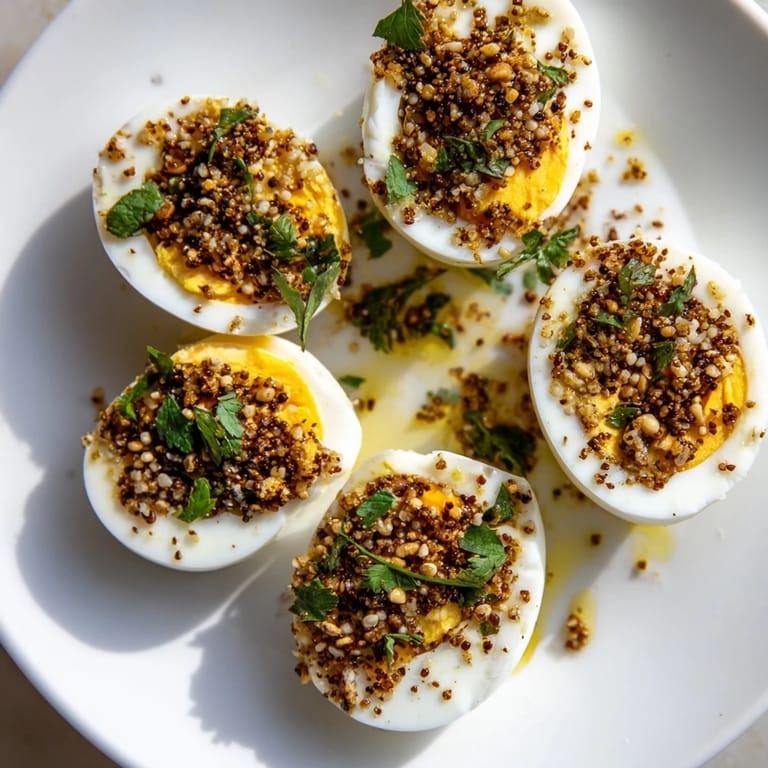
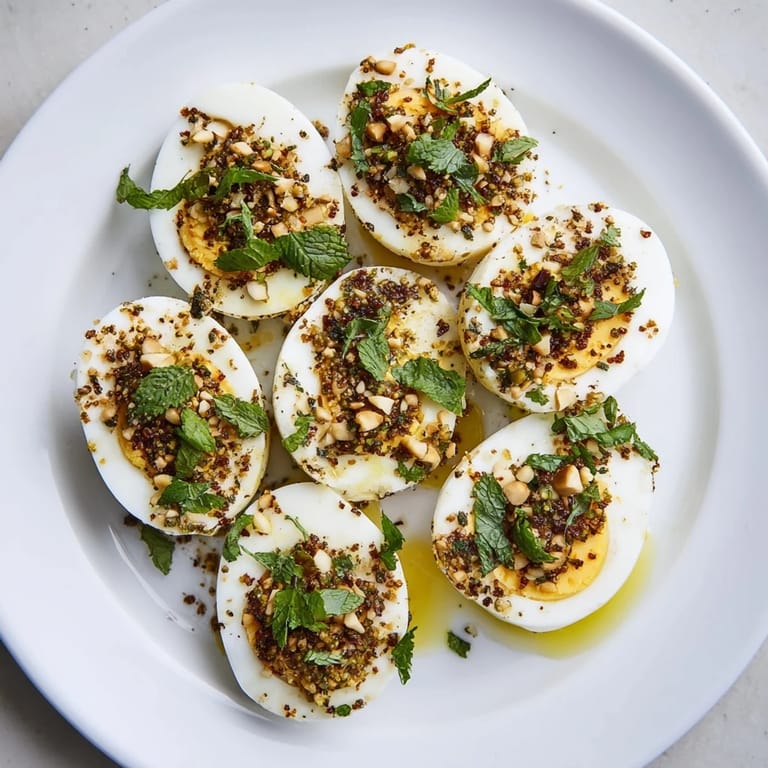
- Slice each egg in half lengthwise and arrange them on a platter, cut-side up, like you're presenting something precious.
- Build the layers:
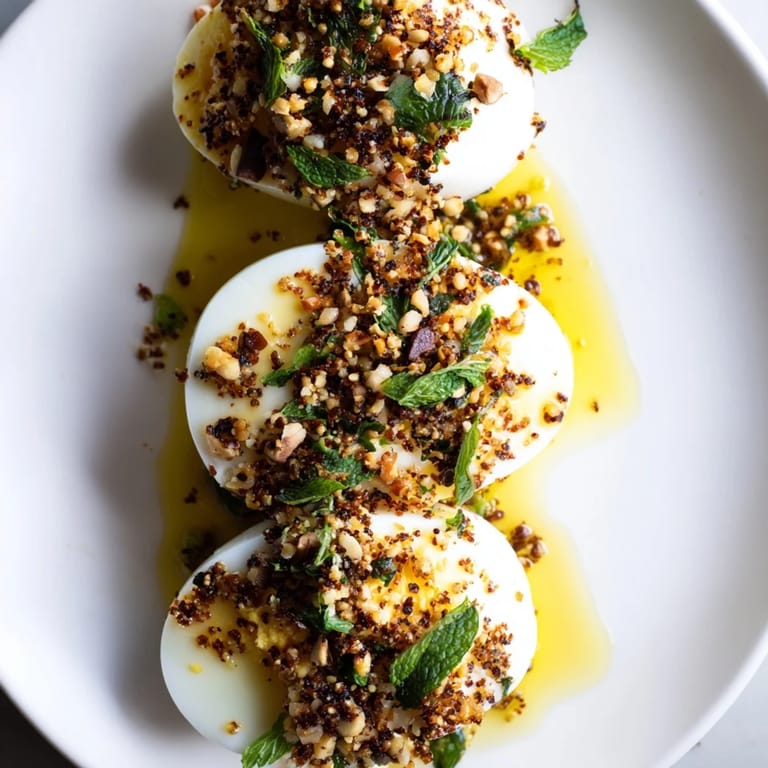
- Drizzle with olive oil first, then shower generously with dukkah—don't be timid here. Scatter your fresh herbs over top like confetti.
- Season and serve:
- Add a final pinch of sea salt and pepper to taste, then serve immediately while everything is still cold and the herbs are still bright.
 Save
Save There's a moment, just after plating, when I catch the light hitting the dukkah and those fresh green herbs, and I remember why I came back to this recipe over and over. It's not complicated, but it feels intentional—like you've chosen something good for yourself.
The Case for Dukkah
Dukkah is one of those ingredients that changes how you cook once you have it in your pantry. It's technically a spice blend, but it behaves more like an amplifier—whatever you put it on becomes more itself, more flavorful, more interesting. I've scattered it on yogurt, toasted bread, roasted vegetables, and even soup, but something about it with eggs feels like the intended pairing, like the recipe wrote itself.
Why Fresh Herbs Matter Here
The herbs aren't decoration—they're essential balance. Dukkah leans warm and toasty, almost sweet with all those hazelnuts and seeds, and the bright cilantro and mint cut through that richness like cold water on a warm day. Parsley adds an earthy note that ties everything together. This is why wilted or dried herbs would genuinely change the dish; you need that snappy freshness to make it sing.
Timing, Variations, and the Perfect Breakfast
The beauty of this dish is its flexibility within a structure—you can adjust your egg doneness based on mood or preference, play with different dukkah recipes if you find one you love, or add lemon juice for brightness if the spirit moves you. Some mornings I serve these with warm pita for scooping, other times with crusty sourdough, and occasionally with nothing but a fork and an appetite. The only rule is that everything should be fresh and assembled with attention.
- Soft-boiled or poached eggs work beautifully here too if you prefer runny yolks.
- If you make your own dukkah, store it in a sealed jar where it'll keep for weeks and remind you how good toasted spices smell.
- Serve these immediately after plating—this is not a dish that waits around.
 Save
Save These eggs remind me that the best meals aren't the complicated ones—they're the ones made with attention and good ingredients. Make these for yourself on a morning when you deserve something special.
Recipe FAQs
- → What is dukkah and how does it enhance the dish?
Dukkah is an Egyptian blend of toasted nuts, seeds, and spices that adds a crunchy texture and aromatic flavor, complementing the eggs and herbs beautifully.
- → How do I achieve jammy yolks when cooking the eggs?
Simmer eggs gently for about 7 minutes in boiling water, then transfer to ice water to stop cooking and ensure perfectly soft yolks.
- → Can I make the dukkah spice mix at home?
Yes, by toasting hazelnuts, sesame seeds, coriander, cumin, peppercorns, and fennel, then grinding them with sea salt to create a fresh, fragrant spice blend.
- → What herbs work best with dukkah-spiced eggs?
Fresh parsley, cilantro, and mint are traditional choices that add bright, refreshing notes to balance the rich spices and eggs.
- → Is this dish suitable for special diets?
It is vegetarian and gluten-free; however, check dukkah ingredients carefully for nuts or sesame allergens depending on the mix used.
- → Are there alternative cooking methods for the eggs?
Besides boiling, poaching the eggs offers a silky texture that also pairs well with the dukkah and herbs.