 Save
Save There's something almost therapeutic about grating fresh lemon zest into a mixing bowl on a quiet afternoon, watching the pale butter and sugar transform into something cloud-like and hopeful. My neighbor brought over a homemade lemon drizzle loaf one March morning, still warm from her oven, and I remember being struck by how something so simple—just butter, eggs, and bright citrus—could taste like springtime itself. That cake taught me that the best desserts don't need to be complicated, just honest and bursting with real flavor. I've made this version dozens of times since, and it never fails to fill the kitchen with that unmistakable sunny-sweet aroma that somehow makes everything feel a little bit better.
I baked this for my daughter's school bake sale a few years ago, and watching the other parents' faces when they tasted it was its own kind of reward. One mum asked for the recipe right then and there, and I loved that I could hand it over without hesitation—this is the kind of cake you want to share, not hoard. Since then it's become my go-to when I need something that feels special but doesn't announce how much effort it took.
Ingredients
- Unsalted butter, softened (200g): Room temperature is non-negotiable here—it creams properly only when it's soft enough to leave a thumbprint, which is how you trap air and create that tender crumb.
- Caster sugar (200g): The fine crystals dissolve faster and blend smoother than granulated sugar, giving the cake its signature delicate texture.
- Large eggs, room temperature (3): Cold eggs won't incorporate properly, which means a denser cake; I leave mine on the counter for 10 minutes before baking.
- Fresh lemon zest (1 tbsp from 2 lemons): Don't even think about using bottled—the difference is the entire soul of this cake, and real zest gives you those little bursts of flavor.
- Self-raising flour (200g): This already contains baking powder and salt, which is why the instructions list them separately for extra lift, but don't skip this particular flour type or substitute it with all-purpose.
- Baking powder (1/2 tsp): The extra boost ensures the cake rises evenly and stays moist rather than becoming dense.
- Salt (1/4 tsp): It's the quietest ingredient but it makes the lemon flavor sing by balancing the sweetness.
- Whole milk (3 tbsp): This keeps the batter wet enough to bake through without drying out, and the dairy adds subtle richness.
- Fresh lemon juice (2 tbsp for batter plus 3 tbsp for glaze): Freshly squeezed is worth the effort—bottled tastes tinny by comparison, and here it's the star ingredient.
- Icing sugar (80g for glaze): Sift it first if there are lumps, otherwise you'll end up with a bumpy, uneven drizzle on top.
Tired of Takeout? 🥡
Get 10 meals you can make faster than delivery arrives. Seriously.
One email. No spam. Unsubscribe anytime.
Instructions
- Prepare your space:
- Preheat the oven to 180°C and grease your loaf tin thoroughly before lining it with baking parchment—this double protection means no sticking and a clean release. Have all your ingredients measured out and ready because once you start creaming, you want to work at a steady pace.
- Cream the butter and sugar:
- Beat the softened butter and caster sugar together for a good 3 to 4 minutes until it's pale, fluffy, and noticeably lighter in color than when you started. This is where you're incorporating air into the mixture, which is what gives the finished cake its tender, moist crumb.
- Add the eggs one at a time:
- Drop in the first egg and beat until it's completely combined and the mixture looks smooth again before adding the next one. Rushing this step or adding them all at once can cause the batter to look curdled, which means the eggs and butter are separating.
- Fold in the lemon zest:
- Stir the finely grated zest into the egg mixture until evenly distributed. You'll start to smell that unmistakable bright citrus aroma at this point, which is your hint that you're on the right track.
- Gently fold in the dry ingredients:
- Sift the self-raising flour, baking powder, and salt together, then fold them into the wet mixture using a spatula or wooden spoon with a light touch. Overmixing at this stage toughens the gluten and results in a dense cake instead of the tender crumb you're after.
- Add the milk and lemon juice:
- Stir in the milk and fresh lemon juice until the batter comes together and looks smooth and pourable. The batter should fall slowly from a spoon, not be stiff like cookie dough.
- Transfer to the tin:
- Pour the batter into your prepared loaf tin and smooth the top gently with a spatula so it bakes evenly. Don't tap the tin hard on the counter or you'll knock out the air you just worked to incorporate.
- Bake until golden:
- Bake for 45 to 50 minutes, until a skewer inserted into the very center comes out clean with no wet batter clinging to it. The top should be a light golden brown, and the cake should smell intensely lemony and buttery.
- Prepare the glaze while baking:
- While the cake is in the oven, whisk together the icing sugar and 3 tablespoons of fresh lemon juice until you have a thick but pourable consistency. It should coat the back of a spoon but still be thin enough to drizzle.
- Glaze the warm cake:
- Remove the cake from the oven and let it cool in the tin for about 10 minutes, then use a skewer to poke holes all over the top while it's still warm. Slowly drizzle the glaze over those holes and let it soak in, which creates those lovely pockets of sweetly tart flavor throughout.
- Cool completely before serving:
- Leave the cake in the tin until it's completely cool, then turn it out onto a wire rack and slice. This patience ensures the cake is set enough to slice cleanly without crumbling.
 Save
Save My mum called me one afternoon to say she'd made this cake for her book club, and apparently there was a quiet moment when everyone tasted it—the kind of moment where people stop talking because food has genuinely delighted them. That's when I realized this loaf isn't just dessert; it's a small gesture of care that happens to taste like sunshine.
Why Fresh Lemon Matters Here
Bottled lemon juice is convenient but it's been sitting in a bottle losing flavor and picking up a metallic tang that has no business being in something this delicate. When you squeeze a fresh lemon, you get oils from the zest and juice that work together to create that bright, almost floral quality that makes people close their eyes and say 'wow.' I learned this lesson when a friend gifted me a bag of beautiful Meyer lemons and I used them for this cake—the difference was so noticeable that I've never gone back to shortcuts. Your taste buds will thank you, and honestly, the five minutes it takes to zest and juice fresh lemons is the easiest part of this whole recipe.
The Importance of Patience with Cooling
There's always that moment when the cake comes out of the oven, golden and fragrant, and every fiber of your being wants to slice into it immediately—resist that urge. If you slice into a warm cake, it'll crumble and fall apart because the structure hasn't fully set; wait until it's completely cool and it slices like a dream with clean, neat edges. I once cut into a warm loaf for my impatient nephew and spent twenty minutes sweeping up crumbs, so now I'm a firm believer in the cooling period. That wait is actually part of the magic—it gives the glaze time to set too, and by the time you slice it, the whole cake has this almost velvety texture.
Variations and Extras That Actually Work
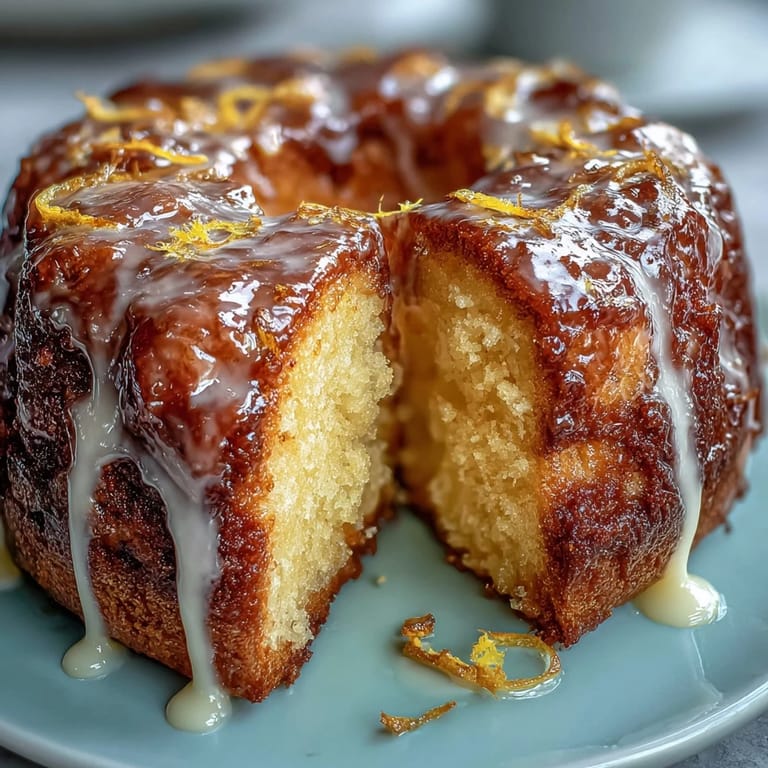
This cake is naturally versatile, and I've experimented with additions that respect the original without overwhelming it. Poppy seeds add a subtle nuttiness and a lovely speckled look, while a touch of limoncello in the glaze transforms it into something grown-up and sophisticated. Some afternoons I dust the finished cake with a little icing sugar for elegance, and other times I serve it plain because the cake's simplicity is its strength.
- Poppy seeds (a small handful stirred into the batter) add texture and sophistication without competing with the lemon flavor.
- Replace a tablespoon of milk with plain yogurt for extra moisture and a subtle tang that complements the citrus beautifully.
- Swap half the lemon juice in the glaze for limoncello or elderflower cordial if you're feeling creative, but taste as you go so the flavor stays balanced.
 Save
Save This cake has become my reliable friend in the kitchen, the recipe I reach for when I want to create something that tastes like home. It's proof that simplicity, when done with care and fresh ingredients, is often far more delicious than anything complicated could ever be.
Recipe FAQs
- → How do I ensure the loaf stays moist?
Use softened butter, don’t overmix the batter, and pour the lemon drizzle over while the loaf is still warm to lock in moisture.
- → Can I add other flavors to enhance this loaf?
Yes, a handful of poppy seeds adds texture, and substituting some lemon juice with limoncello offers an adult twist.
- → What is the best way to zest lemons for this loaf?
Use a fine grater or zester to collect just the outer yellow layer, avoiding the bitter white pith beneath.
- → How do I know when the loaf is fully baked?
Insert a skewer into the center; it should come out clean or with a few moist crumbs when fully baked.
- → What alternatives can I use for caster sugar?
Superfine sugar works well as a substitute, ensuring it dissolves easily for a smooth batter.